Every host hits this wall eventually: you open a spreadsheet, you Google "airbnb supplies," and forty minutes later you have twelve browser tabs and a shopping cart with a blender in it you didn't need. So let's do this properly, once.
Airbnb supplies are everything a guest needs to live comfortably in your space for the length of their stay: linens, toiletries, kitchen basics, cleaning products, and the small safety items most jurisdictions require. The list itself isn't the hard part. Knowing what to buy once versus what you're restocking every single turnover, and what that actually costs you per guest, is where most checklists stop short.
The quick version
Before the full room-by-room breakdown, here's how to think about priority and replacement cadence. Save this table, skip the categories you've already sorted.
| Category | Must-have or nice-to-have | Typical replace cycle | Does individually wrapped matter? |
|---|---|---|---|
| Bed linens & towels | Must-have | Laundered every turnover | No |
| Bathroom toiletries (soap, shampoo, conditioner) | Must-have | Every turnover | Yes, significantly |
| Toothbrush & oral care | Nice-to-have, high review impact | Every turnover if stocked | Yes |
| Kitchen basics (coffee, oil, salt, trash bags) | Must-have | Weekly to monthly | No |
| Cleaning supplies (for you, not guests) | Must-have | Ongoing | No |
| Entertainment & extras | Nice-to-have | Rarely | No |
| Safety items (smoke detector, first aid, fire extinguisher) | Must-have, often required by law | Check quarterly | No |
That last column matters more than it looks. We'll get to why.
The room-by-room list
Bedroom
- Sheets (own at least two sets per bed so you're never caught mid-turnover)
- Pillows, in varying firmness if you can manage it
- Extra blankets, seasonal if your property sees real temperature swings
- Blackout curtains or shades
- A few hangers and a luggage rack
- Phone chargers (guests forget these constantly, and a spare earns outsized goodwill)
Bathroom
- Bath towels, hand towels, washcloths, one full set per guest at minimum
- Toilet paper, at least two rolls visible plus backstock
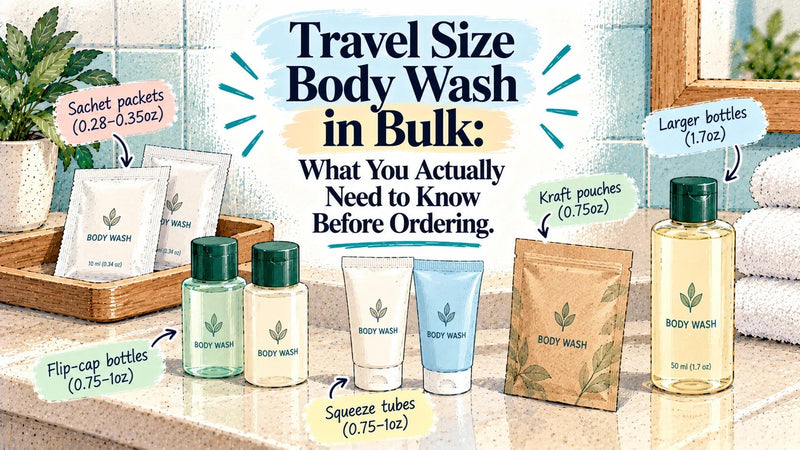
- Individually wrapped bar soap or bottled body wash and shampoo
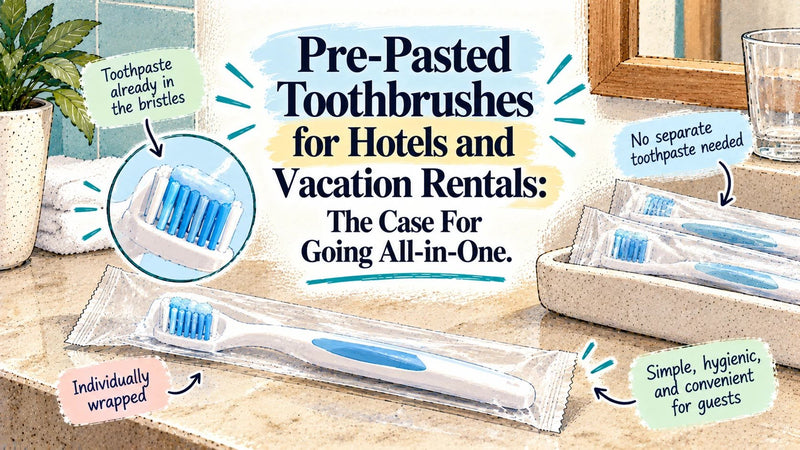
- Toothbrush and toothpaste, or a combined disposable option
- Hair dryer
- Bath mat
This is the room that does the most work for your reviews, and it's also where "just buy whatever's cheapest at the warehouse club" starts to break down. More on that below.
Kitchen
- Basic cookware: a pot, a pan, a few utensils
- Plates, bowls, cups, silverware for max occupancy plus a couple extra
- Coffee maker with a few days of coffee or pods
- Salt, pepper, cooking oil
- Dish soap, sponge, dish towels
- Trash bags sized to your bins
Living area and extras
- Wi-Fi, printed clearly with the password
- TV with streaming access or clear instructions
- A couple of board games or a deck of cards
- Local guide or a laminated card with checkout instructions
- Umbrella by the door
Safety
- Working smoke and carbon monoxide detectors
- Fire extinguisher, accessible and not expired
- Basic first aid kit
- Flashlight
Check your local short-term rental regulations here specifically. Several cities and states now mandate detectors and extinguishers as a licensing condition, not just a nice-to-have.
Cleaning supplies (yours, not the guest's)
- All-purpose cleaner, glass cleaner, bathroom cleaner
- Vacuum and mop
- Laundry detergent, if you're washing linens on-site
- Disposable gloves for turnover cleans
The guest-type layer
Once the base list is covered, a few additions punch above their weight for specific guest types: a pack-and-play or outlet covers for families, food and water bowls if you allow pets, and a printed spot with the strongest Wi-Fi signal for anyone traveling for work. None of this needs to be permanent inventory. Keep it in a labeled bin and swap it in based on the booking.
Where the checklists stop and the real decision starts
Almost every "airbnb supplies" list online treats the bathroom the same way it treats the coffee maker: buy it once, forget it. That's wrong, and it's the single biggest gap in most host guides.

Coffee makers and blenders are capital purchases. You buy them once and they last years. Bathroom toiletries are consumables. You're buying them every turnover, for as long as you host, and that means the real cost isn't the sticker price, it's the sticker price times your annual turnover count.
Here's a concrete example using real, currently listed pricing. A 450-count case of individually wrapped floss picks runs $29.97, which works out to roughly 6.7 cents per pick. That number looks trivial on a single guest. Multiply it by 300 turnovers a year across a few units and it's still small, but it's a number you can actually plan around, instead of guessing.
That's the exercise worth doing for every consumable on your list: divide the pack price by the unit count, then multiply by your actual turnover frequency. It turns "toiletries are expensive" into an actual line item.
Individually wrapped matters here for a reason that has nothing to do with aesthetics. A guest who opens a bathroom cabinet and sees a sealed bar of soap knows, without you saying a word, that nobody used it before them. An open bottle of hand soap on the sink doesn't send the same signal, even if it's completely fine.
Buying in bulk without overbuying
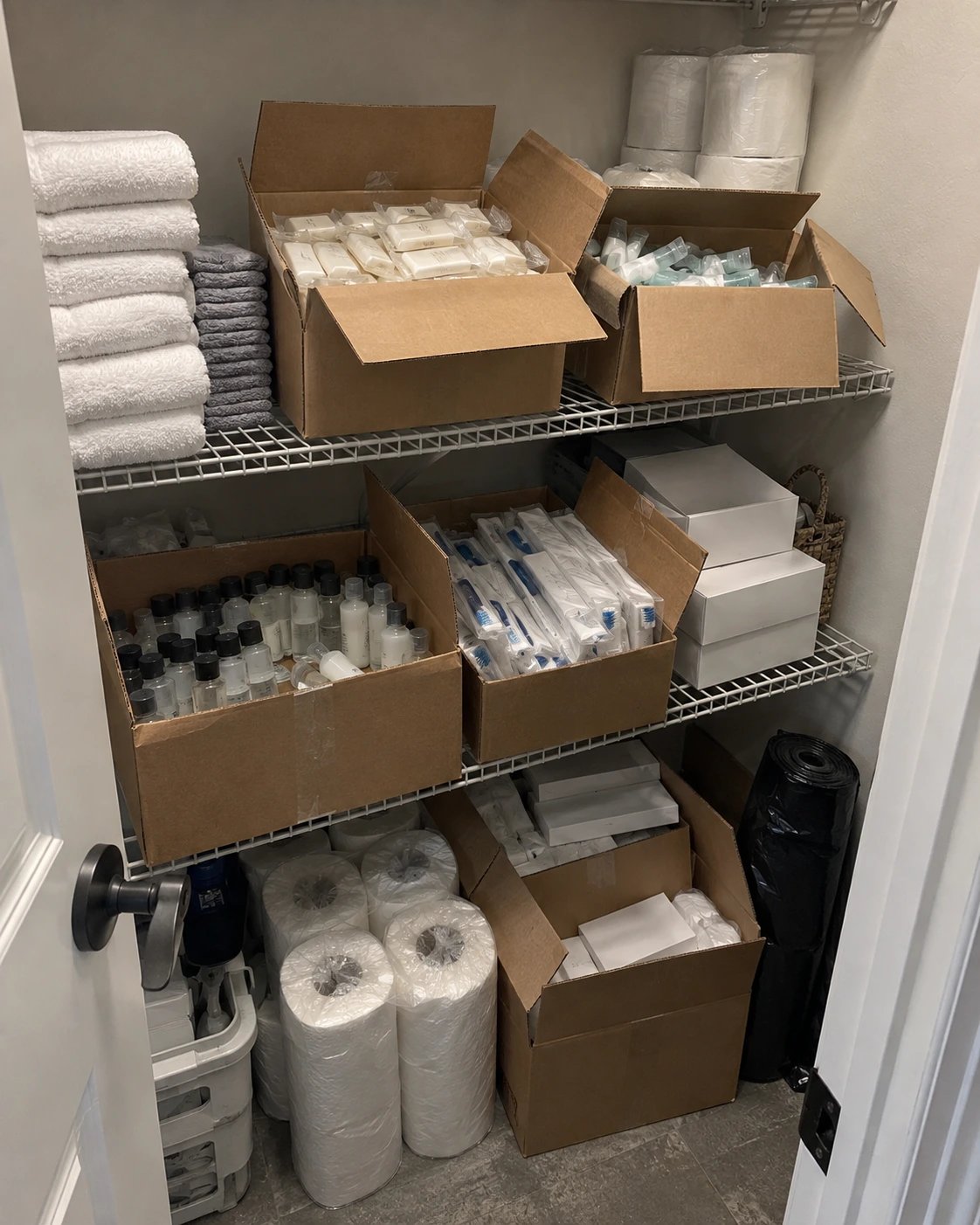
The instinct to "just buy the biggest pack" is usually right, but only past a certain volume. If you're running one unit with a dozen turnovers a month, a warehouse-club case of 200 units of something can mean product sitting in a closet for a year, degrading or going out of style before you use it. If you're running ten units, the math flips hard in favor of the largest case size you can store.
The variable that actually matters isn't your unit count, it's your annual consumption per SKU. A simple way to check the decision: take the price difference between two pack sizes and divide it by the number of extra units in the bigger pack. If that per-unit savings is meaningful and you'll realistically use the volume within a year, buy bigger. If you won't touch the bottom of the case before it's stale, buy smaller and reorder more often, timed to your actual turnover schedule rather than a guess.
What to ask any supplier before you commit
Whether you're sourcing from a warehouse club, Amazon, or a dedicated hospitality supplier, the same questions separate a good decision from an expensive mistake:
- What's the actual price per unit at the pack size I'll realistically buy, not the smallest pack shown?
- Is the product individually wrapped, and does that matter for how guests will encounter it?
- What's the minimum order, and is it the same as the smallest listed pack size? (These are often different things.)
- How fast can a reorder actually arrive, and does that match my turnover schedule?
- Can I get a sample before committing to a case?
- Is pricing consistent across quantities, or does it jump unpredictably at certain thresholds?
Where Avistar fits into this
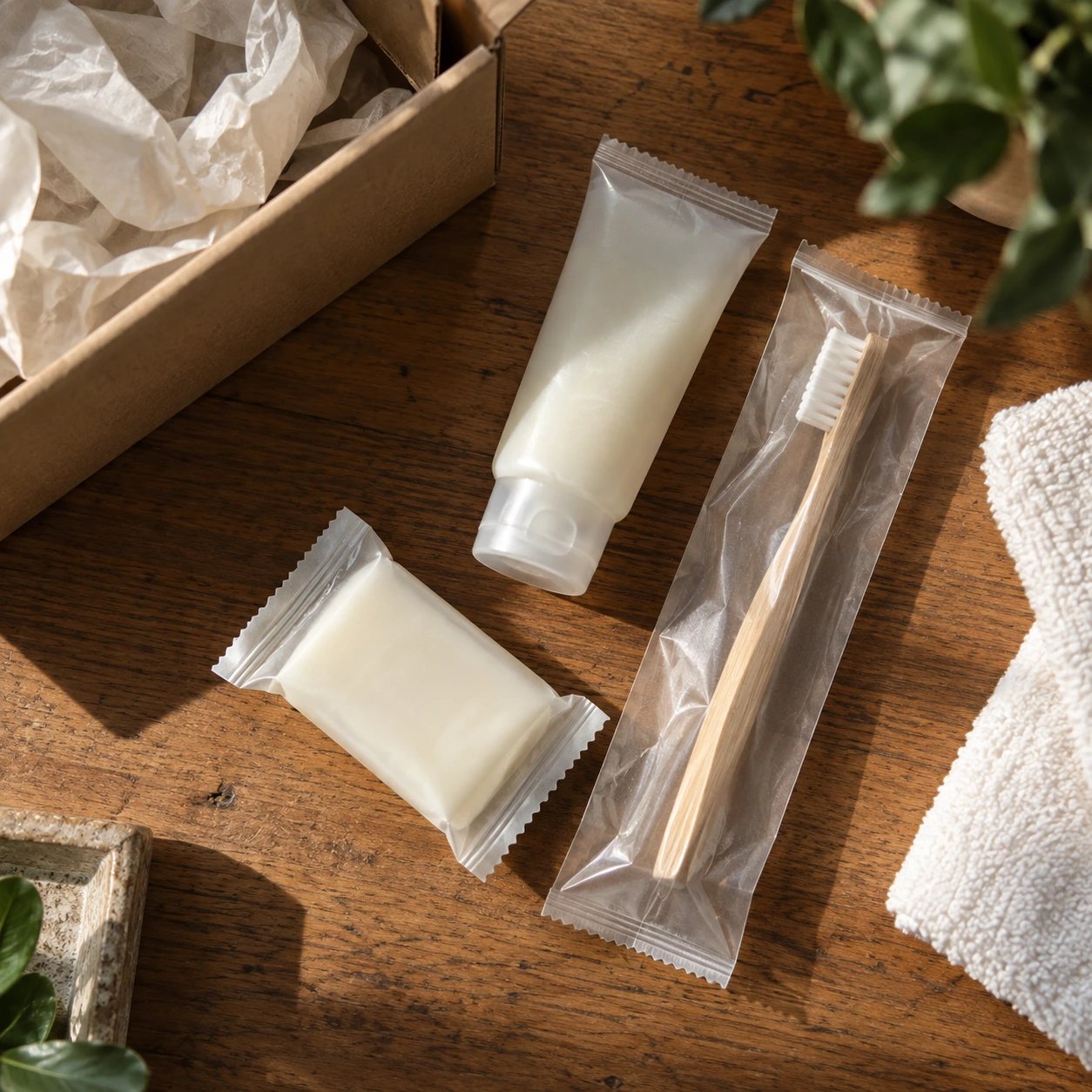
Avistar supplies individually wrapped guest bathroom and oral care items, the specific category where most generic "buy from a warehouse club" advice falls short for hosts. As of this writing, the catalog includes a toiletries pack covering the full guest bathroom in single-use packets (from $29.99 for 100 count up to $66.99 for 300 count), two squeeze-bottle amenity sets for the counter (from $48.97 for an 80-piece set and $49.97 for a 90-piece set, each scaling up in larger sizes), individually wrapped bulk toothbrushes (from $4.97 for 4 count up to $49.97 for 208 count), and the 450-count floss pick case referenced above ($29.97).
If your setup uses wall-mounted refillable dispensers rather than single-use bottles, that's a different sourcing category and Avistar's individually wrapped format isn't the right fit for that specific dispenser style. It's the right fit when the goal is a sealed, obviously-unused item for every new guest, which is most short-term rental turnovers.
We've also put together a separate guide on where to buy toothbrushes in bulk if oral care is the piece you're still sourcing.
Frequently asked questions
What supplies do I actually need to stock an Airbnb?
At minimum: linens and towels, bathroom toiletries, basic kitchen cookware and consumables, cleaning supplies for turnovers, and the safety equipment required in your jurisdiction (smoke detector, carbon monoxide detector, fire extinguisher, first aid kit). Everything past that, entertainment extras, guest-type add-ons, is optional but improves the guest experience.
How much should I budget for Airbnb supplies per turnover?
It depends heavily on unit size and what you restock every turnover versus what's a one-time purchase. The consumables that repeat every stay, toiletries, toilet paper, coffee, trash bags, are the ones worth calculating a real per-unit cost for, since that number compounds across a year of bookings in a way a one-time furniture purchase doesn't.
Should I buy Airbnb supplies in bulk?
Buy in the largest pack size you'll realistically use within about a year. Beyond that window, savings from a bigger case get eaten by product sitting unused, and in the case of toiletries, potentially degrading in quality.
Do Airbnb guests expect their own toiletries provided?
Most guests expect at least basic toiletries, soap, shampoo, toilet paper, similar to a hotel stay. It's not universally required by Airbnb's platform, but its absence is a common source of guest complaints and lower cleanliness ratings.
How often should toiletries and oral care items be restocked?
Every turnover, without exception, for single-use items. Guests notice unwrapped or partially used bathroom products more than almost anything else in the unit, and it shows up directly in review language.
What's the difference between consumer-grade and hospitality-grade supplies?
Hospitality-grade guest amenities are typically individually wrapped or single-use, sized for one stay rather than one household, and packaged to visibly signal that nobody has used them. Consumer products bought at a regular grocery store are usually shared-bottle formats built for repeat use by the same household.
Our approach
We looked at what other host guides recommend for stocking a short-term rental, noted where that advice stopped short, and checked every product reference here against Avistar's own catalog and listed pricing at the time of writing. The per-unit cost example uses Avistar's currently listed price and unit count for its floss pick case; other Avistar prices referenced here are the listed price for the specific pack size named in each case. Prices change, so confirm current figures before ordering at volume.
If you want the bathroom and oral care side of this list handled without chasing reorders yourself, that's the specific problem we built Avistar around. Browse the travel and guest amenities collection or read our guide to buying toothbrushes in bulk.