Most retainer cleaning content is written for a teenager who just got their braces off. One person, one retainer, one box of tablets. That's not who this is for.
If you're managing a senior living facility, a care home, or a property where residents wear removable dental appliances day in and day out, the problem is structurally different. You're not buying a single pack. You're building a hygiene system that runs at volume, and the stakes are higher than fresh breath.
A poorly cleaned retainer is a documented source of oral bacterial buildup, including streptococcus and candida. For older adults already dealing with compromised immune function or dry mouth from medication, that's not a minor inconvenience.
This guide covers how retainer cleaner actually works, what separates a good cleaning tablet from a mediocre one, and how to set up a reliable bulk supply for care settings.
What Is a Retainer Cleaner, and What Is It Actually Doing?
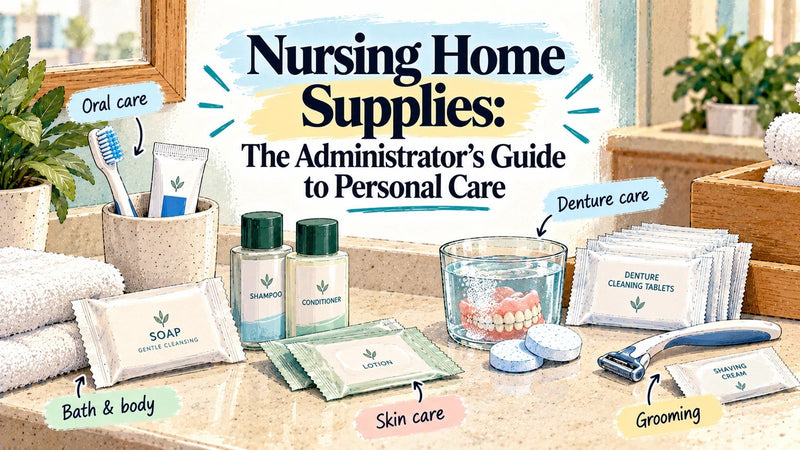
A retainer cleaner is a product designed to remove the biofilm, stains, tartar, and odor-causing bacteria that accumulate on removable dental appliances: retainers, dentures, night guards, clear aligners, and mouthguards.
The most practical form is a cleaning tablet. Drop one into a glass of warm water, add the appliance, and let it soak. The tablet dissolves into an effervescent solution that penetrates the microscopic surface of the appliance, breaking down bacterial colonies and loosening mineral deposits that a toothbrush can't reach.
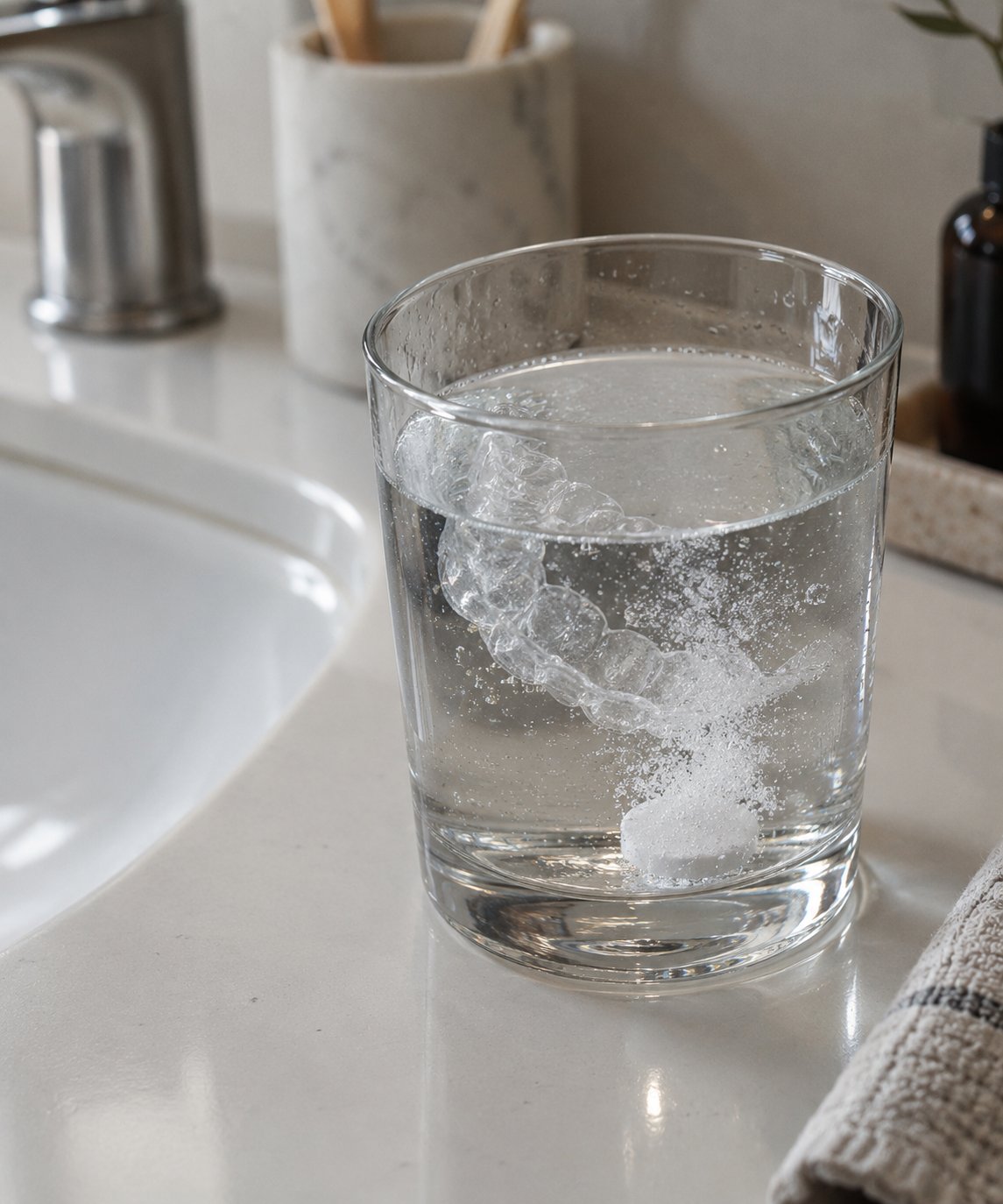
Done right, a 15-minute soak does more than an hour of scrubbing.
The Biofilm Problem (This Is the Part Most People Skip Over)
Here's the thing about retainers that doesn't get said plainly enough: they're warm, moist, protein-rich environments that bacteria love. Within hours of being worn, a biofilm layer starts forming on the surface. Within days, that biofilm matures into something a simple rinse won't remove.
Biofilm is the clinical term for what most people call "plaque on a retainer." It's a structured bacterial community that adheres to surfaces and resists basic cleaning. The same process that creates tartar on teeth creates tartar on retainers.
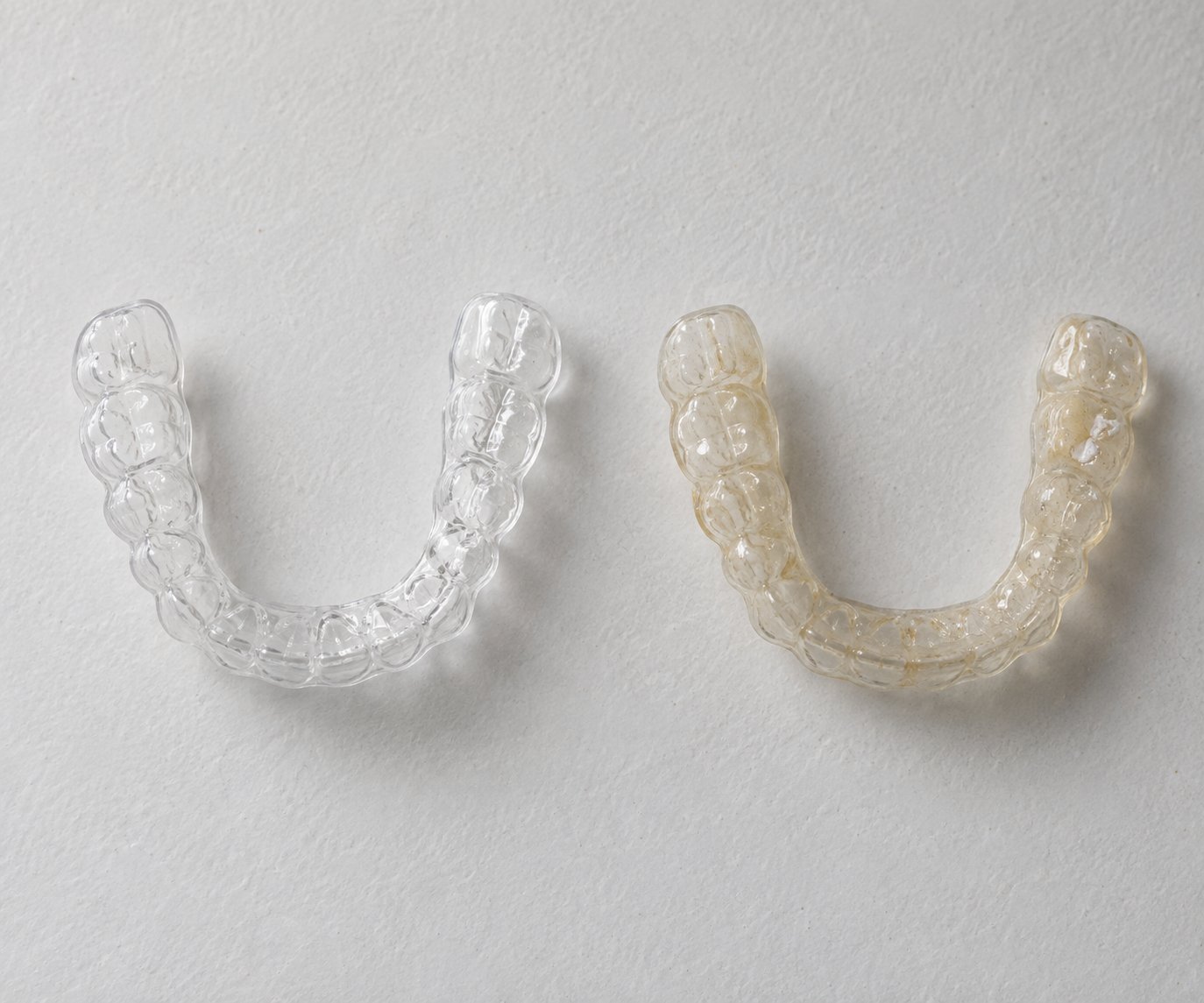
For care facilities, this has a specific operational implication: residents who wear their appliances daily but don't clean them with a purpose-made solution are accumulating biofilm continuously. A once-a-week brushing routine doesn't cut it.
Cleaning tablets with effervescent action break biofilm down chemically, which is why they outperform mechanical scrubbing for anything below the visible surface.
Tablets vs. Other Methods: What Actually Scales
Not every cleaning method works at scale. Here's an honest comparison for anyone managing appliance hygiene across multiple residents or guests.
| Method | Cost per use | Time | Effective on biofilm? | Works at volume? |
|---|---|---|---|---|
| Cleaning tablets | ~$0.10–$0.15 | 15 min soak | Yes | Yes |
| Ultrasonic cleaner | ~$0.02–$0.05 | 5–10 min | Very | Only with one machine per station |
| Baking soda + brush | ~$0.01 | 5 min | Partial | Inconsistent across staff |
| Mouthwash soak | ~$0.08–$0.12 | 30 min | Partial | No, and time-inefficient |
| Dish soap + brush | ~$0.02 | 5 min | Minimal | No |
Ultrasonic cleaners are genuinely effective, but they require equipment investment and a staff member to operate them at the right time. Tablets require only a glass and warm water.
For facilities looking for a standardized, staff-proof protocol, tablets win on simplicity and consistency. The cleaning step becomes: fill glass, drop tablet, soak appliance, rinse. Anyone can do it correctly.
How to Use Retainer Cleaner Tablets Correctly
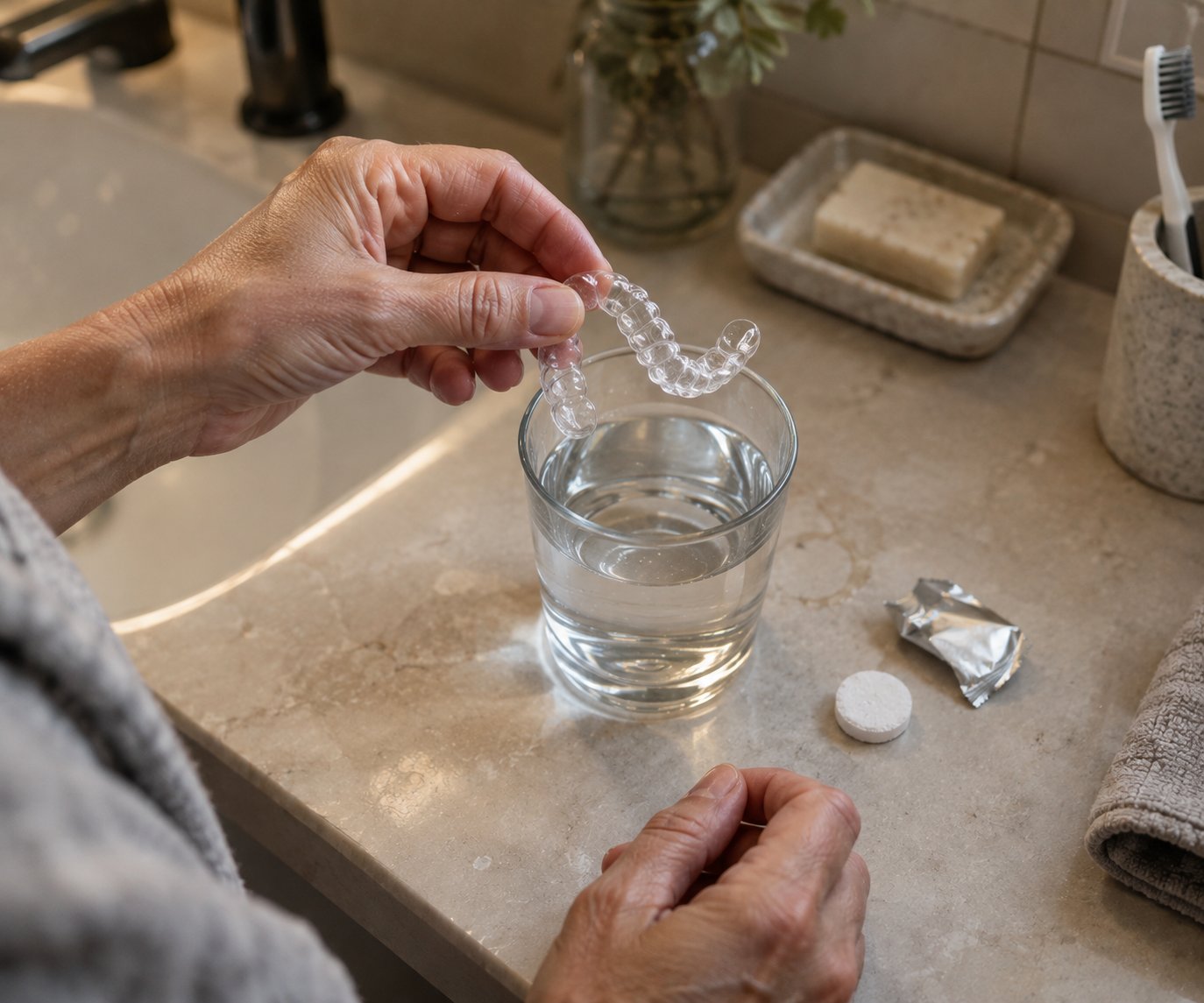
This part gets glossed over on most product pages, but the method matters for results.
- Use warm water, not hot. Hot water can warp thermoplastic retainers (the clear, Invisalign-style type). Warm water activates the tablet efficiently without risking the appliance.
- Fully submerge the appliance. Partial soaking means partial cleaning. Make sure the entire appliance is covered.
- Soak for at least 15 minutes. Some protocols recommend overnight soaking for heavy buildup. For daily maintenance, 15 minutes is sufficient.
- Rinse thoroughly before returning to the mouth. The cleaning solution isn't meant to be worn; a 30-second rinse under running water removes any residue.
- Don't skip days. Daily cleaning is what prevents biofilm from establishing itself. A weekly "deep clean" can't compensate for six days of accumulation.
What to Look for When Buying Retainer Cleaner in Bulk
Not all retainer cleaning tablets are equivalent. When you're buying for a facility rather than an individual, the evaluation criteria shift slightly.
Coverage: Does the tablet work on the full range of appliances your residents or guests use? Look for products that explicitly list retainers, dentures, night guards, and aligners. A product designed only for dentures may use formulations too harsh for the thinner plastic of a retainer.
Count and cost per tablet: Calculate cost per use, not cost per box. A 150-tablet pack at $19.97 comes to roughly $0.13 per tablet. At daily use per resident, one pack lasts five months. Scale that across 20 residents and you're looking at four packs per month total.
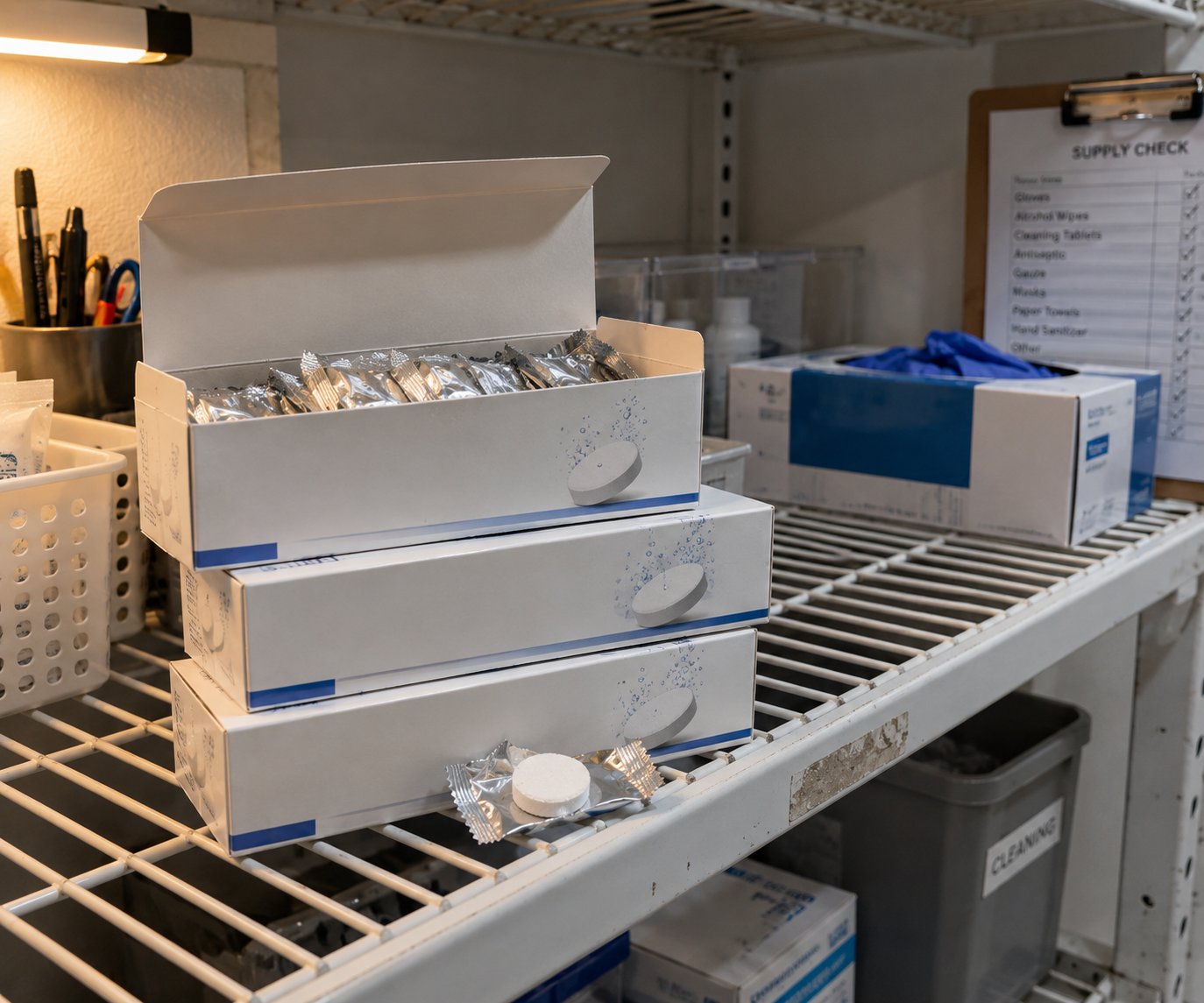
Individually wrapped vs. bulk loose: For shared supply closets and staff dispensing, individually wrapped tablets reduce contamination risk and make it easy to track one-per-day usage. This is a meaningful operational detail in care settings.
Flavor and resident comfort: Mint-flavored tablets are generally better received by residents than clinical or unflavored options, which can smell like bleach or produce off-putting residue.
No harsh chemicals that degrade appliances: Avoid tablets that rely primarily on harsh bleaching agents. Over time, strong oxidizing formulas can yellow clear retainers and break down the acrylic in Hawley-style retainers.
Why Trust This Article
At Avistar, we supply oral care and hygiene products to senior living facilities, care homes, and hospitality properties that need reliable bulk solutions rather than retail-scale packaging. Our perspective on retainer cleaner comes from that operational context: understanding what works when a single care director is managing dental hygiene protocols for dozens of residents, not just one.
We evaluated cleaning tablets based on effectiveness against biofilm (the actual clinical problem), cost per unit at bulk quantities, compatibility with the full range of removable dental appliances, and practical usability in facility settings with varying staff experience levels.
How Avistar's Retainer & Denture Cleaner Tablets Fit Here
Our Retainer & Denture Cleaner Tablets are a direct answer to the bulk-supply problem for care facilities.
Each box contains 150 mint-flavored, individually wrapped tablets. One tablet per day per appliance, which means a single pack lasts five months for one resident. The tablets work across the full range of removable appliances: plastic and wire retainers, dentures, night guards, and clear aligners.
They're designed to remove stains, tartar, plaque, and odor-causing bacteria in a 15-minute soak, with no scrubbing required. That's the protocol simplicity that matters when you're standardizing a hygiene routine across a care team.
For facilities managing dental hygiene for seniors, consistent retainer cleaning is one of the lower-cost, higher-impact interventions available. The tab-per-day system removes the guesswork from staff protocols.
Subscription options (30, 45, 60, or 90 days) are available with a 15% discount, which makes it straightforward to keep a facility-wide supply without manual reorders.
Frequently Asked Questions
What is the best retainer cleaner to use daily?
Effervescent cleaning tablets are the most practical option for daily use. They clean more thoroughly than brushing alone because they penetrate biofilm chemically rather than relying on mechanical scrubbing. For daily maintenance, a 15-minute soak in a tablet solution is sufficient to remove bacterial buildup and prevent tartar from forming.
Can retainer cleaner tablets be used on dentures and night guards too?
Yes, provided the product is formulated for multiple appliance types. Look for tablets explicitly listed for dentures, retainers, night guards, and clear aligners. Avistar's Retainer & Denture Cleaner Tablets are designed for the full range of removable dental appliances.
How often should a retainer be cleaned with tablets?
Daily cleaning is the standard recommendation. Biofilm begins forming within hours of appliance use, and a daily soak prevents it from accumulating into harder-to-remove tartar. Once-weekly cleaning is not sufficient for most wearers, particularly for older adults with dry mouth or higher bacterial loads.
What happens if you don't clean a retainer regularly?
Uncleaned retainers accumulate biofilm, tartar, and bacteria. Over time, this leads to persistent bad odor, visible white deposits, and potential oral health complications including gum irritation and increased bacterial exposure. For immunocompromised individuals, the risks are more significant than for healthy adults.
Are retainer cleaning tablets safe for clear plastic retainers?
Most purpose-made retainer cleaning tablets are safe for both clear thermoplastic retainers and wire Hawley retainers. The important variable is water temperature: always use warm, not hot, water. Hot water can warp thermoplastic retainers permanently. Avoid tablets formulated primarily for dentures, as they may contain stronger oxidizing agents not suited to thinner clear plastic.
How much does retainer cleaner cost per use for a facility?
At standard bulk pricing, a quality retainer cleaning tablet costs roughly $0.10–$0.15 per use. For a 20-resident facility with daily tablet use, that's $2.00–$3.00 per day in materials, or $60–$90 per month for the full facility. That's one of the lowest-cost daily hygiene interventions available.
What's the difference between a retainer cleaner and a denture cleaner?
Functionally, many products work for both; the distinction is largely about formulation strength and target appliance thickness. Denture cleaners may use stronger oxidizing agents suited to the denser acrylic of dentures. For retainers, especially clear thermoplastic ones, a dual-purpose product formulated for both is the safer choice.