Here's the thing about vacation rental supplies: guests don't write reviews about your garlic press. They remember the bathroom. Knowing that one fact changes how you should think about stocking your property, and probably how you're spending your supply budget right now.
Vacation rental supplies fall into two tiers. Most articles treat them identically. We don't.
The Two-Tier Framework (Read This Before the Checklist)
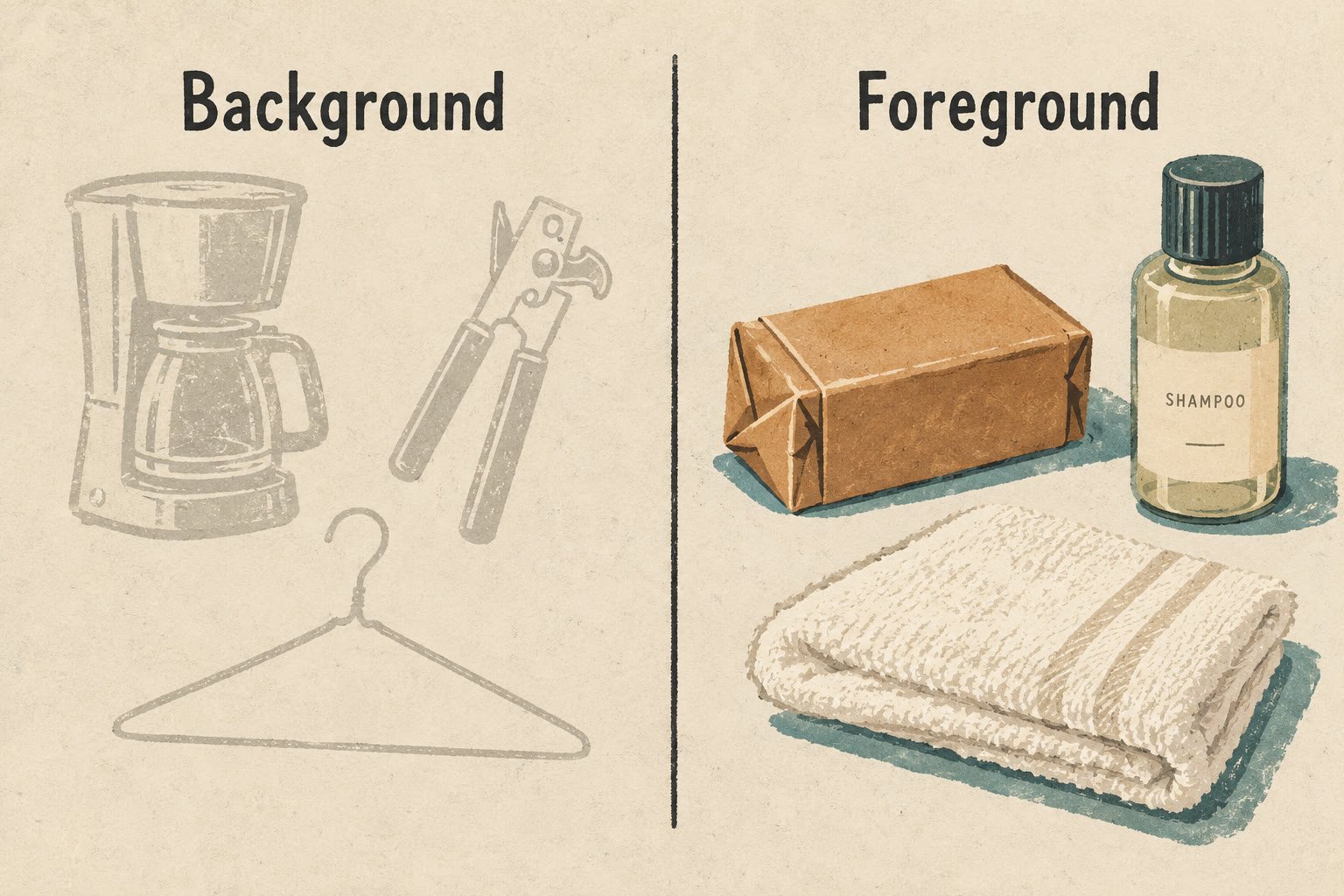
Every supply in your rental is either background or foreground.
Background supplies are things guests expect to exist. A can opener. Hangers in the closet. A coffee maker that works. Guests won't mention these in a review unless they're missing. They're invisible when done right, memorable only when done wrong.
Foreground supplies are the things guests actually register. The soap that smelled good. The toothbrush waiting on the vanity. The shampoo that felt like a real hotel. These are the details that turn a functional stay into a five-star review.
The problem with most "vacation rental supply checklists" is that they list every item at the same level of importance. You end up spending the same mental energy on stocking a cheese grater as you do on guest amenities, when the ROI on those two things is wildly different.
This guide organizes supplies the way a host with 30 units thinks about them, not the way a first-timer stocking from a single Amazon cart does.
The Background Supplies: Just Get These Right
For the background tier, you're aiming for reliability and nothing more. You don't need to impress anyone with your kitchen tongs. You need them to be there, work, and not cost you a 3-star review.
Here's a practical baseline by room:
| Room | Non-Negotiable Background Supplies |
|---|---|
| Kitchen | Coffee maker, mugs (2x occupancy), wine opener, basic cookware set, dish soap, sponge, paper towels, garbage bags |
| Bedroom | Extra blanket, blackout curtains, hangers (10+ per closet), bedside USB outlet, luggage rack |
| Living room | Remote controls (labeled with streaming instructions), throws, extension cord |
| Utility | Iron + board, hair dryer, vacuum, laundry detergent pods |
| Safety | First aid kit, fire extinguisher, smoke + CO detector |
One rule that holds across the board: buy one tier above what you'd personally use. Not luxury. One tier above. Guests compare your rental to hotels, not their own apartments.
For a deeper room-by-room breakdown specific to Airbnb, we've covered this in detail elsewhere, including the math on how many of everything you actually need per unit.
The Foreground Supplies: Where Guests Are Paying Attention
This is where the review is won or lost. The bathroom, specifically.
Think about the last hotel stay you gave a strong review. Odds are the bathroom made an impression. That dynamic transfers completely to short-term rentals. Guests notice bathroom amenities because they interact with them up close, personally, multiple times per day. Cheap soap isn't invisible the way a mediocre can opener is. Cheap soap is felt.
Toiletries and Guest Amenities
The standard for what guests expect has risen significantly. Airbnb's own data shows guests rank cleanliness and amenities as the top two factors in reviews. Amenities, in this context, means the physical products they use, not just whether you have a pool.
At minimum, every vacation rental bathroom should have:
- Soap (bar or pump) clearly designated for guests, not a half-used Dial from the previous turnover
- Shampoo and conditioner (together, not just shampoo)
- Body wash as an alternative to bar soap
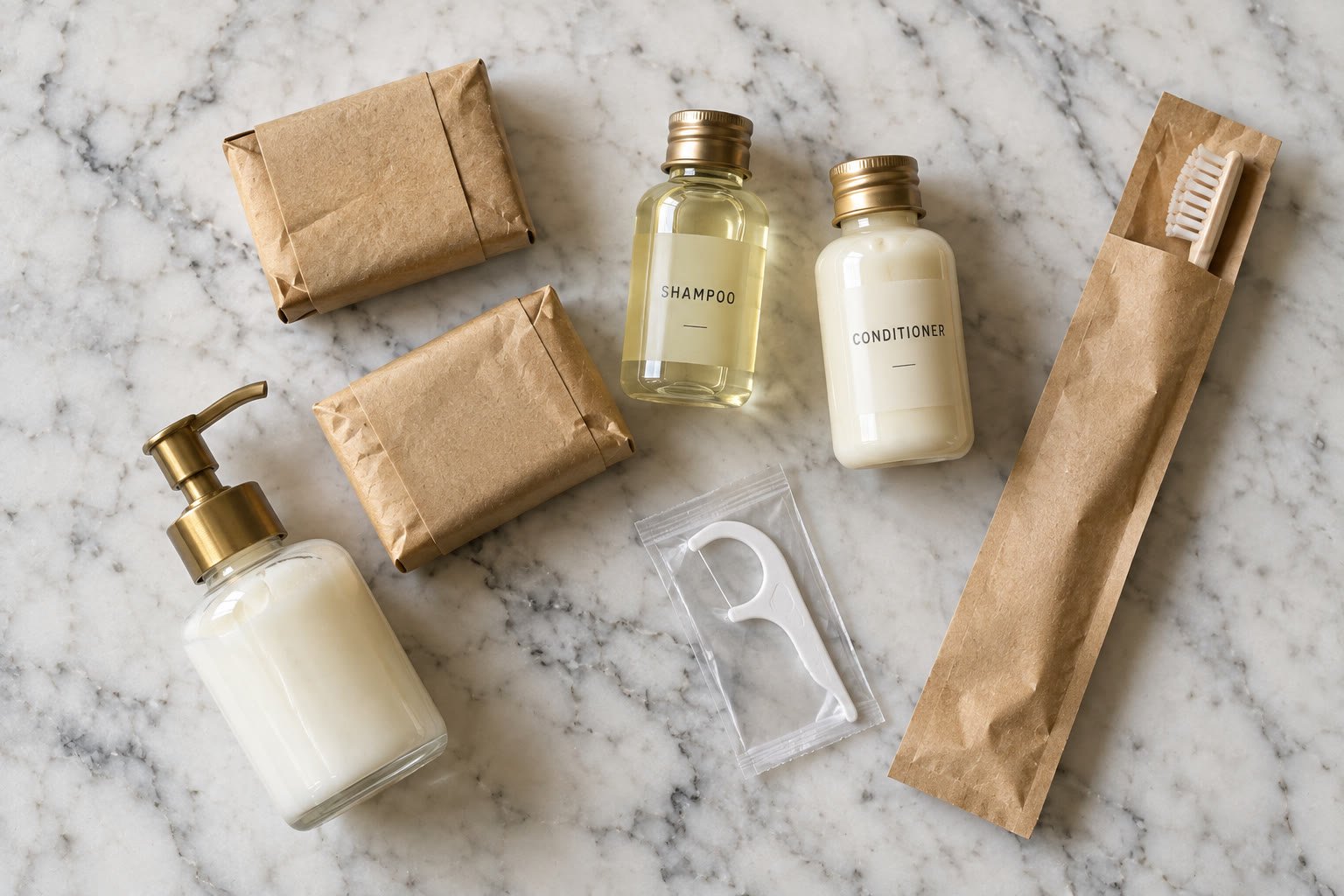
- Toothbrush, individually wrapped, for guests who forgot theirs
- Travel-sized dental accessories (floss picks, mouthwash) if you want to stand out
- Lotion at the vanity
The question most hosts hit quickly is: individually wrapped amenities or in-room dispensers?
Both formats have a legitimate place depending on how your property operates:
Individually wrapped amenities make sense if you run high turnover, short stays (1-3 nights), or properties where hygiene optics matter to your guest base. Guests see a sealed, fresh product at each turnover. There's no ambiguity about whether the bottle was refilled. For multi-unit operators, they also simplify bulk restocking because you're reordering predictable units rather than managing fill levels.
Dispensers make more operational sense for extended-stay properties, eco-conscious brand positioning, or hosts who want to minimize per-turnover restocking time. The tradeoff is that some guests hesitate at communal dispensers, especially post-pandemic, so the format choice signals something about your property type.
At Avistar, we carry individually wrapped amenities and are bringing dispenser options to the catalog; the format decision usually comes down to your average stay length and how your guests are already rating the property. Our bulk shampoo and conditioner guide has more on the format decision, with real per-unit cost comparisons.
The Welcome-Moment Extras
A small number of supplies do disproportionate work on first impressions. These aren't expensive, but they're the things guests photograph:
- A small welcome card or note
- A basket or tray organizing bathroom amenities so they look intentional
- A scented candle (unlit, for guests to choose) in the living area
- Coffee and tea selection that goes beyond a single-serving packet
None of these are expensive. All of them are noticed.

Sourcing Smarter: Why Most Hosts Are Paying Too Much
The typical first-year host shops for vacation rental supplies the same way they'd shop for their own apartment: one-off purchases from Target or Amazon, restocking reactively when something runs out.
That approach costs you roughly 2-3x what systematic bulk buying costs per unit of product. It also means you're always slightly understocked, doing emergency runs before check-ins.
Here's how multi-unit operators actually approach this:
Go Wholesale for High-Velocity Items
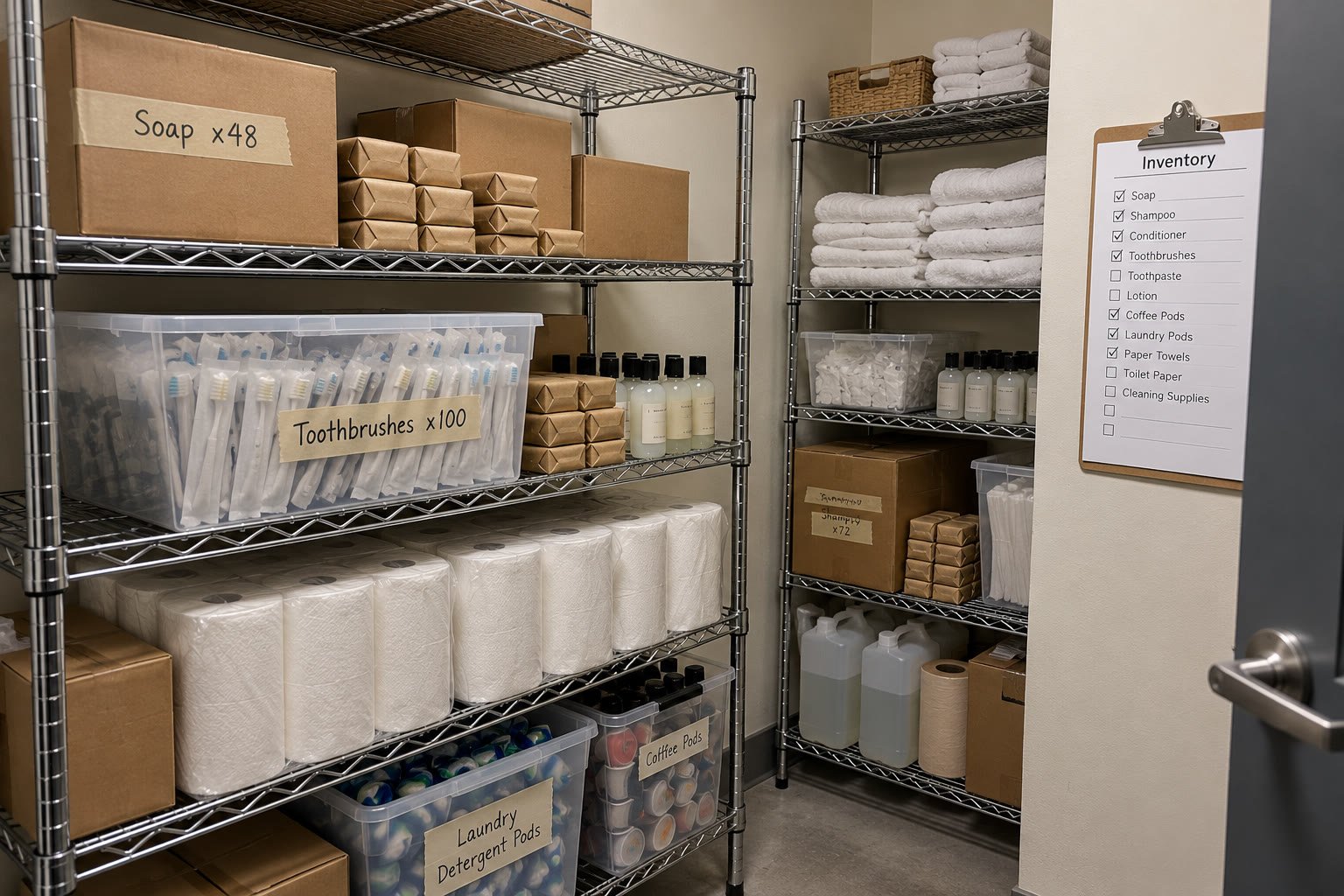
Any item that gets used or replaced on every turnover should be sourced wholesale. This includes:
- Guest toiletries (soap, shampoo, conditioner, toothbrushes, lotion)
- Paper products (toilet paper, paper towels, tissues)
- Coffee pods and tea bags
- Garbage bags and cleaning supplies
The economics flip quickly. A single hotel-style wrapped soap bought in small quantities from a retail or grocery store runs $0.80-$1.20 per unit. The same quality product sourced wholesale by the case drops to $0.15-$0.40 per unit. At 100 turnovers a year across 3 properties, that's a meaningful number.
The bulk buying guide for hosts walks through the math in detail, including when wholesale MOQs (minimum order quantities) actually make sense vs. when you're buying more than you can store or rotate.
Set Par Levels, Not a Shopping List
A par level is a hotel operations concept: the minimum quantity of each item you need on hand to cover a set number of turnovers. Once you stock below par, you order back to par.
For a single-unit operator running 3-4 turnovers per week, par for toiletries might be a 30-day supply. For a 10-unit operator, you're thinking in terms of cases.
Running a simple par system beats the "I'll order when I run out" approach because it means you're always ordering in quantity (cheaper), never scrambling before a check-in, and never over-buying product that expires on a shelf.
Don't Cheap Out on the Foreground Supplies
We've watched hosts run sophisticated wholesale programs for toilet paper, then buy the lowest-tier soap to save a few cents per unit. It's the wrong place to cut costs.
Guests don't experience your toilet paper sourcing decision. They experience the soap. Individually wrapped guest amenities that look and feel like a quality hotel product cost more per unit than commodity alternatives, but the review impact-per-dollar is higher than almost any other supply decision you'll make.
If you want to see what guests actually notice in the bathroom, this breakdown of the five-star bathroom covers it from the guest-perception angle specifically.
The Per-Turnover Cost Model (Rough Numbers Worth Knowing)
Hosts who run their supply budgets well think in terms of per-turnover cost, not total spend. Here's a rough framework:
| Supply Category | Budget Approach (per turnover) | Quality-Tier Approach (per turnover) |
|---|---|---|
| Toiletries + amenities | $1.00-$2.00 | $3.00-$5.00 |
| Paper products | $1.50-$2.50 | $2.00-$3.00 |
| Cleaning supplies | $0.50-$1.00 | $0.75-$1.25 |
| Coffee/tea/welcome items | $0.50-$1.50 | $1.50-$3.00 |
| Total per turnover | $3.50-$7.00 | $7.25-$12.25 |
At 150 turnovers a year, the difference between budget and quality-tier is roughly $600-$800 annually per unit. Most hosts who've tested both approaches find the ADR (average daily rate) improvement from better reviews more than offsets that difference. But that's a judgment call you make with your own numbers.
How Avistar Fits Into This
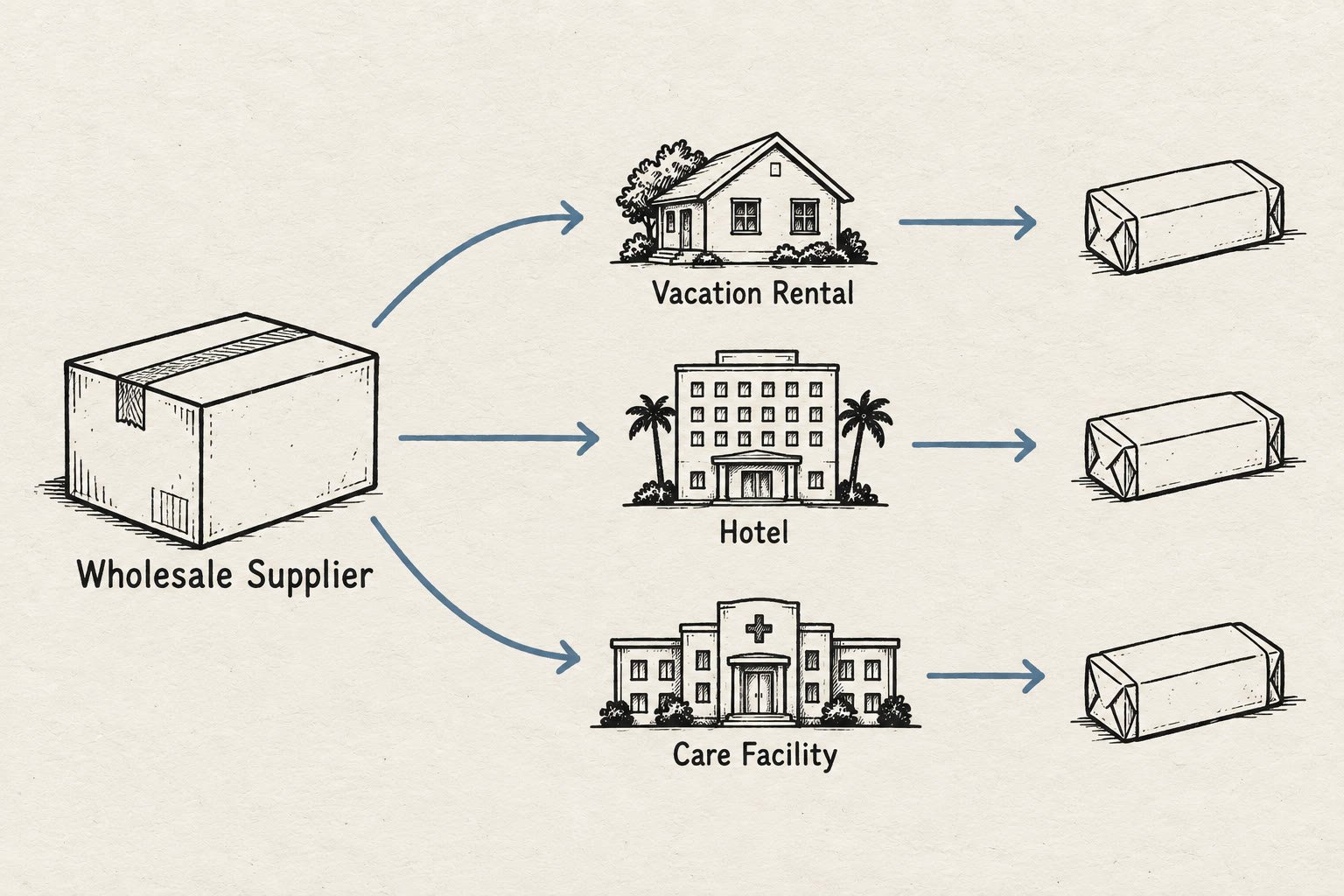
Avistar supplies individually wrapped guest amenities wholesale to hotels, Airbnb hosts, vacation rental operators, property managers, and care facilities across the US. Our catalog covers the foreground tier specifically: soaps, oral care products, toiletries, and personal care items in the formats that actually work for short-term rental operations.
We're also bringing dispenser options to our catalog, because we don't think one format wins for every property type. The right format depends on your operation.
If you're moving from retail restocking to a wholesale system, or if you're scaling from one unit to several and need to set up a proper supply program, our Travel & On-the-Go collection is a useful starting point. If you're setting up a par system for the first time or scaling to multiple units, reach out and our team is happy to help you think through ordering cadences that fit your turnover volume.
Why Trust This Article
We supply hotels, short-term rental hosts, and property managers with guest amenities at scale. That means we see firsthand what operators reorder consistently (revealed preference is more honest than survey responses), what formats work by property type, and where first-year hosts overspend vs. underspend relative to guest satisfaction outcomes.
The cost figures in this article are real wholesale vs. retail pricing, not illustrative estimates inflated to make a point. Where we'd normally drop in a brand stat (years in business, properties served), we haven't, because we'd rather the advice stand on its own than hide behind numbers we haven't verified for this piece.
Frequently Asked Questions
What supplies are most important for a vacation rental?
The highest-impact supplies are bathroom amenities: soap, shampoo, conditioner, body wash, and a guest toothbrush. These are the products guests interact with directly and personally, and they correlate more strongly with review language about "cleanliness" and "amenities" than almost any other supply category. Background supplies like kitchen tools and closet hangers matter, but they're hygiene factors. Bathroom amenities are the experience.
How much should I budget for vacation rental supplies per turnover?
A reasonable quality-tier budget for consumable supplies (toiletries, paper products, coffee, cleaning items) runs $7-$12 per turnover. Budget-tier approaches can get this to $3-$7, but the savings typically show up in reviews before they show up in your P&L. For durable supplies (cookware, bedding, towels), budget separately and amortize replacement costs over 2-4 years depending on the item.
Should I use individually wrapped toiletries or dispensers in my vacation rental?
Both formats work; the right choice depends on your property type. Individually wrapped amenities are better for high-turnover short stays (1-3 nights), properties where hygiene optics matter, and multi-unit operators who want predictable restocking. Dispensers work better for extended-stay properties, eco-focused rentals, or operators who want to minimize per-turnover setup time. Most short-term rental operators skew toward individually wrapped because guests can visually confirm each product is fresh.
Where do vacation rental hosts buy supplies in bulk?
The main sourcing channels are wholesale hospitality suppliers (purpose-built for hotel and rental operators, with the right formats and quantities), wholesale club stores like Costco or Sam's Club (decent for paper products and some kitchen items, but limited on guest amenities), restaurant and hotel supply distributors, and direct-to-operator brands like Avistar for toiletries and guest amenities. Avoid sourcing high-velocity consumables from retail: the per-unit cost is 2-3x higher and you end up managing a constant low-level restocking problem.
How many of each supply should I stock for a vacation rental?
Think in par levels rather than item counts. For toiletries in a unit that turns over twice a week, stock a 3-4 week supply so you're always ordering in bulk and never scrambling. For kitchen consumables and paper products, a case quantity (the smallest bulk unit your supplier sells) is usually the right starting point. For durable items like cookware, stock 1.5x what you need so you can swap something out mid-stay if required.
Do vacation rental guests expect hotel-quality amenities?
Yes, increasingly. Guest expectations for short-term rentals have risen significantly as the market has matured. Guests compare their Airbnb or VRBO experience to mid-scale hotels, not to staying at a friend's house. That doesn't mean you need luxury-tier products, but it does mean individually wrapped, labeled amenities that feel intentional rather than leftover products or bulk-pack retail items placed in a bathroom without any staging.