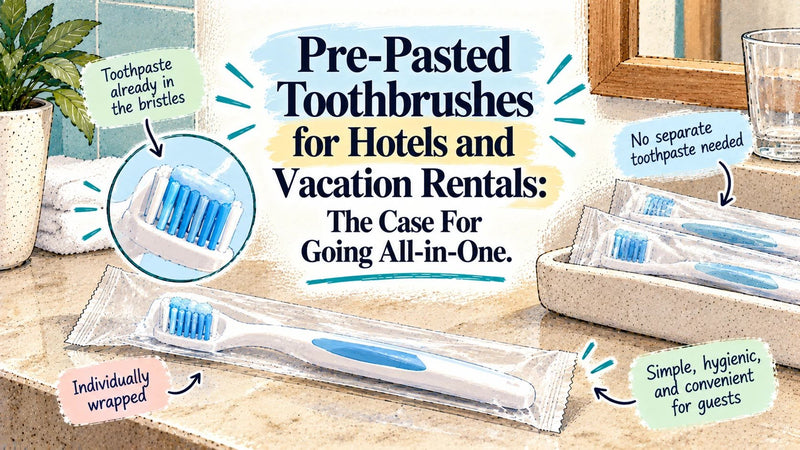
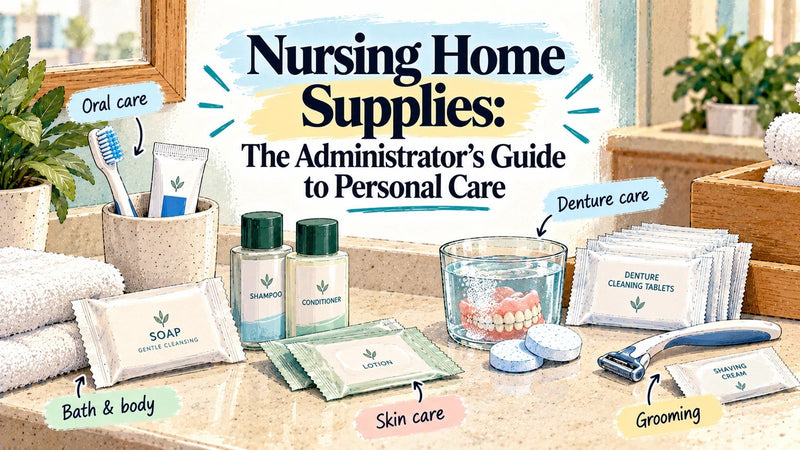
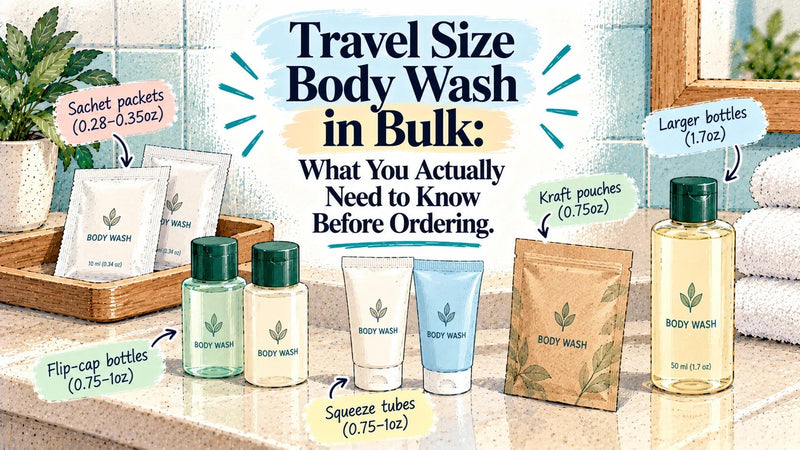
The short answer is that every Airbnb guest expects to find soap, shampoo, conditioner, and body wash in the bathroom. Those four are non-negotiable. Everything beyond that is a positioning decision: are you a property that covers the basics, or one that makes guests feel like they're in a proper hotel? That question, not a generic checklist, is what should drive your toiletries buying decisions.
Why Toiletries Specifically Deserve More Thought Than You're Giving Them
Here's a thing most supply guides don't say directly: toiletries are the highest-frequency consumable in any short-term rental. You buy towels once. You buy a coffee maker once. But soap and shampoo? Those go out the door with every checkout, every time, without exception.
That makes toiletries a category where small per-unit costs compound into serious annual spend. It also makes them one of the highest-leverage places to think clearly about quality, format, and supplier reliability. Get it right and guests notice, even if they can't articulate exactly why the bathroom felt put-together. Get it wrong and you'll find it in your reviews, usually phrased as something like "the basics were covered but it felt a little bare."
We've been supplying hotels, Airbnb hosts, and care facilities with individually wrapped guest amenities long enough to have seen both sides of this decision. This guide reflects what we've learned.
The Decision Framework Before You Buy Anything
Before getting into specific products, it helps to answer three questions that will shape everything else:
| Question | Why It Matters |
|---|---|
| How many guests per month? | Determines reorder frequency and whether bulk pricing moves the needle |
| What's your price point? | A $90/night property and a $300/night property have different amenity expectations |
| Do you manage remotely? | Remote hosts need formats that are faster to restock and harder to mess up |
A host doing 6–8 bookings a month with 2–4 guests per stay is in a completely different operational situation than someone managing a 10-unit portfolio. The first person can probably get away with buying from a well-stocked retailer on a monthly run. The second needs a wholesale supplier, a par-level system, and formats that work with a cleaning crew operating on a tight turnaround.
Figure out which of those describes you before you read another word of any supply guide, including this one.
What to Stock: The Tiered List
The Essentials (Non-Negotiable)
These are the items that, if missing, will show up in a guest review as a complaint:
- Hand soap (individual bar or pump dispenser by the sink)
- Body wash or shower soap
- Shampoo
- Conditioner
- Toilet paper (minimum two rolls per bathroom, one on the holder plus a spare)
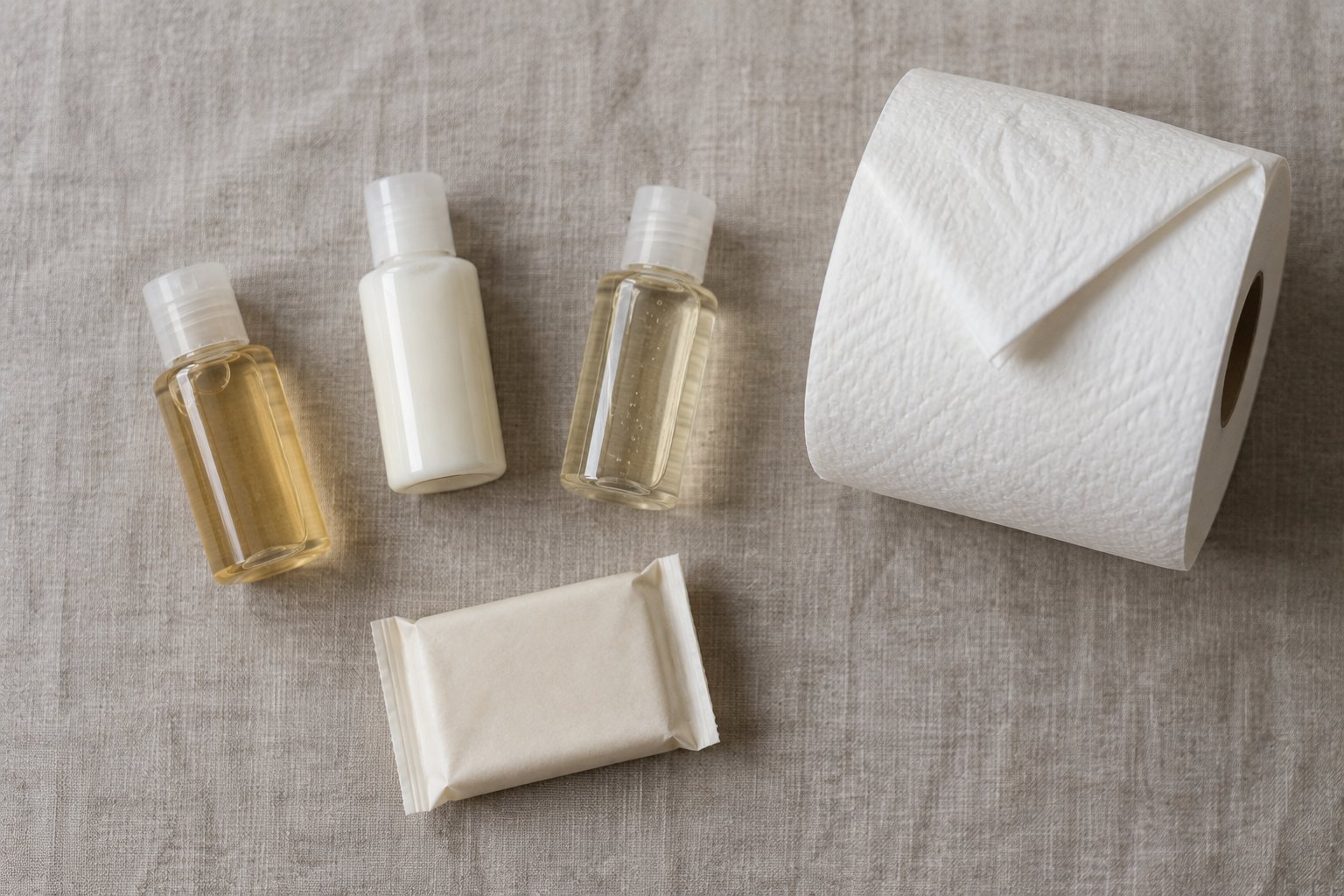
This is the floor. Every listing, regardless of price point or location, needs these five covered before anything else matters.
The Differentiators (Recommended for Most Hosts)
These items appear frequently in five-star reviews and rarely get mentioned in negative ones, which tells you something about the asymmetric upside of including them:
- Travel-size or individually wrapped toothbrushes and toothpaste
- Disposable razors
- Individually wrapped cotton swabs or cotton rounds
- Lotion (hand lotion by the sink, body lotion in the shower area)
- Dental floss picks
The oral care items deserve particular attention. Guests forget toothbrushes more often than hosts expect, and the guest who arrives at 11pm having left theirs at home will remember that you had one waiting. That's a review moment.
The Upgrades (For Higher Price Points or Competitive Markets)
- Individually wrapped shower caps
- Vanity kits (cotton pads, emery board, tissues)
- Feminine hygiene items
- High-quality branded soap bars with a recognizable scent profile
- A small, clearly labeled "forgot something?" basket
The basket concept works especially well for remote-hosted properties. You stock it with individually wrapped items, guests help themselves if they need something, and your cleaning crew tops it up between stays. It requires no real-time coordination from you.
What Guests Actually Notice (and What Hosts Overestimate)
There's a mismatch between what hosts spend mental energy on and what guests actually register. It's worth knowing the difference before you overbuy in the wrong direction.
What guests notice almost immediately:
Whether the bathroom feels complete. Not brand names, not specific scents, not whether the soap is artisan or generic. What registers first is whether everything a person reasonably needs for a shower and basic grooming is present and clearly placed. A bathroom that has six niche products but no conditioner is worse than one that stocks simple, recognizable options across all the bases.
Seal integrity also lands subconsciously. A wrapped bar of soap, a sealed sachet, a bottle with its tamper-evident cap intact: these signal that the item is there for this guest, not a partial leftover from the last stay. It's a trust cue that operates below the level of explicit thought, but it shapes the overall impression.
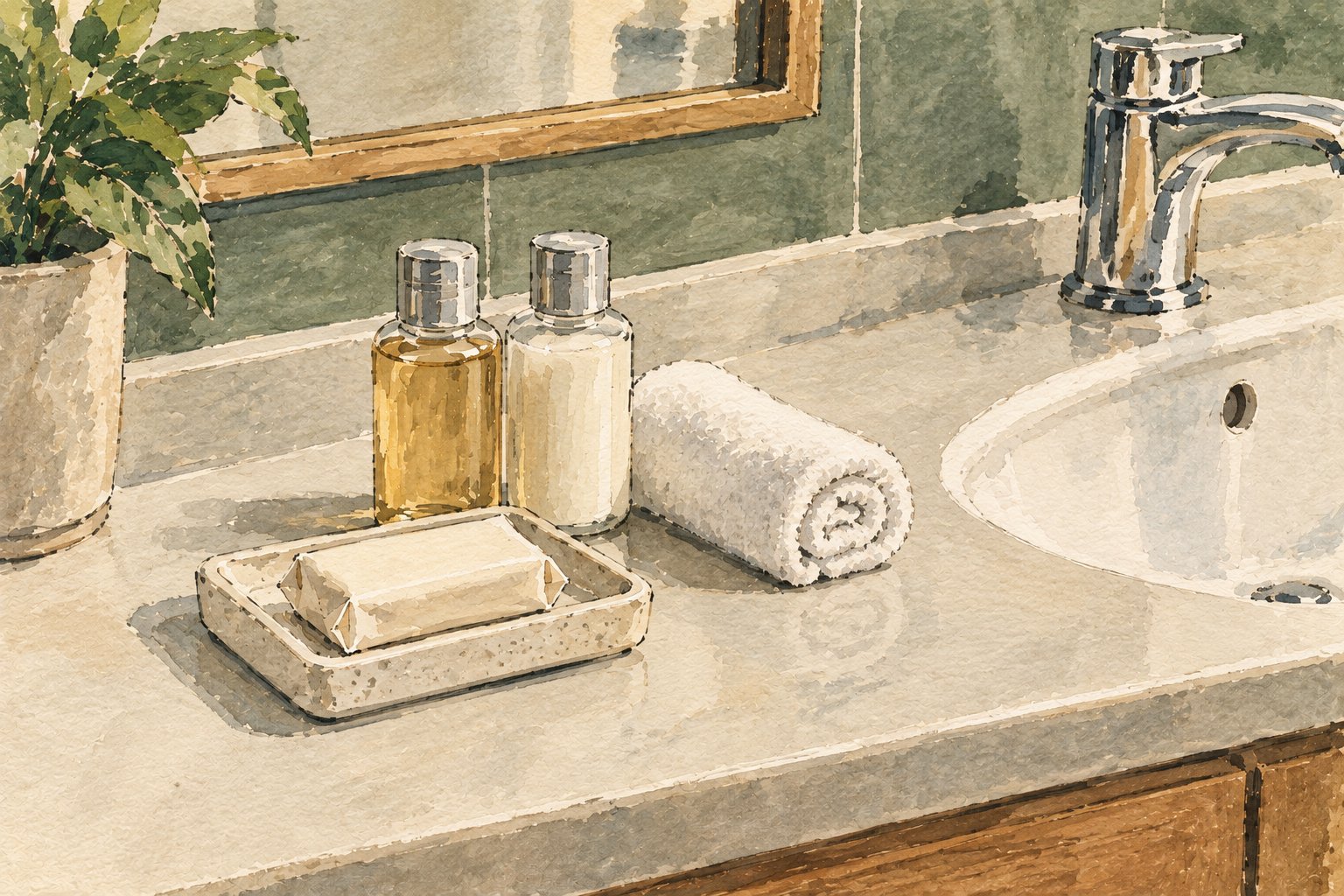
Arrangement is the third signal. Products grouped near the shower, labels facing forward, no random clutter alongside them: this reads as intention rather than afterthought. It doesn't require expensive fixtures. It requires whoever cleans the property to place things consistently.
What guests mostly don't notice:
The brand. Unless you've gone noticeably upmarket (hotel-branded amenities, recognizable luxury lines) or noticeably downmarket (no-label products that feel institutional), brand identity doesn't drive reviews. Guests remember that the bathroom felt good, not which company made the shampoo.
Exact scent profiles. "Smells clean" is what shows up in reviews. Lavender versus citrus versus eucalyptus is a fine consideration, but don't let it become the primary buying criterion when product completeness and presentation matter more.
The article length on your listing. Many hosts overinvest in listing copywriting about their "curated amenity collection" while underinvesting in the actual setup. Guests verify claims during the stay, not before it.
Where this leaves you:
The practical implication is that your toiletries spend is better allocated toward completeness and consistency than toward premium brand selection. Stock everything a guest might reasonably need, keep it sealed and well-presented, and restock it reliably between stays. That combination outperforms a smaller set of expensive products in terms of review impact.
What Toiletries Actually Cost Per Guest: The Math Most Guides Skip
Let's make this concrete. Here's a reasonable per-guest toiletries cost breakdown for a mid-tier Airbnb running individually wrapped amenities:
| Item | Cost per Guest |
|---|---|
| Individually wrapped soap bar | $0.30 |
| Shampoo sachet | $0.30 |
| Conditioner sachet | $0.30 |
| Body wash sachet | $0.30 |
| Body lotion sachet | $0.30 |
| Pre-pasted disposable toothbrush | $0.40–$0.75 |
| Total (bath + oral care) | $1.90–$2.25 |
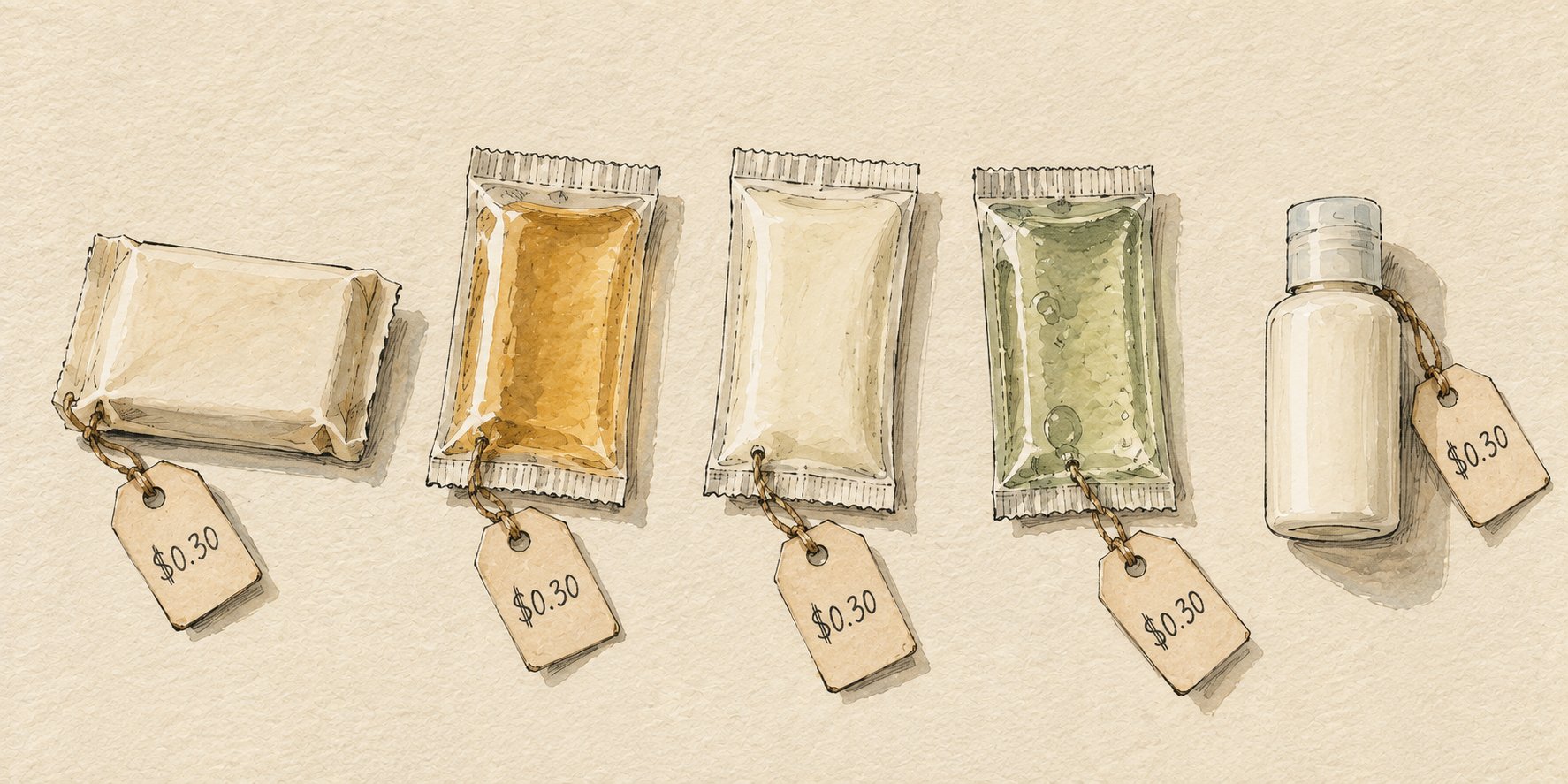
All five bath items come from Avistar's Hotel Toiletries Packets at $29.99 for 100 units (20 complete guest sets). Per-unit cost drops further at the 200 and 300-count tiers. Disposable razors aren't part of Avistar's range; most hosts source these from Amazon or Costco at roughly $0.30–$0.50 per unit, adding around $0.30–$0.50 to the per-guest total if you choose to include them.
For a property hosting 60 guests a month, that's roughly $117–$234 in toiletry spend. For a property hosting 200 guests a month across multiple units, you're looking at $390–$780 monthly, before any bulk pricing reduces those per-unit costs.
This is why knowing your guest volume actually matters before you choose a supplier. At 60 guests a month, buying from a retailer in reasonable quantities is fine. At 200+ guests a month, moving to a wholesale supplier and negotiating on minimum order quantities (MOQs) starts to make a material difference to your margins.
For context on how bulk pricing changes the equation, our guide to bulk buying for hosts breaks down the math more granularly across different purchase volume tiers.
Where to Buy Airbnb Toiletries Supplies
The supplier question depends heavily on your volume and how much operational overhead you're willing to carry.
For hosts doing fewer than 10 bookings a month:
Amazon, Costco, and Sam's Club all work fine at this scale. The unit economics aren't ideal compared to wholesale, but the convenience and lack of minimum order requirements make them practical. Look for multi-packs that give you 50–100 units of each item so you're not reordering every few weeks.
For hosts doing 10–30+ bookings a month, or managing multiple units:
This is where a dedicated hospitality supplier starts making more sense. Buying individually wrapped amenities from a supplier that stocks hotel-grade products in case quantities typically cuts per-unit cost by 20–40% compared to retail.
The things to ask any supplier before you commit:
- What are the minimum order quantities?
- What's the lead time for replenishment once stock runs low?
- Do you offer samples before a bulk order?
- Are products individually wrapped or do they arrive in bulk dispensing formats?
- What's the shelf life on the products you sell?
That last question matters more than most guides acknowledge. Toiletries have expiry dates. If you order a six-month supply to hit a pricing threshold and the product expires before you use it, the savings evaporate.
For a deeper look at what to actually evaluate when a supplier's bathroom amenities page makes specific claims, our wholesale soap supplies buying guide covers the evaluation criteria in detail.
Where Avistar fits: We built this product line for exactly the use case described above. Our Hotel Toiletries Packets start at $29.99 and cover the complete guest bathroom in individually wrapped, single-use formats: soap, shampoo, conditioner, body wash, and body lotion in one order. The Nature's Essence and Tropical Oasis amenity sets step up for hosts positioning at the premium tier.
Per-unit cost drops as pack size goes up, and orders typically ship the next business day with free shipping on every order. If you manage multiple units, the auto-ship option means you're not manually reordering every time stock runs low. One order a month, every property stocked the same way.
Tailoring Your Setup to Your Property Type
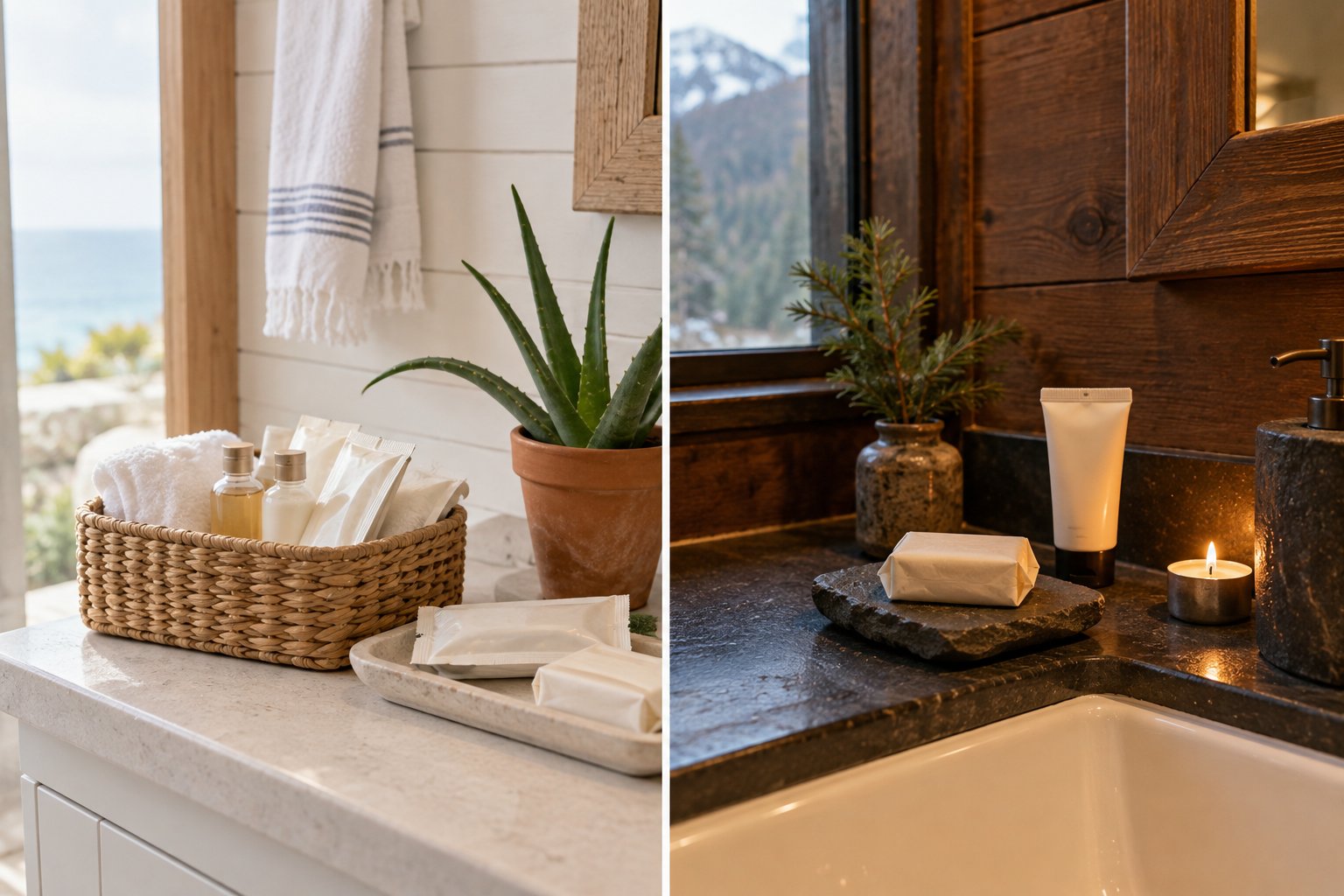
A toiletries checklist that works for a city apartment doesn't translate cleanly to a beachfront house or a mountain cabin. The basics stay the same, but the context changes what "complete" actually means to your specific guest.
| Property Type | Standard Spec | Consider Adding |
|---|---|---|
| Urban apartment (1–3 nights) | Essentials + oral care + razor | Nothing extra; convenience and speed matter more than luxury |
| Beach/lake house | Essentials + oral care + lotion | SPF lip balm, after-sun lotion, extra body wash (guests shower more) |
| Mountain/ski cabin | Essentials + oral care + heavy lotion | Lip balm, extra moisturizer for dry cold air, tissues |
| Long-stay (7+ nights) | Full essentials tier | Full-size or multi-use bottles rather than single-use for each category |
| Premium/luxury listing | Full essentials + all differentiators | Branded amenity sets, vanity kits, high-end soap with scent profile |
| Multi-bathroom property | Full essentials in every bathroom | Identical spec across all bathrooms; inconsistency reads as an oversight |
The long-stay column is worth pausing on. A guest staying seven or ten nights using individually wrapped sachets every day will notice by day four that the bathroom is starting to feel like a hotel corridor rather than a home. For extended bookings, consider staging a mix: single-use items for the first night (toothbrush, razor, sealed soap), then a fuller size for the remaining stay. It's a small adjustment that reads as thoughtful.
The Restocking System That Keeps You from Running Out
 Running out of toiletries mid-stay is a review-killer. Running out and not knowing about it until a guest messages you is worse. The fix isn't buying more: it's setting up a system that makes running out structurally unlikely.
For single-property hosts:
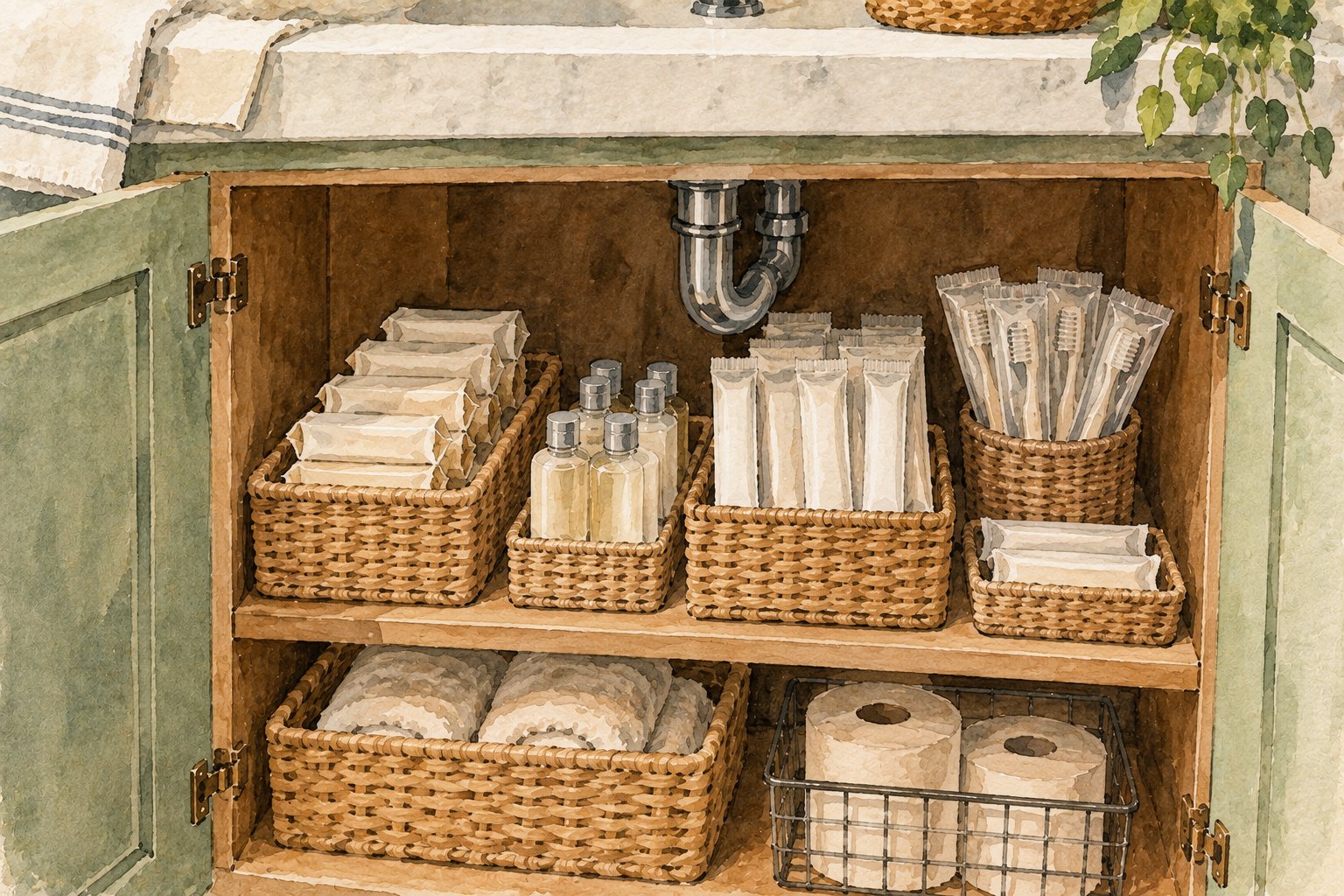
Keep a bathroom-adjacent storage spot (under the sink, a closet shelf) stocked with one full stay's worth of backup items at all times. Your rule is simple: when you dip into the backup, that triggers the next order. You're always restocking before you actually need it, not after.
For multi-unit hosts or those working with a cleaning crew:
The par-level system is the only thing that scales. For each unit, establish the minimum quantity of each item that should be present after a turnover. Your cleaning crew's job is to leave the bathroom at par, every time, pulling from a central supply rather than each unit's own stock.
The central supply approach also makes ordering predictable. When the central stock of any item drops below two weeks of projected usage, it triggers a reorder. You're not guessing; you're counting.
Individually wrapped items make this significantly easier to manage than liquids. You can physically count toothbrushes. You cannot glance at a dispenser and know how many guest-uses are left.
Auto-ship as a system:
For high-frequency items (soap, shampoo, oral care), auto-ship through a reliable supplier removes the reorder decision entirely. You set the frequency based on your average monthly guest count, and the supply arrives without you needing to think about it. The only discipline it requires is adjusting the cadence when your booking volume changes significantly. Our Hotel Toiletries Packets include an auto-ship option for exactly this reason.
The Bathroom Setup That Gets Five-Star Mentions
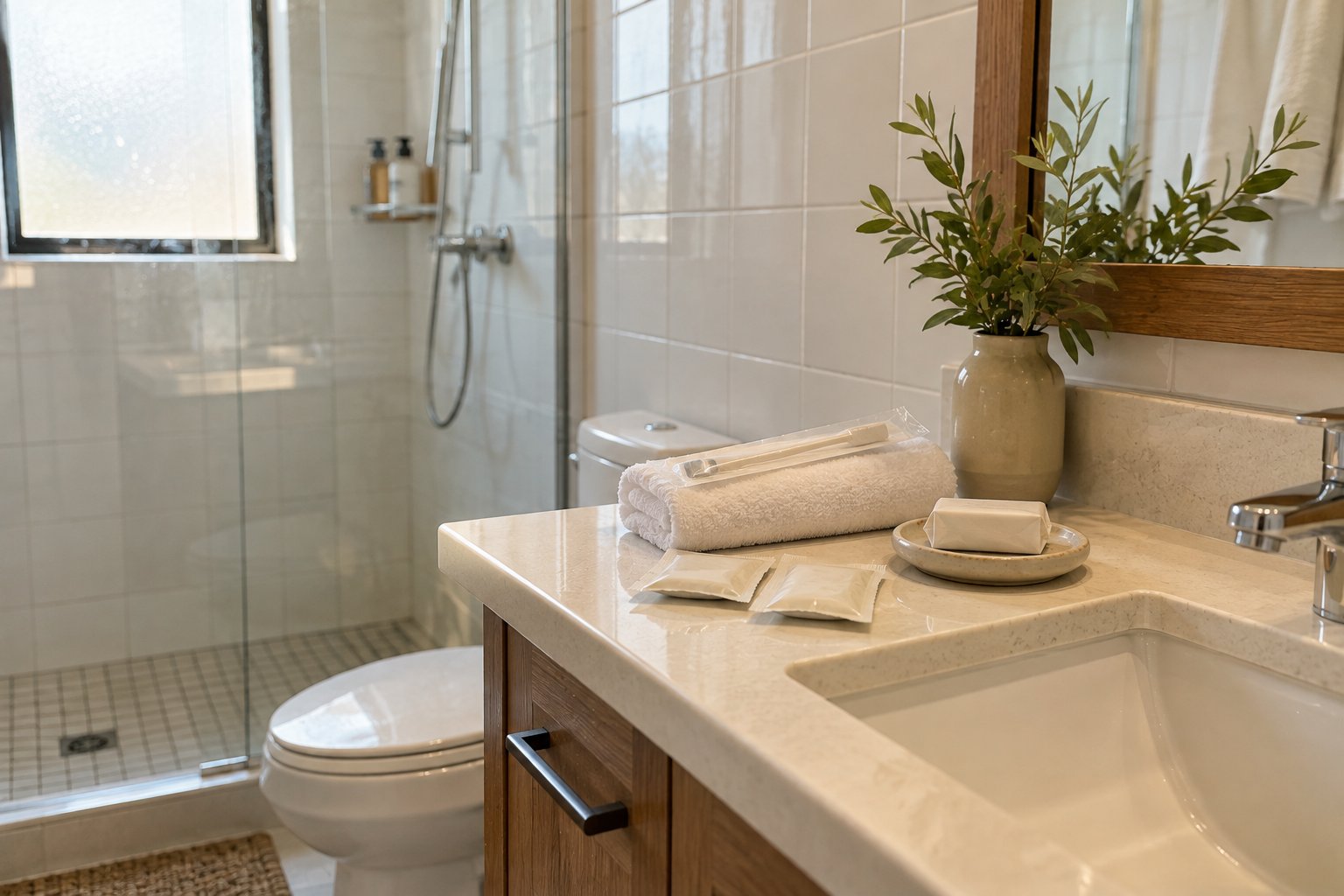
There's a specific visual and tactile presentation that guests associate with a well-run property. It's not complicated, but it's consistent. Our five-star bathroom guide covers the full picture, but for toiletries specifically, the key elements are:
Arrangement matters. Products placed together, neatly, near the shower and sink signal intentionality. Scattered individual items in different areas read as an afterthought.
Sealed products signal freshness. An individually wrapped bar of soap or a sealed sachet communicates something a half-used communal pump bottle doesn't. Even at the same cost per use, sealed items feel more premium.
Consistency across stays. Guests who return, or who refer friends, notice when the product quality changes. Establish a spec and stick to it. If you switch suppliers, do a side-by-side comparison before you change the whole stock.
For a full bathroom setup walkthrough room by room, the Airbnb supplies room-by-room guide gives you the complete picture beyond just toiletries.
Why Trust This Article
Avistar supplies individually wrapped guest amenities to hosts running everything from a single Airbnb to property managers overseeing hundreds of doors. Our products are rated 4.7/5 on Amazon across 4,200+ reviews, and the feedback we hear most consistently is operational: turnovers got faster, restocking got simpler, and guests started mentioning the bathroom in their reviews.
The cost figures, restocking frameworks, and supplier evaluation criteria in this guide aren't sourced from generic content research. They reflect what we've seen work across a wide range of hosting setups, including remote-managed single units, multi-unit portfolios, and short-term rental operators running tight cleaning windows.
A few things our customers have said directly:
- "Managing amenities across twelve units used to be a constant scramble. Now it's one order a month and every property has the same clean, consistent setup." (Devon, Property Manager)
- "Everything being individually wrapped makes resets fast and hygienic. My cleaner loves how simple it is to restock." (Priya, Host, 2 doors)
- "Guests comment on how thoughtful the little touches are, and my reviews mention the bathroom more than anything else now." (Maria, Superhost, 3 listings)
We built this product line specifically around how hosts operate, not around what's easiest to manufacture or sell. That perspective is what shapes the recommendations in this guide.
Frequently Asked Questions
What toiletries are required for Airbnb?
Airbnb's platform guidelines require hosts to provide a few core essentials, including toilet paper, but the specific toiletry requirements for a five-star rating go further: soap (hand and body), shampoo, and conditioner are the practical baseline that guests expect in any properly run short-term rental. Hosts who don't include at least those four will see it reflected in cleanliness and amenity scores over time.
Should I use dispensers or individual toiletries in my Airbnb?
It depends on your operational setup. Dispensers reduce per-use cost and plastic waste but require consistent refilling between stays, and some guests are sensitive to shared-pump hygiene concerns. Individually wrapped amenities cost slightly more per use but are faster to restock, eliminate the refilling risk, and signal freshness to guests. For remote-managed properties or multi-unit portfolios, individually wrapped formats tend to perform better operationally.
How much should I spend on toiletries per Airbnb guest?
A reasonable range for mid-tier properties using individually wrapped amenities is $2–$4 per guest, covering soap, shampoo, conditioner, body wash, oral care, and a razor. Premium properties or those adding extras like lotion and vanity items can run $4–$7 per guest. At volume (100+ guests per month), wholesale pricing typically brings per-guest costs toward the lower end of those ranges.
Where can I buy toiletries for my Airbnb in bulk?
Amazon, Costco, and Sam's Club work well for low-volume hosts (under 10 bookings a month). For hosts running multiple units or higher booking volumes, dedicated hospitality suppliers, including Avistar, offer individually wrapped amenities in case quantities at per-unit pricing closer to what hotels pay. The key variables to compare: minimum order quantities, lead times, shelf life, and whether products arrive individually wrapped or in bulk formats that still need dispensing.
What toiletries do guests most often forget?
Toothbrushes and toothpaste are the most commonly forgotten items, followed by razors and dental floss. Guests arriving after late flights or long drives are especially likely to realize mid-check-in that they've left these behind. Stocking individually wrapped oral care items and razors consistently generates the kind of small, specific positive mentions that show up in five-star reviews.
Do hotel-quality toiletries actually make a difference to Airbnb reviews?
Yes, with a caveat. The toiletries themselves rarely get called out by name in positive reviews. What guests notice is whether the bathroom felt complete, considered, and clean. Sealed, individually wrapped amenities, arranged intentionally and consistently stocked, contribute to that overall perception. The gap shows up more clearly in the negative direction: a bathroom missing basics, or with nearly empty shared dispensers, is the kind of detail guests specifically mention.
How do I manage toiletry restocking across multiple Airbnb units?
The most reliable system for multi-unit hosts is a par-level approach: set a minimum stock threshold per unit, reorder when you hit it, and store a central backup supply that cleaning crews pull from on each turnaround. Individually wrapped items make this easier because you can count units rather than estimating liquid levels. Buying in case quantities from a wholesale supplier means fewer reorder events and more predictable per-guest costs.