Most hospitality buyers spend five minutes thinking about the toothbrush and thirty seconds thinking about the toothpaste. Then they place an order and wonder why the setup feels off, or why they're reordering more often than expected, or why guests mention the toothbrush in reviews but the toothpaste quietly gets ignored.
This guide flips that. We'll start where most sourcing guides don't: with the toothpaste.
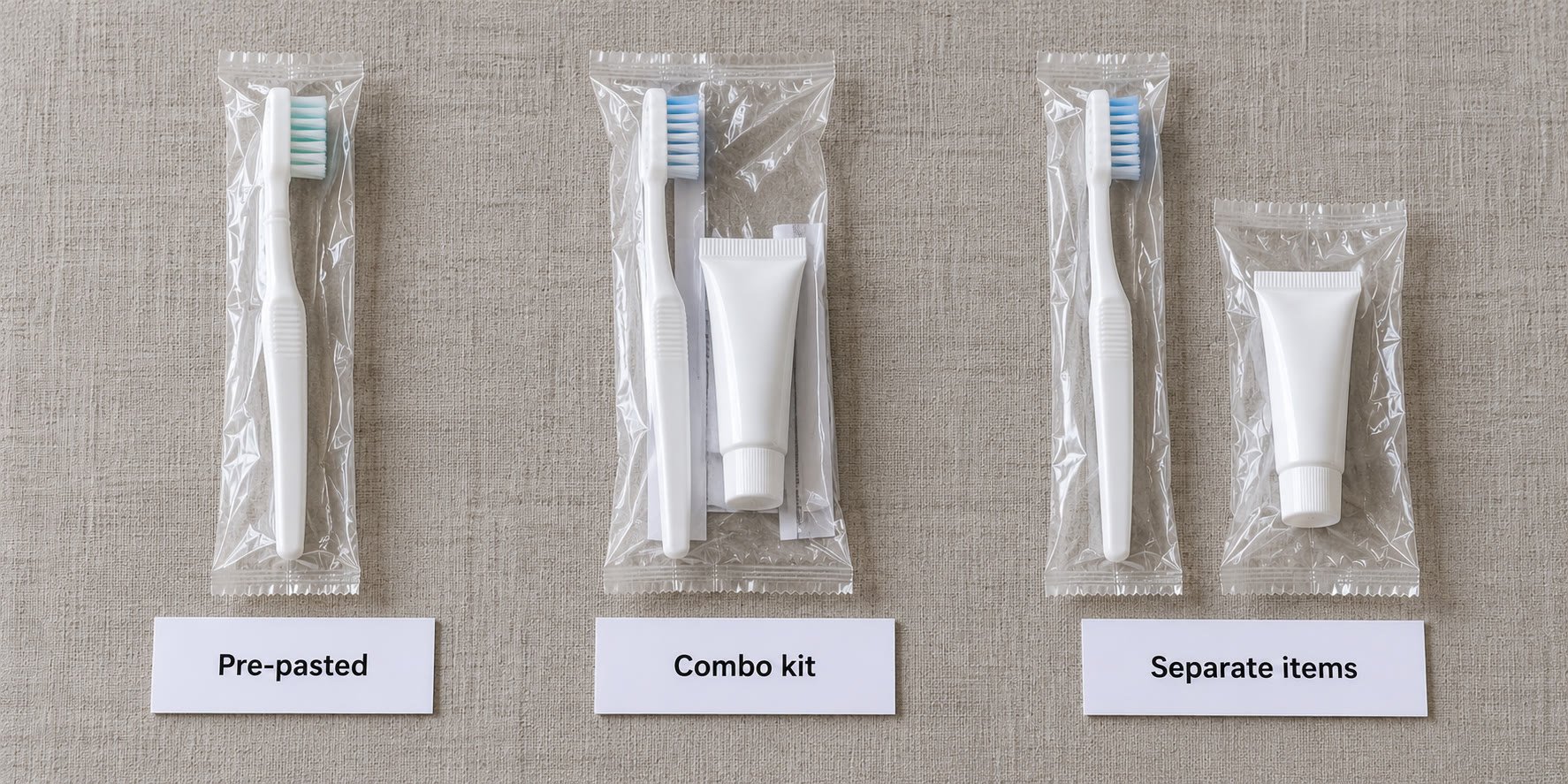
A quick definition before we get into it: Bulk toothbrushes and toothpaste means buying enough oral care supply to cover multiple guest turnovers without constant reordering. That can mean buying both items separately, buying pre-packaged kits with one item per guest, or using pre-pasted toothbrushes that eliminate toothpaste sourcing entirely. The right approach for your property is what this guide is actually about.
The Toothpaste Question Gets Answered Too Fast
Toothbrushes are easy to evaluate. Toothpaste, less so. And because it feels like a secondary item, most operators either skip it entirely (leaving guests to ask at the front desk) or grab whatever travel-size tubes are cheapest on Amazon.
Both are mistakes.
Skipping toothpaste is a guest experience miss that costs almost nothing to fix. A standard hotel bathroom in the US gives guests soap, shampoo, and lotion. Toothpaste is notably absent from almost every property, not because it's strategically excluded, but because the per-unit cost of toothpaste is higher per ounce than standard bath products and it often gets cut at the purchasing stage. The irony: toothbrushes are the most commonly forgotten item in hotel stays, and toothpaste is among the first things guests request at the front desk after they realize it's missing. A single positive review from a guest who found both waiting for them is worth considerably more than the $0.25 you saved per room.
Grabbing whatever's cheapest creates a different problem. Here's what to actually check before you buy.
Size per tube. The range for hospitality use is 0.6 oz (17g) to 1.0 oz (28g). Below 0.6 oz is a single-use mini, fine for a one-night stay, meaningless for a two- or three-night one. Above 1.0 oz is standard retail, cost-inefficient for turnover use, and overkill when most guests on longer stays bring their own.
Fluoride. Non-negotiable. Charcoal, mineral, and fluoride-free alternatives are a product experience variable that hospitality guests don't expect and don't thank you for. Fluoride toothpaste is the baseline and the safe default for a general guest population.
Name-brand vs. generic. Colgate and Crest do something that white-label tubes don't: they communicate quality without any explanation. A generic tube in a plain hotel bathroom reads as cheap. At upscale properties, it undercuts the rest of the amenity setup. Match the brand tier to your property's positioning.
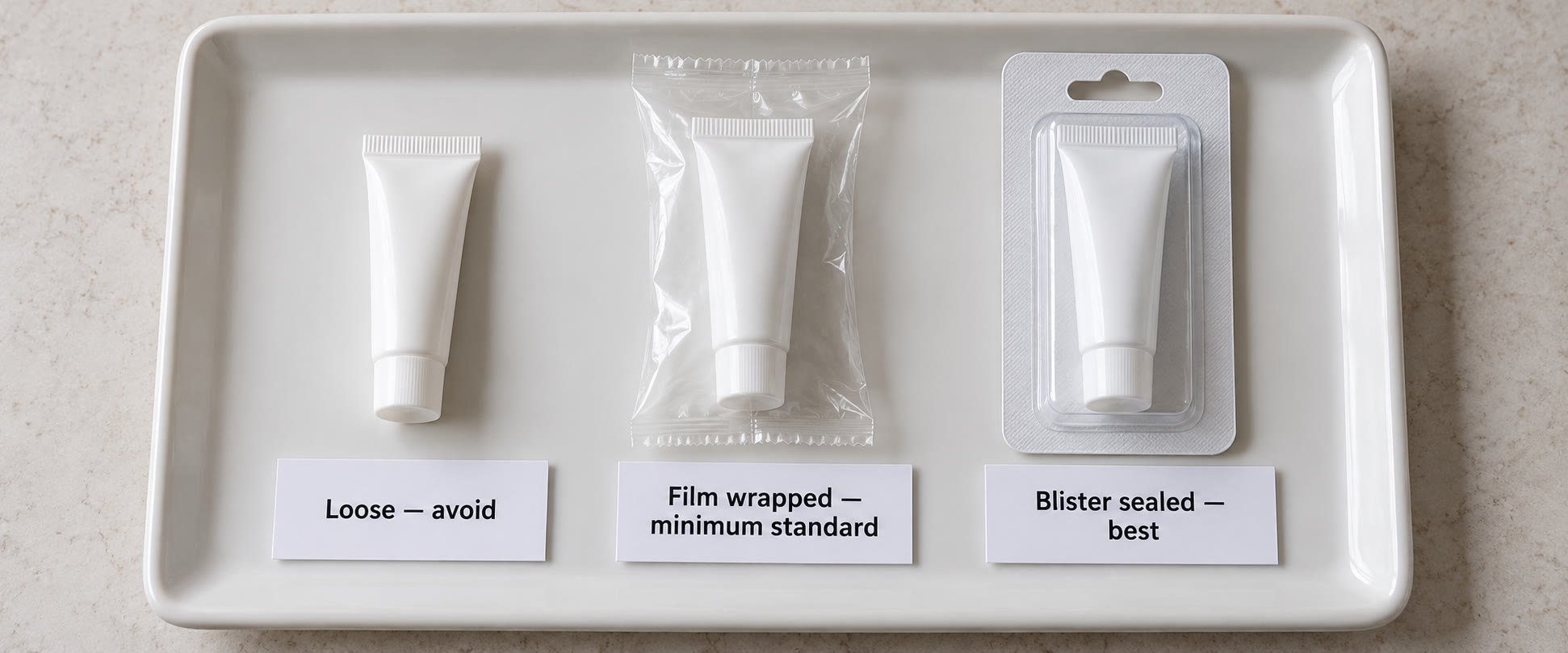
Individual packaging. Every tube should be individually wrapped or blister-sealed, not loose in a bulk bag. A loose toothpaste tube sitting next to an individually wrapped toothbrush creates an immediate inconsistency in the bathroom setup. The hygiene signal should be consistent across every item.
The Toothbrush Side Is More Straightforward
The reason most guides spend more time on toothbrushes is that there's more surface area to cover. But for hospitality use, the decision space is narrower than it looks.
You're not evaluating brush longevity. You're evaluating what happens during a single guest stay.
The one spec that drives reviews: bristle quality. Specifically, whether the bristles are too firm (causes discomfort) and whether they're properly anchored (sheds during brushing). Either failure shows up in reviews. Soft or medium-soft nylon bristles, end-rounded if you're sourcing for a care facility, are the safe standard for a broad guest population.
The one feature that does the most work: individual wrapping. Sealed packaging communicates that the brush is untouched. An unsealed toothbrush on a vanity doesn't, regardless of whether it's been handled. The seal is doing hygiene communication that a 400-thread-count towel isn't.
Handle material is a branding decision, not a quality one. Bamboo handles don't brush better than plastic. They cost $0.10–$0.30 more per unit, they look better in a boxed kit, and they give upscale properties a sustainability angle to describe in their listing. For budget and mid-range properties, plastic handles are equal on function at a lower cost. The choice is about how you want the amenity to read, not how well the guest brushes.
For a deeper look at toothbrush-specific sourcing, our guide to buying toothbrushes in bulk covers that category alone.
The Option Most Operators Don't Know Exists
Before you finalize whether to buy toothbrushes and toothpaste together or separately, it's worth knowing about a third option that most buying guides don't mention: the pre-pasted toothbrush.
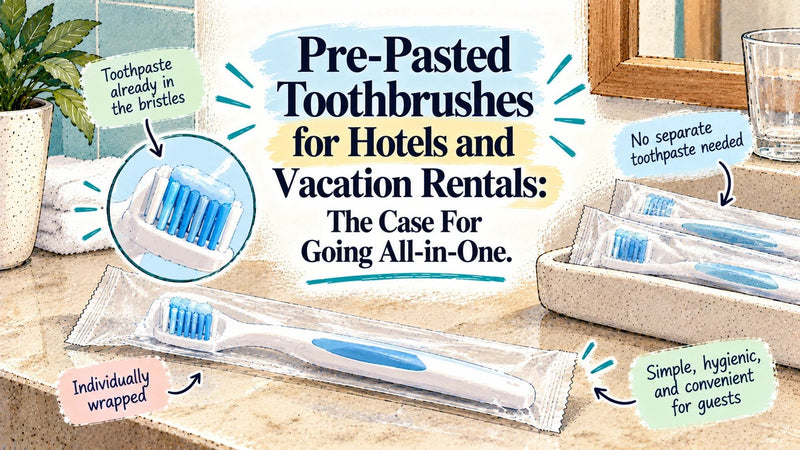
A pre-pasted brush has the toothpaste built directly into the bristles. No tube, no pairing, no prep. The guest unwraps one item, brushes, and discards. It works without water, which makes it practical for travel kits, outdoor venues, and any setup where a sink isn't guaranteed.
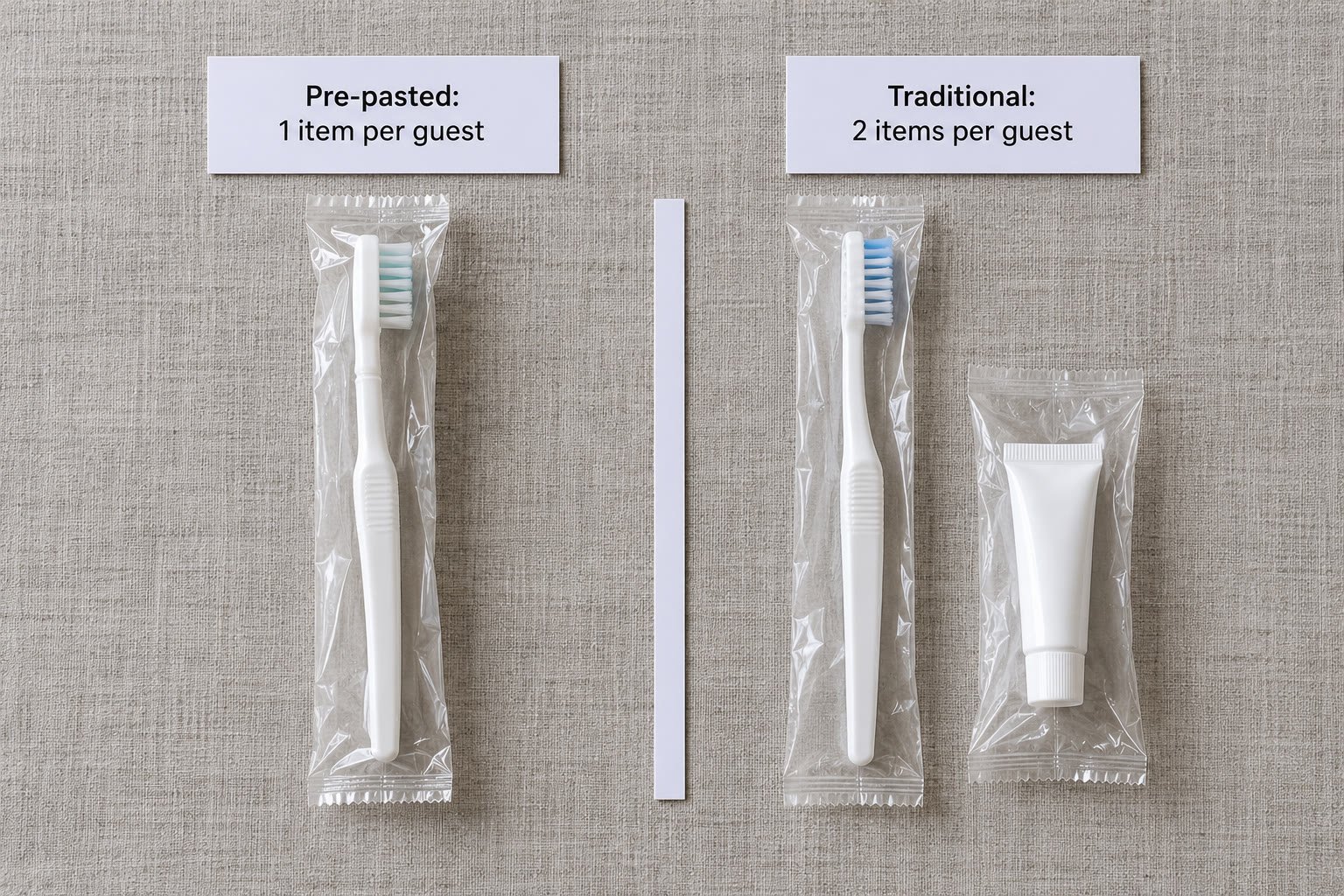
For fast-turnover short-term rentals and care facilities where operational simplicity is the priority, the pre-pasted brush often beats both the combined kit and the two-item setup: it's one SKU to manage, one item per bathroom, and no toothpaste sourcing decision at all.
The trade-off: pre-pasted brushes deliver less toothpaste than a dedicated 5g or 6g tube, and there's no brand on the paste. For hotels where Colgate or Sensodyne in the bathroom is part of the guest experience, this isn't the right call. For everything else, it's worth factoring in seriously.
Kit, Separate, or Pre-Pasted: The Breakdown
Now that all three options are on the table, here's how to decide.
| If this describes you... | Your best approach |
|---|---|
| High-turnover STR, want the simplest possible bathroom setup | Pre-pasted toothbrush |
| Hotel or STR, want one item per guest with recognizable toothpaste | Pre-packaged kit (toothbrush + tube) |
| Already have a toothpaste supplier, want control over the brand | Buy toothbrushes separately, source toothpaste through your existing supply chain |
| Care facility with specific hygiene or resident-preference requirements | Pre-packaged kit or separate, depending on resident needs and care protocol |
| Upscale property where branded toothpaste is part of the guest experience | Pre-packaged boxed kit with name-brand paste (Colgate, Sensodyne) |
| Low-volume operator, budget is the primary driver | Retail marketplace kit (100-count, film sachet) |
One pattern we see consistently: operators who switch from stocking both items separately to using pre-packaged kits almost never go back. The operational friction of managing two SKUs is easy to underestimate until you've run a 30-unit property through six months of turnover.
What It Actually Costs Per Guest Stay
This is the number that actually informs the buying decision, and most guides show it without context.
| Approach | Approx. Cost Per Guest |
|---|---|
| Toothbrush only (bulk, plastic, individually wrapped) | $0.12–$0.25 |
| Travel toothpaste tube (0.85 oz, separately sourced) | $0.20–$0.40 |
| Both items sourced separately | $0.32–$0.65 |
| Pre-packaged kit: plastic brush + 5g paste, film sachet | $0.22–$0.45 |
| Pre-packaged kit: bamboo brush + 5g name-brand paste, boxed | $0.85–$1.20 |
| Pre-pasted toothbrush (no tube) | $0.35–$0.55 |
At low volumes (under 100 units), sourcing separately is sometimes the cheapest option on paper. At 200 or more units, pre-packaged kits reach price parity with the combined cost of two items while eliminating the handling overhead. The pre-pasted brush sits in the middle: one item, no toothpaste cost, slightly more than a basic sachet kit.
The number missing from most cost tables: time. Two items per guest means double the stocking, double the inventory check, and double the reorder tracking. For a property manager running 15 to 20 units, that overhead is real.
Where to Actually Buy This in the US
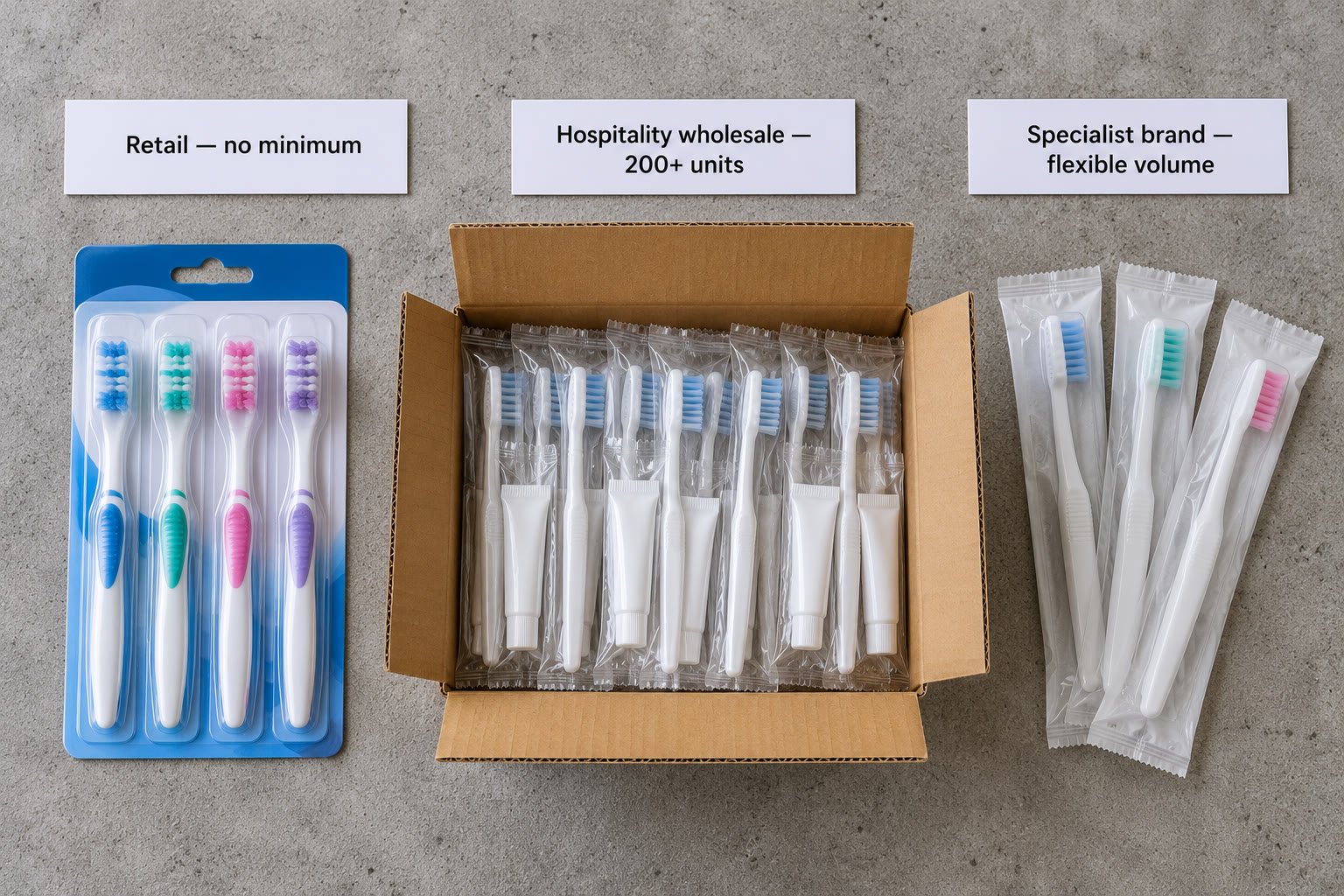
Three channels, with honest trade-offs.
Retail marketplaces: Amazon carries 100-count pre-packaged kits at $22–$40 (roughly $0.22–$0.40 per kit) and standalone toothbrush packs at $12–$25 per 100. Fast shipping, no MOQ. The downside is quality inconsistency across sellers and no meaningful account relationship. Fine for operators who need flexibility on volume; less reliable for consistent large-scale restocking.
Hospitality wholesale suppliers: Companies like Zogics carry 200–500-unit case packs at $0.35–$1.20 per kit depending on format, specifically designed for hotel and STR use. Better specification consistency, account support, and volume pricing. Trade-off: higher MOQs and longer lead times.
Specialist guest amenity brands: Brands built specifically for hospitality operators stock purpose-designed products across a wider range of pack sizes, often with no large MOQ requirement and subscription restocking available. Per-unit pricing is competitive at 100 or more units. This is where to look when you want product specifications matched to the hospitality context rather than a general wholesale catalog.
For a broader look at how sourcing channels compare across the full bathroom amenity category, see our bulk toiletries guide or our hotel amenity kit guide for how oral care fits into the complete guest bathroom setup.
Oral Care at Avistar
Avistar supplies individually wrapped guest amenities to hotels, vacation rental hosts, property managers, and care facilities across the US. Our oral care range covers all three approaches in this article.
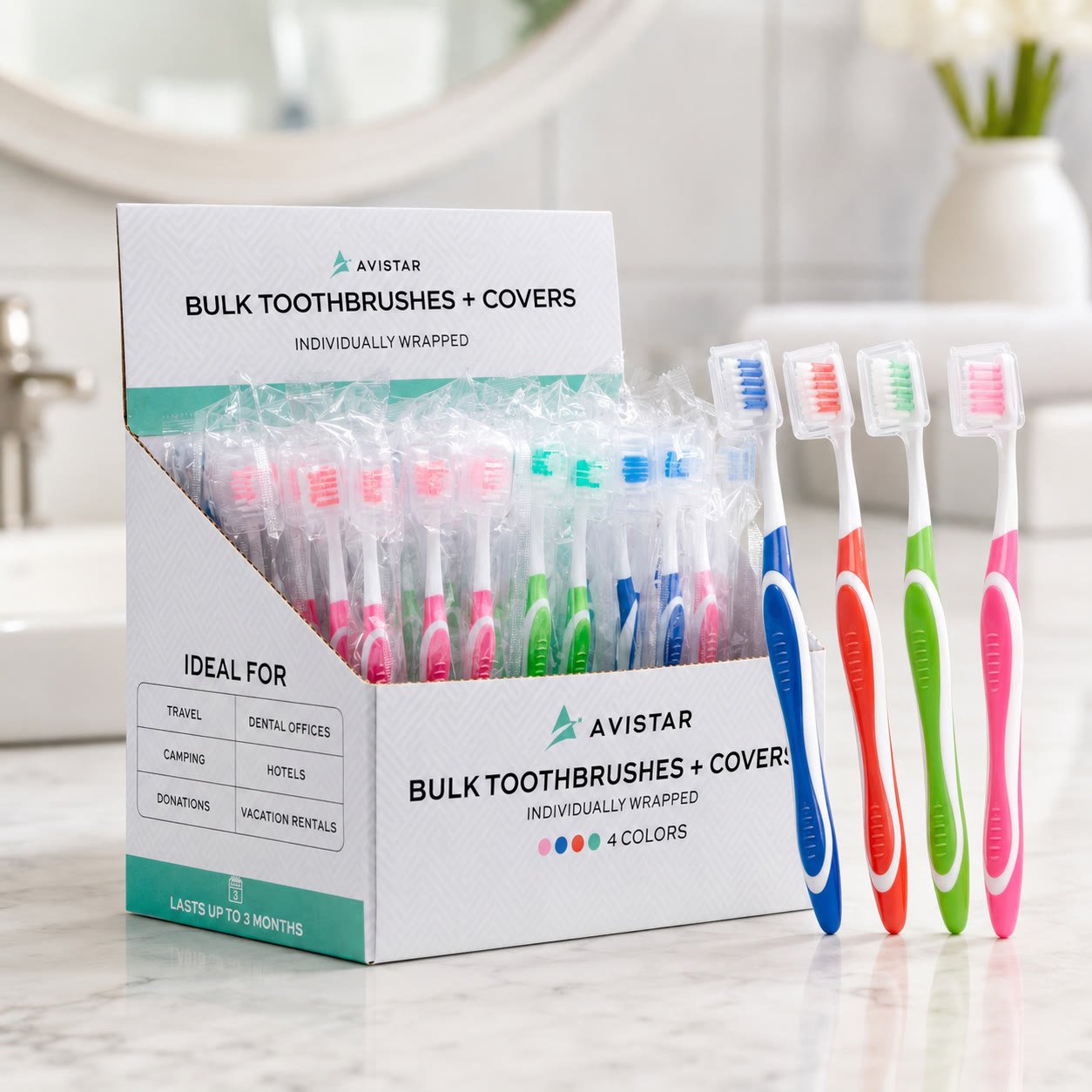
Bulk Disposable Toothbrushes: Individually wrapped and sealed with a cover cap. Pack sizes from 4 to 208 units.
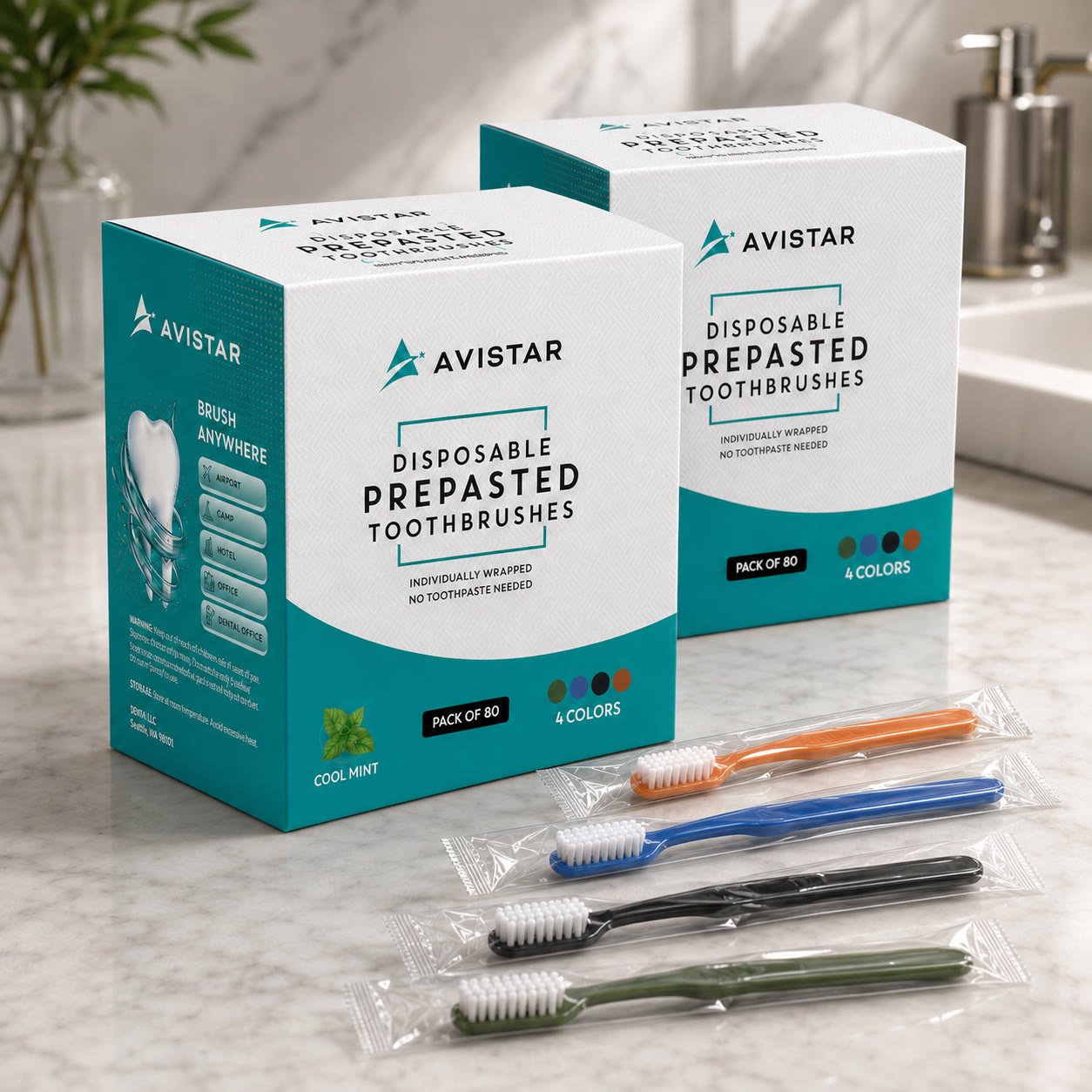
Pre-Pasted Disposable Toothbrushes: Toothpaste built into the bristles, no tube, waterless. Available for adults and kids, 40 to 480 units.
Floss Picks: Individually wrapped in four colors, 450-count packs.
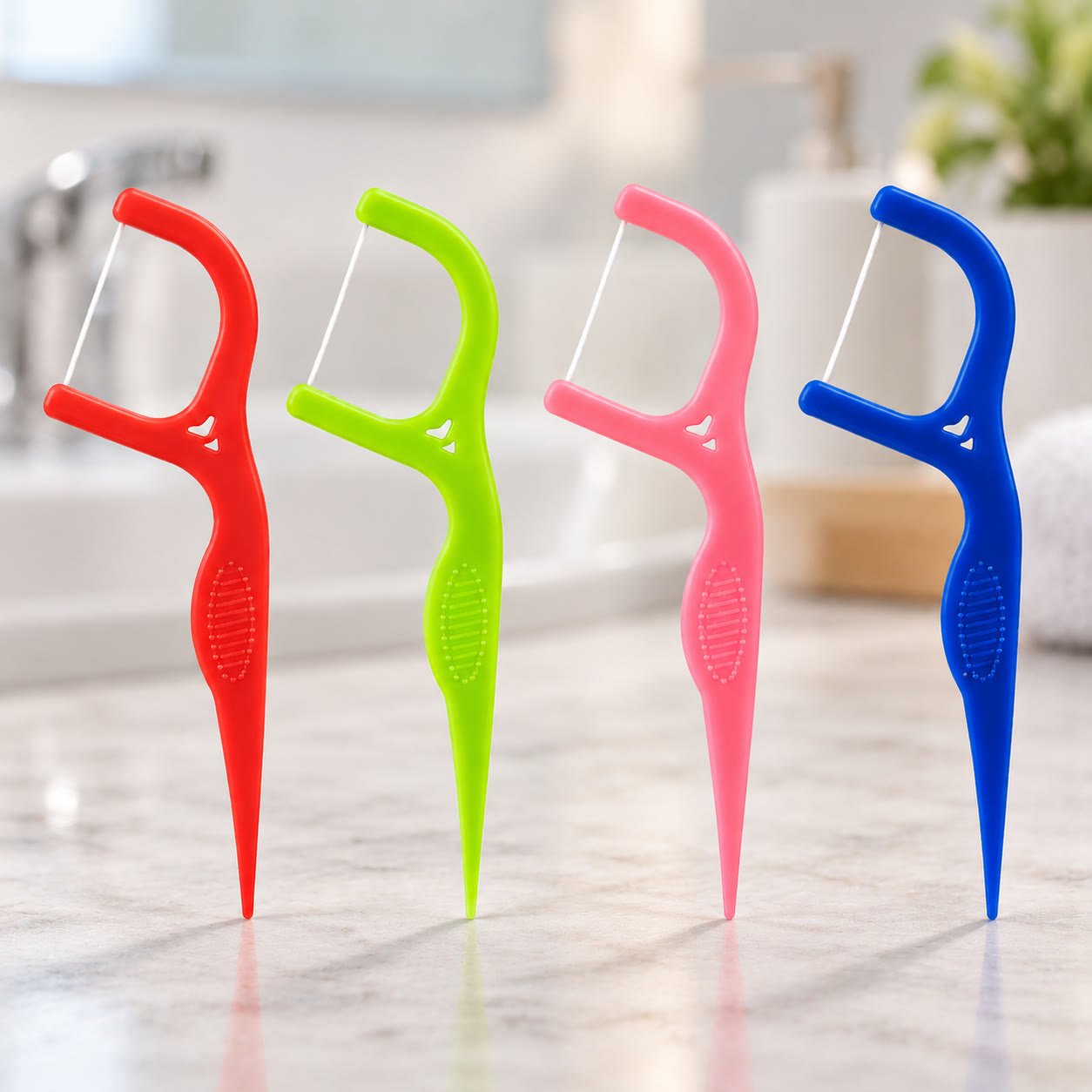
Whether you're starting with a small test order or restocking across a full property portfolio, all three are available in the Avistar oral care collection, with pack sizes that let you match your order to your actual volume without committing to a large minimum upfront.
How We Know This
We work directly in the supply chain for individually wrapped hotel and hospitality guest amenities, which means we see what properties actually order, what gets returned after the first shipment, and which sourcing decisions operators make once and then stop reconsidering.
The perspective here is from the supply side: not what looks good in a product listing, but what actually holds up across high-turnover hospitality operations. For more on the full guest bathroom picture, our bulk hygiene products guide covers the complete category.
Frequently Asked Questions
Why don't most hotels include toothpaste as a standard in-room amenity?
Cost, primarily. Oral hygiene products cost more per ounce than standard bath products like shampoo or body wash, and toothpaste is among the first items cut when a property is trimming the amenity budget. Many US hotels keep toothpaste and toothbrushes available on request at the front desk rather than stocking them in every room by default.
Is it better to buy toothbrushes and toothpaste as a kit or separately?
For most operators, the pre-packaged kit is the better choice once order volume reaches 100 units or more. It simplifies turnover to one item per guest, presents more consistently in the bathroom, and reaches price parity with separate components at moderate volume. Buying separately makes more sense when you have an existing toothpaste supplier, need a specific brand, or are matching an existing amenity program.
What size travel toothpaste should I buy in bulk?
For one- to three-night stays, a tube between 0.6 oz (17g) and 0.85 oz (24g) is the right range: enough for one to three uses, not so much that you're over-supplying. Tubes under 0.5 oz are single-use only. Anything above 1.0 oz is standard retail size and is cost-inefficient for guest turnover.
Do bulk toothbrushes for hotels need to be individually wrapped?
Yes. An unwrapped toothbrush on a bathroom vanity reads as previously used to guests regardless of whether it has been touched. Individual wrapping is the minimum standard for hospitality use, at any price point.
What is the cheapest way to buy toothbrushes and toothpaste in bulk?
At low quantities, sourcing a 100-count toothbrush pack on Amazon and pairing it with separately sourced travel tubes gives the lowest per-unit cost, roughly $0.27–$0.45 per guest. At 200 or more units, pre-packaged kits from a hospitality supplier typically match that cost while removing the two-item handling overhead, making them the more practical choice at volume.
What is a pre-pasted toothbrush and is it worth considering?
A pre-pasted toothbrush has toothpaste built directly into the bristles. No tube is needed, and it works without water. For fast-turnover STRs and care facilities where simplicity outweighs brand presentation, it is often the most practical oral care solution available. It is less suitable for upscale hotels where a named-brand toothpaste is part of the expected guest experience.