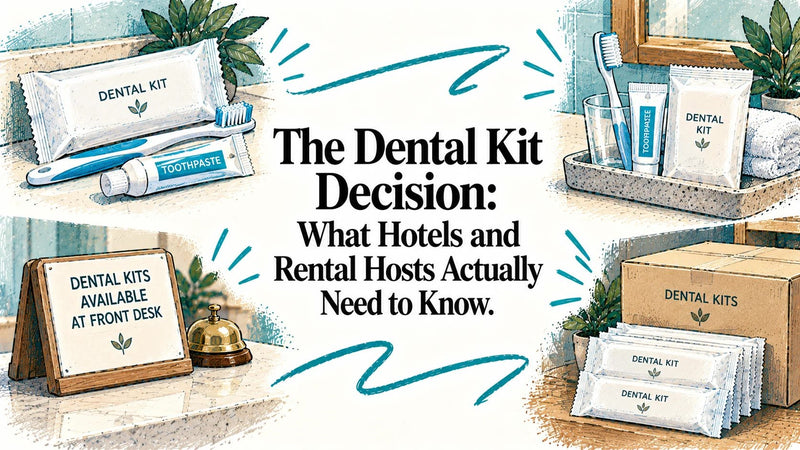
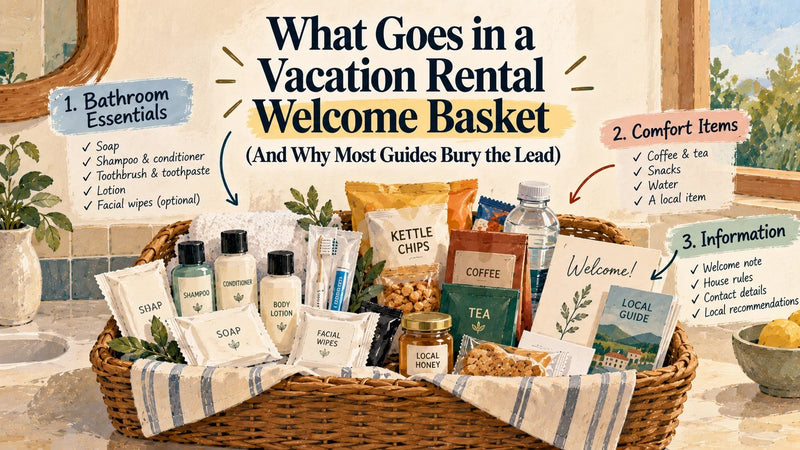
Bulk hygiene products are the consumable personal care items you purchase in large quantities to stock your guest bathrooms: soap, shampoo, conditioner, body wash, lotion, toothbrushes, toothpaste, and dental floss. Operators who source these well spend under $4 per guest on a full bathroom setup and earn the kind of bathroom review that drives repeat bookings. Operators who treat them as an afterthought spend about the same and get the reviews to match.
Here's what most guides on this topic won't say: the difference between a forgettable bathroom and one that guests mention by name in a review almost never comes down to brand. It comes down to whether anyone actually thought about it.
What "Bulk Hygiene Products" Actually Covers
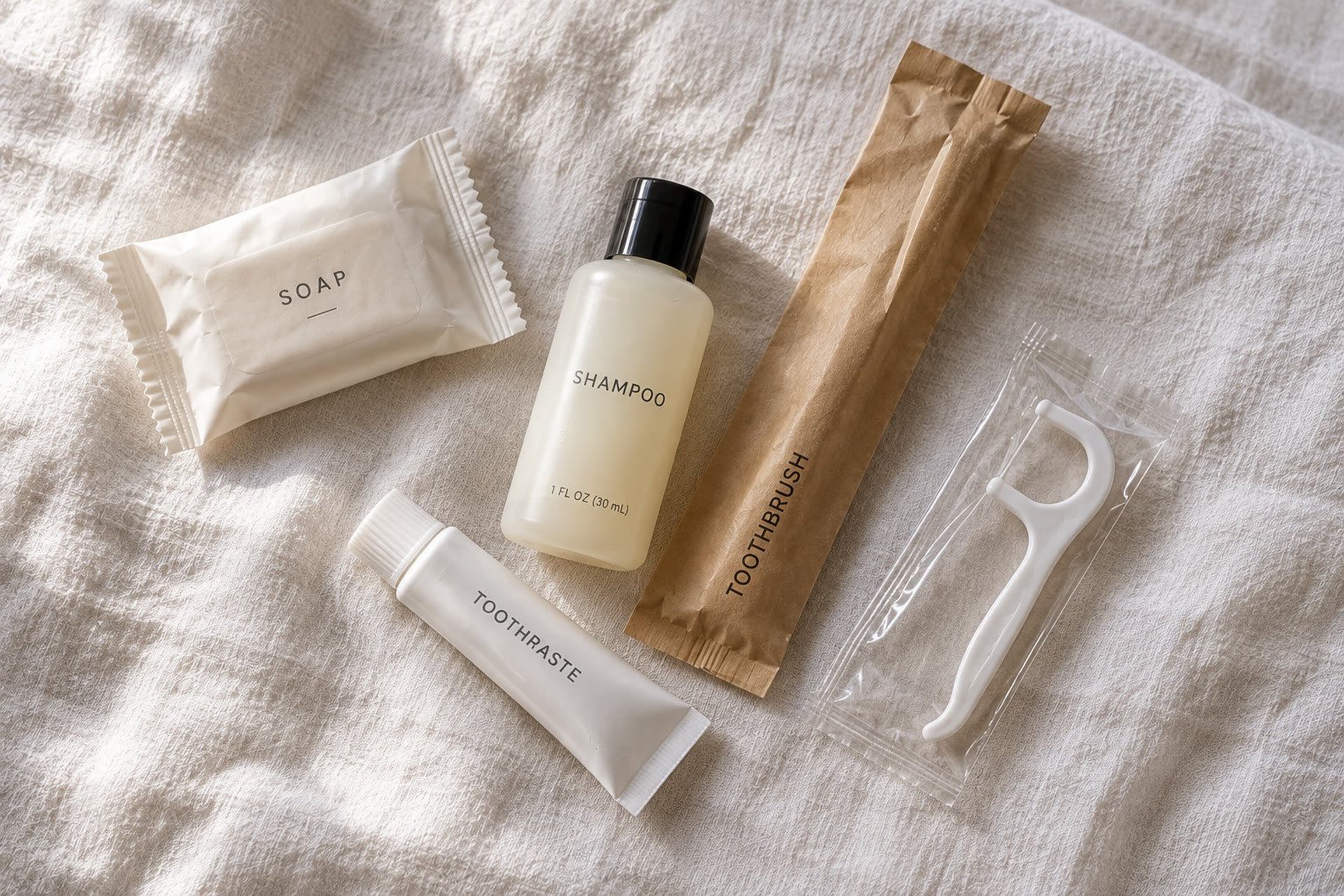
Most operators start with soap and shampoo and stop there. The full category spans more ground than that, and knowing what's in scope matters before you start making sourcing decisions.
Bath and body:
- Bar soap and liquid hand soap
- Shampoo and conditioner (individually bottled or dispenser-fill)
- Body wash
- Lotion
Oral care:
- Toothbrushes (individually wrapped)
- Toothpaste (individually wrapped tubes or sachets)
- Dental floss and floss picks
- Mouthwash (single-dose packets or small bottles)
- Complete dental kits (brush, paste, and floss in one packaged unit)
Ancillary hygiene:
- Cotton swabs
- Disposable razors
- Feminine hygiene products (relevant for care facilities and some vacation rentals)
Not every property needs all of these. The goal isn't to stock every category; it's to make a deliberate decision about what belongs in your bathroom and what doesn't. Operators who buy one category at a time, from different vendors, with no system behind it spend the most time on restocking and usually end up with bathrooms that feel assembled rather than considered.
How Much to Actually Buy: Par Levels for Bulk Hygiene Products
The economics of buying in bulk only work if you're buying the right quantity. Too little and you're reordering constantly, losing the per-unit savings to shipping costs and admin time. Too much and you're tying up cash in inventory that sits in a storage closet for months.
A par level is the minimum quantity you want on hand before you trigger a reorder. The formula for any consumable is simple:
Par level = (daily usage x lead time in days) + safety buffer
For a solo Airbnb host with one or two units, that might mean keeping two cases of soap on hand at any time. For a property manager running 30 units at 70% occupancy, the math shifts considerably: 21 guest turnovers per day at peak means running out of shampoo mid-week if your reorder trigger is set too conservatively.
Here's a starting framework by portfolio scale:
| Property scale | Suggested par (per product) | Reorder trigger |
|---|---|---|
| 1–3 units (solo host) | 1–2 cases (100–200 units) | When down to 1 case |
| 4–15 units (small portfolio) | 3–5 cases per SKU | When down to 1.5 cases |
| 16–50 units (mid-portfolio) | 6–10 cases per SKU | Monthly standing order |
| 50+ units (hotel or large portfolio) | Dedicated storeroom by SKU | Automated reorder by usage rate |
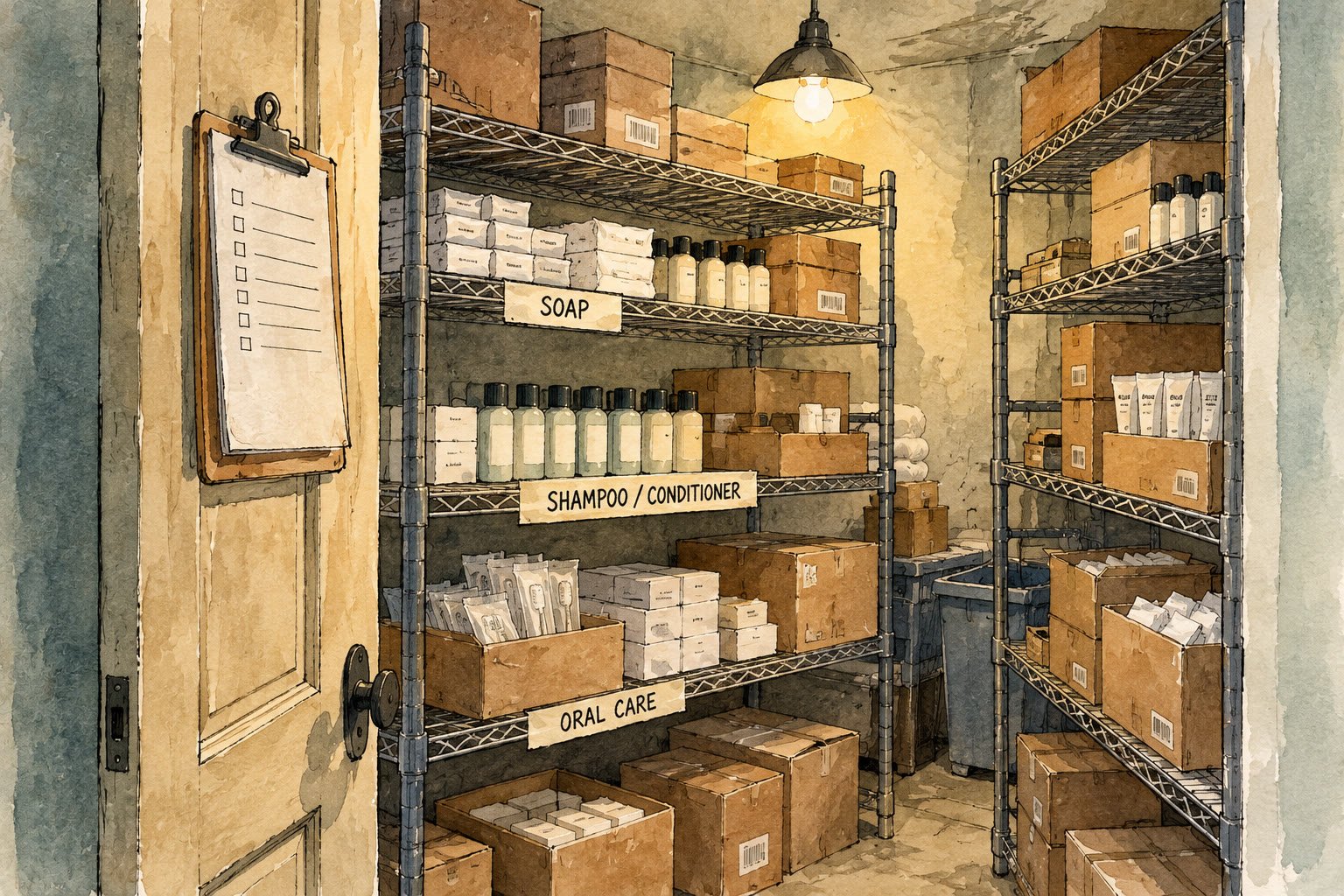
Two categories get under-ordered almost universally: oral care and lotion. Most operators keep enough soap and shampoo. They forget that toothbrushes and lotion cycle through at every turnover too, and running out mid-week means a last-minute pharmacy run that costs three times the bulk price and more time than it's worth.
What Your Property Type Actually Needs
The right bulk hygiene setup looks different at a 10-room boutique hotel, a 60-unit property management portfolio, and a senior care facility. Context changes the calculus.
Hotels: The standard expectation on arrival is a complete bathroom setup. At minimum: soap, shampoo, conditioner, body wash, and lotion. Oral care (toothbrush and toothpaste) is increasingly standard at mid-tier and above. The key sourcing question is MOQ relative to your occupancy rate and available storage.
Short-term rentals and Airbnb hosts: Guest expectations are closer to hotel standards than they were three years ago. Superhost-level properties typically stock a full bathroom suite. The operational difference from hotels: you're restocking one unit at a time, often without a housekeeping cart or stockroom. Individually wrapped items with long shelf lives are an operational advantage, not just a hygiene choice.
Property managers (multi-unit portfolios): At 20 or more units, you're building a procurement system. Par levels, reorder triggers, storage infrastructure, and consistent product selection across all units become real operational decisions with cost implications. The economics of bulk purchasing only show up fully at this scale. For a deeper look at how to structure that sourcing, our guide to wholesale personal care products covers the framework.
Senior living and care facilities: Hygiene products in care settings need to be individually packaged for infection control, easy for staff to distribute, and gentle on sensitive skin. Oral care takes on additional weight here: residents with dental appliances need products (denture cleaners, retainer cases) that hotels never think about. The restocking cadence and product selection are different from hospitality by design.

The Math Most Operators Never Do
Here's what makes bulk hygiene products worth thinking about carefully: the numbers.
A full bathroom restocking with budget-to-mid-tier, individually wrapped products costs between $1.50 and $4.00 per guest at volume pricing. Here's how that breaks down:
| Item | Per-unit cost at volume |
|---|---|
| Bar soap (1 oz) | $0.20–$0.60 |
| Shampoo (1 oz) | $0.30–$0.65 |
| Conditioner (1 oz) | $0.30–$0.65 |
| Body wash (1 oz) | $0.25–$0.60 |
| Lotion (1 oz) | $0.20–$0.55 |
| Toothbrush (individually wrapped) | $0.40–$0.80 |
| Toothpaste (individually wrapped) | $0.20–$0.40 |
| Dental floss pick | $0.10–$0.20 |
At the low end of these ranges, a full bathroom for one guest runs around $1.95. At mid-range, closer to $3.00. Against an average nightly rate of $150 or more, that's under 3% of revenue, and it directly influences the reviews that drive future occupancy.
The operators who decide not to include oral care because "it adds cost" tend to be the same ones who respond to reviews about missing basic amenities.
The Three Ways Operators Get This Wrong
Most sourcing mistakes in this category cluster around the same patterns.
Buying one category at a time. The instinct when you start is to buy soap from one place, shampoo from another, and toothbrushes from wherever's cheapest this week. This works until you're managing three supplier relationships, three reorder timelines, and three sets of packaging that don't match. Consolidating around a single supplier with a full category offering isn't just more convenient; it produces a cohesive guest bathroom and simplifies your logistics significantly.
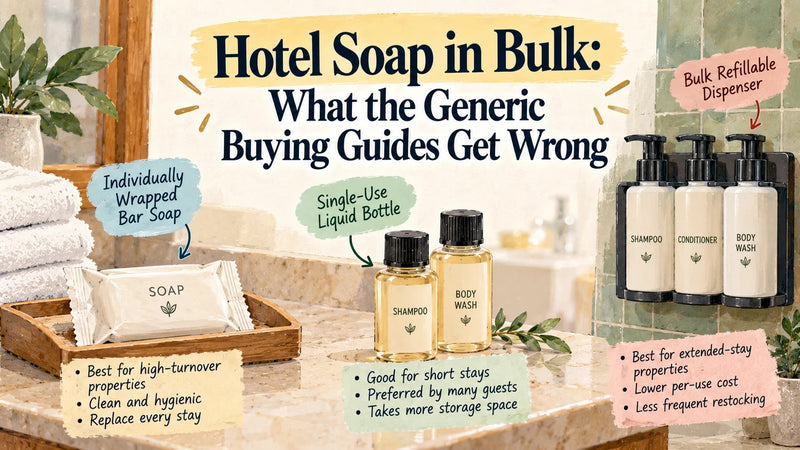
Ignoring the format question until it costs you. Properties that switch from individually wrapped to dispensers (or vice versa) mid-season almost always underestimate the operational change involved. Dispensers require a cleaning protocol and a refill schedule. Individually wrapped products require adequate storage and a reliable restocking routine. Neither format is difficult to manage, but both need to be chosen deliberately, before you've ordered a case of something that doesn't fit your workflow.
Optimizing for unit cost instead of total cost. The cheapest shampoo per bottle is rarely the cheapest shampoo when you factor in usage rates, restocking frequency, and the time your cleaning staff spends managing it. Products with better formulations tend to be used more efficiently; better packaging reduces breakage and waste in storage. Price per unit is one input. It's not the decision. For a full evaluation framework, see our wholesale soap supplies guide and our bulk body wash breakdown.
Why Trust This Article
Avistar supplies individually wrapped guest amenities to hotels, Airbnb hosts, property managers, and care facilities across the United States. Our catalog covers bath and body, oral care, and denture care. The recommendations in this article come from working directly with operators at a range of scales, from single-unit hosts to property management companies managing dozens of properties.
We have a product to sell, and we've been upfront about that throughout. We've also been direct about where dispensers outperform individually wrapped products, where another sourcing model might work better for your operation, and where general advice doesn't apply to your specific context. The goal is to help you make a better sourcing decision, not to make every decision for you.
Stocking Your Property Through Avistar
Avistar's catalog covers the full bulk hygiene product range for hospitality operators. That includes individually wrapped soap, bath and body products (shampoo, conditioner, body wash, lotion), oral care kits spanning toothbrushes, toothpaste, and floss picks, and guest amenity sets that bundle the bathroom essentials in a single order.
All products are available in wholesale quantities through the wholesale page. If you're setting up a restocking system for the first time or looking to consolidate your current supplier relationships, that's the right starting point.
Frequently Asked Questions
What are bulk hygiene products?
Bulk hygiene products are consumable personal care items purchased in large quantities for hospitality or care facility use. The category includes soap, shampoo, conditioner, body wash, lotion, toothbrushes, toothpaste, dental floss, and related oral care items. Operators buy them in bulk to reduce per-unit cost, ensure consistent restocking, and control the presentation their guests experience in the bathroom.
What is the difference between bulk hygiene products and travel-size toiletries?
The terms are often used interchangeably, but they describe slightly different things. "Travel size" refers to the product format (small bottles, typically 1 oz or 30 ml). "Bulk" refers to the quantity purchased. Hospitality operators typically buy travel-size toiletries in bulk, meaning they order cases of 100, 200, or more individual bottles at a time. Some operators also buy dispenser-fill formats in gallon or larger containers that are not travel-size at all.
How much should I budget for bulk hygiene products per guest?
For a full restocking that includes soap, shampoo, conditioner, body wash, lotion, toothbrush, and toothpaste, expect to spend between $1.50 and $4.00 per guest at budget-to-mid-tier bulk pricing. The exact figure depends on which categories you stock, your per-unit cost at volume, and whether you're using standard or premium-tier products. Most operators running properties at $100 or more per night find this range well within budget relative to the review impact a stocked bathroom delivers.
Should I use individually wrapped products or dispensers?
Both formats work, and the right choice depends on your operational model. Individually wrapped products suit high-turnover properties where restocking happens at every guest change and hygiene presentation matters at a glance. Dispensers work well for extended-stay properties, eco-focused hotels, and facilities where staff can reliably manage refill and cleaning protocols. Avistar carries both formats. Neither is categorically better.
What bulk hygiene products matter most for Airbnb hosts?
The highest-impact items for Airbnb hosts are soap, shampoo, conditioner, and body wash. These are the products guests most commonly mention in reviews. Individually wrapped toothbrushes and toothpaste are increasingly expected at Superhost-level properties. Floss picks and lotion are low-cost additions that round out the bathroom without adding significant cost. For product-level guidance and quantity math, see our Airbnb toiletries supplies guide.
Do care facilities have different requirements for bulk hygiene products?
Yes. In most care settings, individually wrapped products are required or strongly preferred for infection control. Formulations should be gentle on sensitive skin and free of common irritants. Oral care in care environments needs to extend beyond conventional toothbrushes and toothpaste to include denture-specific products for residents who need them. The distribution model is also different: staff typically place products room by room during rounds, rather than restocking a self-serve bathroom between guests.