Wholesale personal care products are toiletries (soap, shampoo, conditioner, body wash, lotion, oral care) sold in bulk to businesses rather than individual consumers. For hotels, Airbnb hosts, property managers, and care facilities, buying these products wholesale is the difference between a sustainable amenities budget and a constant cash drain. The key variables are format (individually wrapped vs. dispenser), minimum order quantity, certifications, and how well the product holds up under real turnover volume.
Most suppliers won't tell you any of that. They'll tell you about their "luxury formulas" and "eco-friendly packaging." This guide covers the operational stuff.
There's a version of this question that gets asked every week in hospitality groups and host forums: Where do I buy guest toiletries in bulk without getting ripped off?
The answers are usually a list of brand names. Which is fine, but it skips the part where you figure out what you're actually buying and why it matters for your specific operation. A boutique hotel in Austin sourcing amenities for 40 rooms has completely different needs than someone running five Airbnb units in Phoenix. And both of them are different from a memory care facility that needs to stock individually wrapped products for 80 residents.
Wholesale personal care isn't one purchase decision. It's a series of decisions stacked on each other, and getting the first one wrong makes every downstream decision more expensive.
Who's Actually Reading This (And What You're Trying to Solve)
Before getting into the mechanics of sourcing, it's worth being honest about the audience this topic attracts, because the right answer looks different depending on where you sit.
| Operator Type | Primary Concern | Best Format | Key Buying Factor |
|---|---|---|---|
| Hotel (50+ rooms) | Consistency across high turnover | Both: dispenser for extended stay, wrapped for standard rooms | MOQ, lead time, brand consistency |
| Airbnb / STR host (1–5 units) | Cost per turnover, storage limits | Individually wrapped | Low MOQ, shelf stability, no waste |
| Property manager (10+ units) | Scalability, standardization | Individually wrapped | Reorder frequency, supplier reliability |
| Senior / care facility | Hygiene compliance, resident safety | Individually wrapped, sealed | Certifications, packaging integrity |
If you're a hotel running standard rooms with nightly or two-night turnover, individually wrapped soap and oral care products protect your guests and your reputation. If you're running an extended-stay property where guests check in for weeks, wall-mounted dispensers may be more practical and cost-efficient. Avistar supplies both formats precisely because the right answer depends on what your property actually does, not on what's trending in the industry trade press.
That context matters before you call a single supplier.

The Real Cost Calculation Most Operators Miss
Here's what usually happens: an operator finds a wholesale supplier offering soap bars at $0.18 per unit. They buy a case, feel good about the price, and move on. Six months later, they're running out faster than expected, guests are leaving reviews mentioning "cheap soap," and the reorder process is a headache because the supplier's minimum order quantity changed.
The unit price is the least important number in this decision.
What actually matters:
- Cost per occupied room per night, not cost per unit. A $0.18 soap bar that you go through 1.3x per turnover because guests pocket the extras costs you more than a $0.28 bar that gets used once.
- Lead time and reorder reliability. If your supplier takes three weeks to ship and you carry two weeks of inventory, you're one busy stretch away from running out. Build supplier reliability into your comparison.
- Storage footprint. Individually wrapped products stack clean and stay shelf-stable for 18–36 months in most cases. Bulk liquid dispensers require refill management and cleaning protocols. Neither is wrong, but the labor cost of maintaining dispensers is real and often uncounted.
- Guest perception impact. This one's harder to quantify, but reviews tell you. Guests don't usually comment on soap in positive reviews. They do comment when it's clearly the cheapest bar money can buy. Individually wrapped, clearly labeled products signal intentionality even when the price per unit is low.
If you want the full breakdown on running these numbers for a short-term rental operation, our bulk buying guide for Airbnb hosts walks through the math in detail.
What to Actually Look for in a Wholesale Personal Care Supplier
Search results for this topic are dominated by supplier promotional pages. They're written to sound like guides but they're really pitch decks with H2 headings. So here's what to actually evaluate:
Minimum Order Quantities (MOQs)
For smaller operators, this is the most important filter. Many wholesale personal care suppliers have MOQs of 500–1,000 units per SKU. That's manageable for a 60-room hotel but completely impractical for a host with two rental units. Look for suppliers who offer flexible MOQs or smaller case sizes, especially when you're first testing a product line.
Certifications and Ingredient Transparency
This matters more than it used to, and not just because guests care about sustainability. California Prop 65 compliance, FDA-regulated labeling, and cruelty-free certifications are increasingly table stakes for properties targeting mid-market and above. Confirm that any supplier you work with can provide documentation, not just a claim on a marketing page.
Avoid products with unverified "natural" claims and no third-party certification to back them up. The FDA doesn't regulate the term "natural" in personal care, so it means almost nothing without supporting documentation.
Packaging Integrity
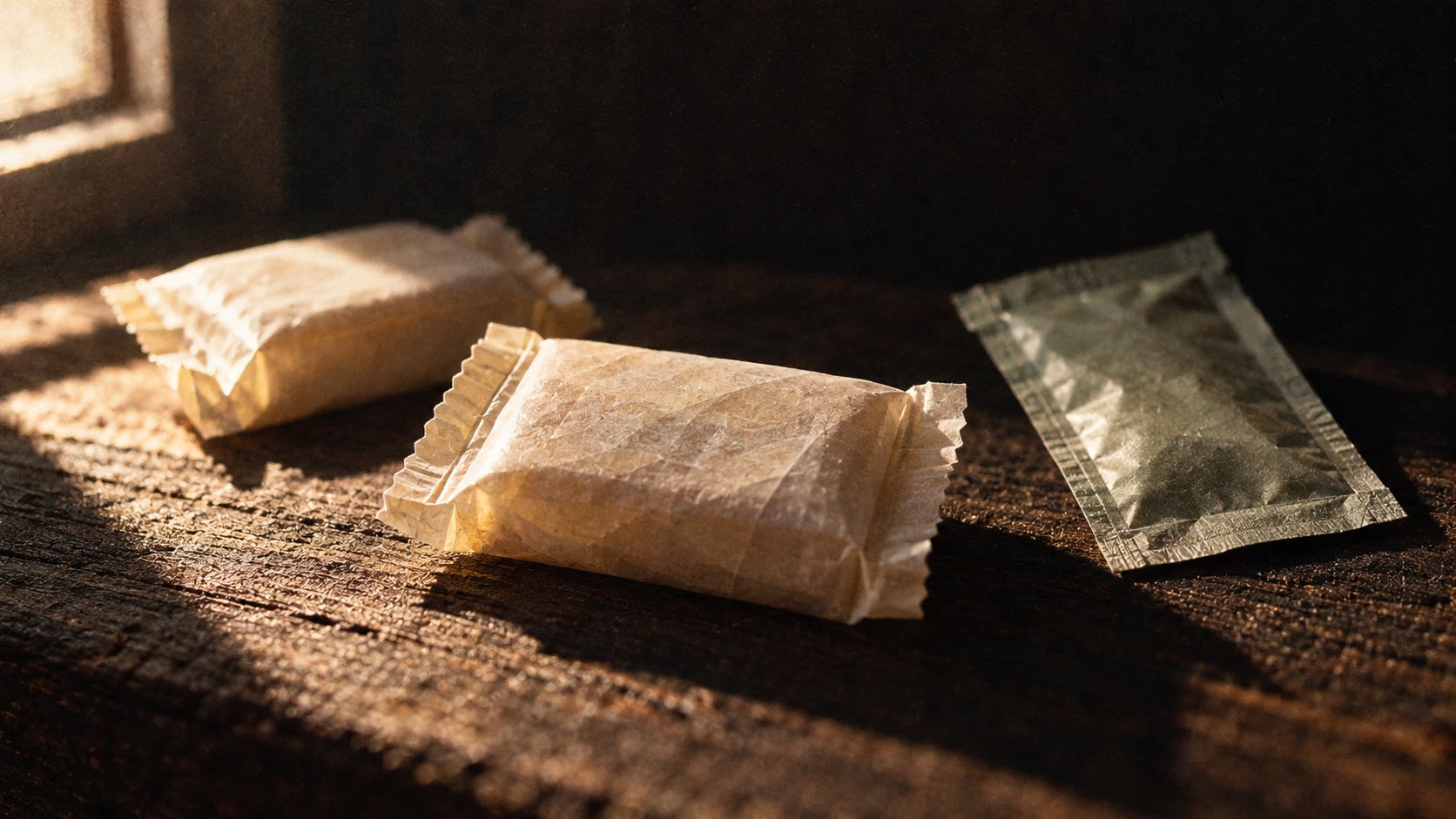
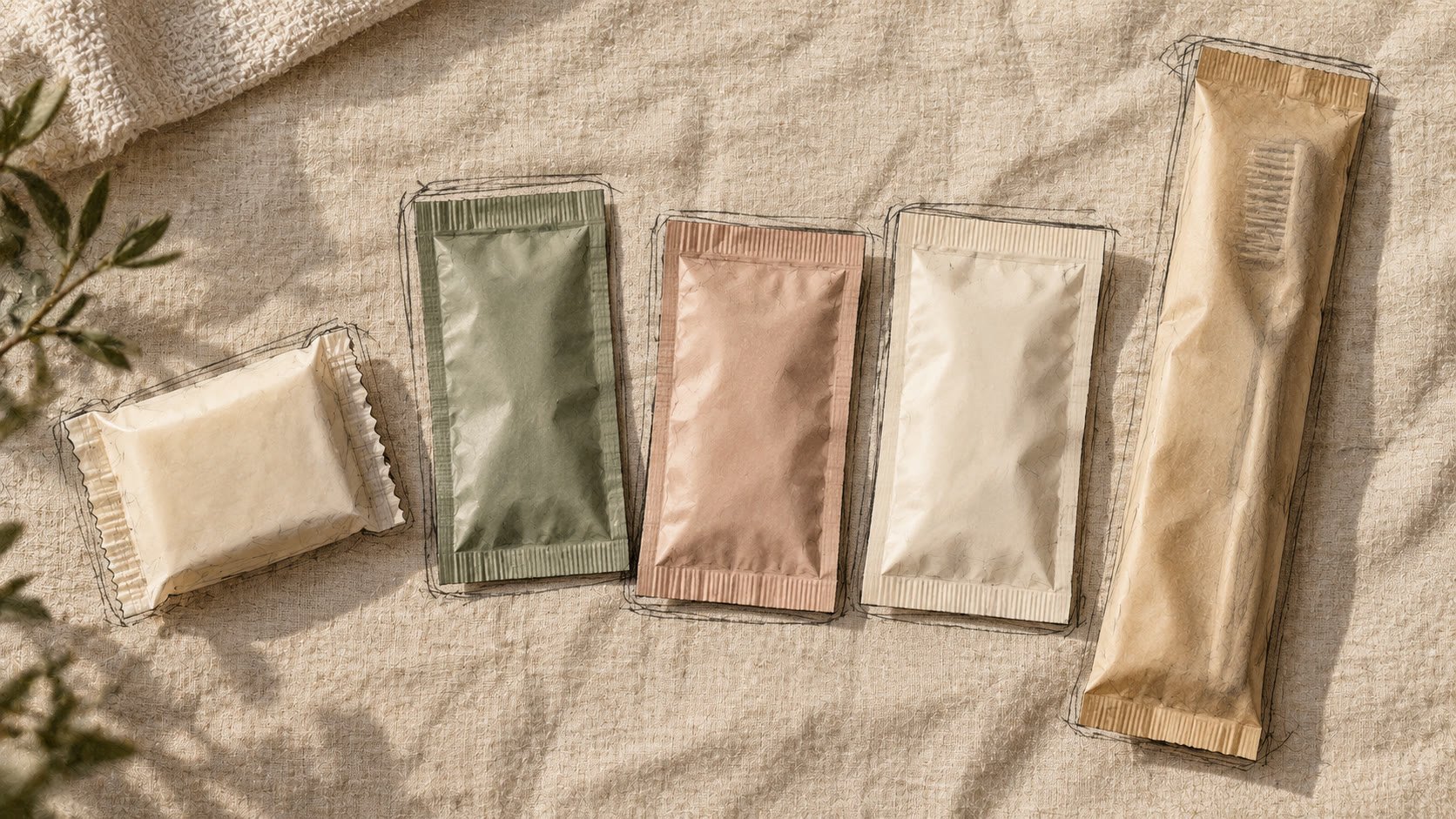
For individually wrapped products specifically, inspect the seal before committing to a large order. Wrappers that open too easily in transit or storage create liability and waste. The seal should require a deliberate tear; guests should be able to tell the product hasn't been touched.
Fragrance Profile
This sounds minor but it shows up in guest reviews. A soap that smells aggressively medicinal in a vacation rental bathroom reads as institutional. A neutral or subtly pleasant fragrance profile is safer across a broader guest base. Get samples before ordering at scale.
Lead Times and Fulfillment Consistency
Ask directly: what's your average fulfillment time, and what happens during your peak periods? A supplier who ships in three days in January and three weeks in July is a planning problem. Get this in writing or at least in email before you commit to them as a primary supplier.
The Category Stack Problem (And Why It Matters More Than You Think)
Most operators don't source personal care products as a system. Soap comes from one supplier, shampoo from wherever had a good deal last quarter, dental kits from a wholesale club run, lotion from an Amazon subscription that got set up and mostly forgotten.
The result is a bathroom that looks assembled rather than chosen. Guests can't always name what's off, but they feel it. A bar of soap in clean, elegant wrapping next to a shampoo sachet with a different aesthetic and a dental kit in a generic poly bag is a collection of purchases, not an amenities program. Small signals like this accumulate into a guest perception, and that perception ends up in your reviews.
Sourcing wholesale personal care works better when you think about your full category stack: every product a guest encounters from the moment they step into your bathroom, and whether those products feel like they belong together.
This doesn't mean buying everything from a single supplier, though that simplifies reordering. It means deciding which categories earn your quality spend, which take the value play, and making sure the packaging language is consistent enough that everything reads as intentional.
| Category | Guest Touchpoint | Sourcing Priority | Typical Wholesale MOQ |
|---|---|---|---|
| Bar or hand soap | Every use, every guest | High: invest here | 100–500 units |
| Shampoo | Daily for most guests | High: invest here | 100–500 units |
| Conditioner | Important for stays of 2+ nights | Medium | 100–500 units |
| Body wash | Supplements or replaces bar soap | Medium | 100–500 units |
| Body lotion | Noticed when present, felt when absent | Medium | 100–500 units |
| Dental kit (brush + paste) | Emergency use, but remembered | Functional minimum | 50–100 units |
The last row is worth pausing on. Dental kits are low-glamour items, but a guest who forgot their toothbrush and finds a sealed, individually wrapped kit in their bathroom remembers the moment. A flimsy brush in a loose poly bag sends the opposite signal. You can spend less here than on soap and shampoo, but there's a floor below which the product actively works against you.
One constraint worth planning around: if you're sourcing six categories at once and each carries a 500-unit MOQ, you're committing to 3,000 units before your first order ships. For smaller operators, that's a real cash-flow and storage problem. The practical workaround is to sequence your sourcing. Lock in your two anchor categories first (soap and shampoo, almost universally) and layer in the rest as you establish reorder rhythms and understand your actual consumption rate per category.
Our hotel toiletries operator's guide covers how to structure your full amenities setup by property type if you want a deeper framework for this sequencing.
The Product Categories Worth Getting Right
Not all personal care products carry equal weight with guests. Prioritizing where to spend on quality versus where to economize is part of running a sustainable amenities program.
High-impact categories (guests notice quality differences):
- Bar soap and hand soap: Daily-use items with direct skin contact. A decent formula at a reasonable price is worth more than the cheapest option available.
- Shampoo and conditioner: Guests with specific hair types will notice immediately. Stock something that works on a broad range of hair.
- Body lotion: Often overlooked, but a sealed lotion packet in the bathroom signals that you thought about the full experience.
Lower-stakes categories (consistency matters more than premium quality):
- Dental amenities (toothbrush, toothpaste): Guests who forget their toothbrush need a functional replacement, not a premium experience. Single-wrapped, individually sealed, reliable.
- Body wash (vs. bar soap): At scale, the cost difference between bar and liquid is meaningful. Bar soap with good packaging holds up fine in most hotel and STR settings.
For a closer look at individual product decisions, our wholesale soap guide and bulk shampoo and conditioner breakdown cover each category in more depth.
Why Trust This Article
We wrote this guide because we supply wholesale personal care products to hotels, Airbnb hosts, property managers, and care facilities across the United States, and the same questions come up on repeat: what's actually worth spending on, how do you evaluate a supplier before committing to a large order, and why does the unit-price comparison always lead people astray.
The advice here comes from seeing those decisions play out across properties of different sizes and types, not from trade press or supplier-facing materials. We've included things in this guide that don't make the case for buying from us specifically, because the goal is for you to source well, whether or not Avistar ends up in your supply chain.
What Avistar Actually Supplies (And Why It's Built the Way It Is)
Everything in Avistar's catalog is designed around one specific problem: getting sealed, guest-ready personal care products to hospitality operators and care facilities without the sourcing headache.
That means individually wrapped soap, shampoo, conditioner, body wash, lotion, and oral care products, each one sealed for hygiene, clearly labeled, and ready to place in a room without additional prep. No bulk refills to manage, no open containers to worry about, no guesswork on whether a product was sealed before it got to your shelf.
A few things worth knowing about how we work:
- Low MOQs for most SKUs. We supply smaller operators, not just hotel groups, so our minimum order quantities are built for a 10-unit Airbnb portfolio or a 30-bed care facility, not just a 200-room hotel.
- Full category range. You can source your entire personal care stack from one supplier rather than managing four different vendor relationships for soap, shampoo, dental, and lotion.
- Both formats. If your property mix includes extended-stay units where dispensers make more operational sense alongside standard rooms where wrapped products work better, we carry both.
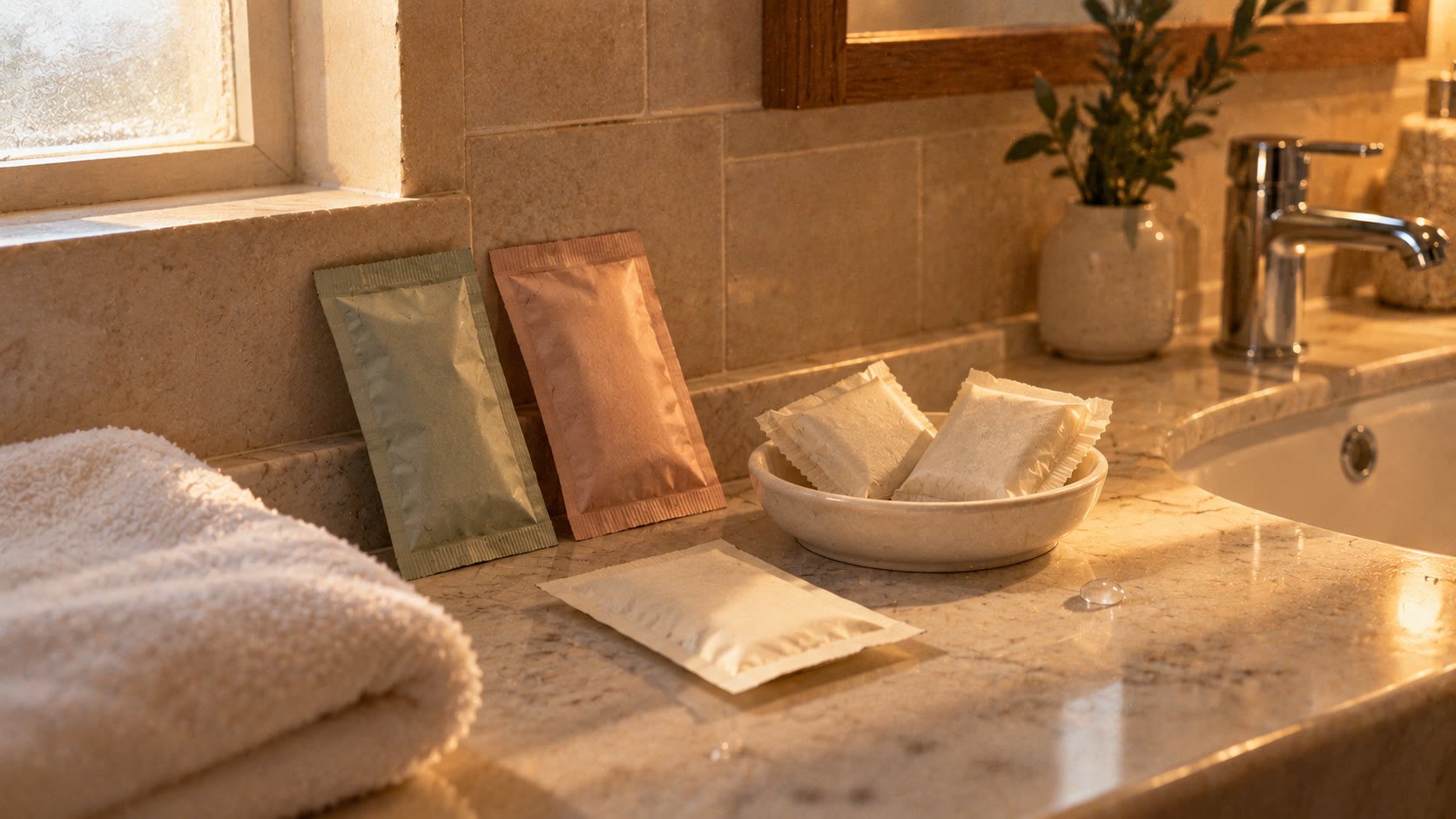
Browse the Avistar product catalog to see what's available across categories, or read our Airbnb toiletries guide if you're sourcing specifically for a short-term rental portfolio.
Frequently Asked Questions
What is the minimum order quantity for wholesale personal care products?
MOQs vary significantly by supplier and product type. Specialty hospitality amenities suppliers often start at 100–500 units per SKU, which is accessible for smaller operators. General wholesale distributors may require 1,000 units or more per order. If you're running a small short-term rental operation, look specifically for suppliers who serve the STR market and offer lower entry-level order sizes.
Are individually wrapped hotel toiletries better than dispensers?
Neither format is categorically better. Individually wrapped products are better for hygiene-sensitive settings, high-turnover properties, and operators who want simplicity in their turnover process. Dispensers work well for extended-stay or eco-focused properties where reducing packaging waste is a priority and staff can manage refill schedules. Most operators with mixed property types stock both.
What certifications should I look for in wholesale personal care products for hotels?
For US properties, look for FDA-compliant labeling, California Prop 65 compliance if you operate in or near California, and any third-party cruelty-free certifications (Leaping Bunny, PETA) your brand positioning requires. "Natural" claims without certification backing are not meaningful in the US regulatory context.
How do I calculate the real cost of wholesale personal care per occupied room?
Take the unit price, multiply by the average number of units consumed per occupied room per night (accounting for multi-night stays and take-home behavior), then add a pro-rated share of storage, handling, and reorder labor. Compare that total cost across suppliers rather than comparing unit prices alone.
Can I get wholesale personal care products with custom branding?
Yes, most mid-to-large hospitality amenities suppliers offer private label or custom-branded packaging, typically at higher MOQs (often 1,000–5,000 units per SKU). This is a worthwhile investment for branded hotel properties. For independent hosts or small property managers, unbranded products with premium packaging tend to deliver better ROI.
How long do individually wrapped personal care products stay shelf-stable?
Most individually wrapped personal care products (soap, shampoo sachets, lotion packets) have a shelf life of 18–36 months when stored in a cool, dry environment. Check the supplier's stated expiration dating before ordering large quantities, especially if your occupancy is seasonal and inventory may sit for months between peak periods.
What's the difference between buying wholesale personal care through a general distributor vs. a hospitality-specific supplier?
General distributors (warehouse clubs, B2B marketplaces) often carry personal care products at lower per-unit prices, but they're designed for retail resale, not hospitality use. Products may lack individual wrapping, have consumer-facing packaging that reads oddly in a hotel bathroom, or come in sizes optimized for retail shelves rather than guest room placement. Hospitality-specific suppliers design their products and packaging around what actually works in a turnover setting.