Hotel supplies are the physical layer of your guest experience: the soap on the sink, the wrapped amenities on the vanity, the small details that tell a guest whether you've actually thought about them or just filled a room. Get them right and guests barely notice. Get them wrong, and you'll read about it in reviews.
That gap, between barely noticed and actively complained about, is where most procurement decisions live. And it's worth understanding before you place your next bulk order.
The Five Categories of Hotel Supplies (And Which One Gets All the Attention)
Most operators, when they hear "hotel supplies," picture toiletries. Shampoo, conditioner, a bar of soap, maybe a shower cap. That's maybe 20 percent of what the phrase actually covers.
Here's a more honest map of what falls under hotel supplies, and the weight each carries in a guest's experience:
| Category | What's Included | Guest Visibility |
|---|---|---|
| Bath amenities | Shampoo, conditioner, body wash, soap, lotion, dental kits | Very high; touched every stay |
| Bathroom sundries | Shower caps, cotton rounds, vanity kits, sewing kits | Low to medium; noticed when missing |
| Room consumables | Tissues, stationery, coffee/tea service, notepads | Medium; noticed when they're good or absent |
| Housekeeping supplies | Trash bags, cleaning agents, laundry bags | Invisible to guests; critical to operations |
| Linens and soft goods | Towels, sheets, pillowcases | Very high; among the top complaint drivers |
The toiletries get the most attention in buying guides because they're the most visible. But experienced property managers know that a bad towel will generate a one-star review faster than a mediocre shampoo will.
For the purposes of this article, we're focused primarily on guest-facing amenities: the items that land in your bathrooms and guest rooms, that guests touch and use and quietly judge you by.
The Psychology of the Wrapped Amenity
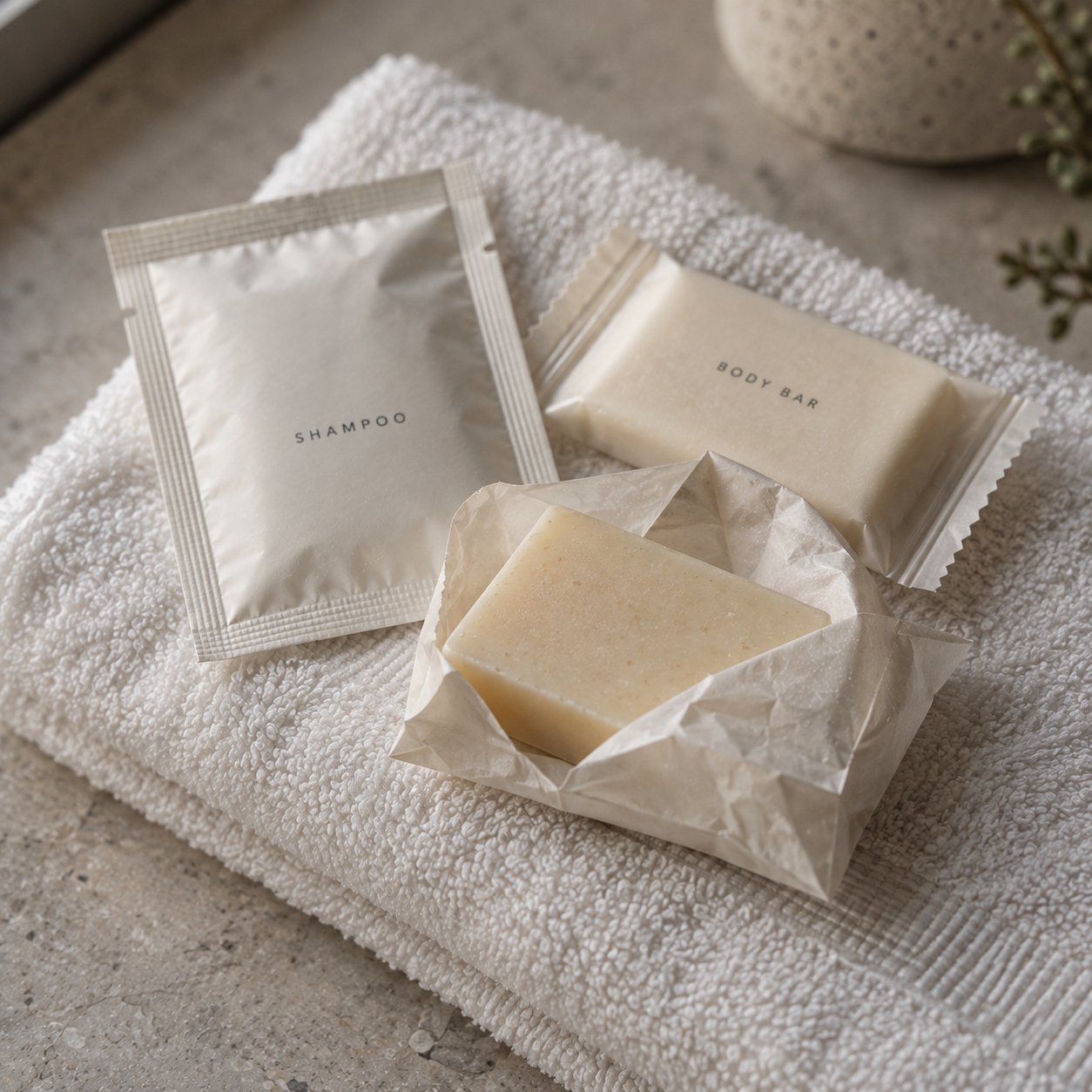
There's something that happens when a guest opens a bathroom door and sees individually wrapped soap and toiletries laid out on the vanity. It signals: someone thought about this. It communicates hygiene. It communicates care. It communicates that the property has standards.
Loose, refillable dispensers have their place, particularly in full-service properties with strong sustainability messaging and clear brand identity. But for the majority of hotels, Airbnbs, vacation rental hosts, and care facilities, individually wrapped guest amenities remain the standard because they do something dispensers can't: they communicate freshness at a glance, before the guest has even touched anything.
This isn't sentimentality. It shows up in reviews. Properties we supply that have made the switch from loose or refillable amenities to individually wrapped toiletries consistently report fewer hygiene-related complaints. The psychology is simple: a sealed wrapper says nobody touched this before you.
If you want to go deeper on the bathroom specifically, The Five-Star Bathroom: What Guests Notice, and How to Nail It Every Turnover breaks down exactly which details move the needle and which ones are wasted effort.
What Guests Actually Notice (Versus What You Think They Notice)
Here's where most procurement guides get it wrong. They treat all hotel supplies as equal and just list categories. But guests don't experience your property categorically. They experience it sequentially.
The first thing most guests do when they arrive is set their bag down and look around the room. The second, especially after a long travel day, is check the bathroom. That's when your amenities get evaluated.
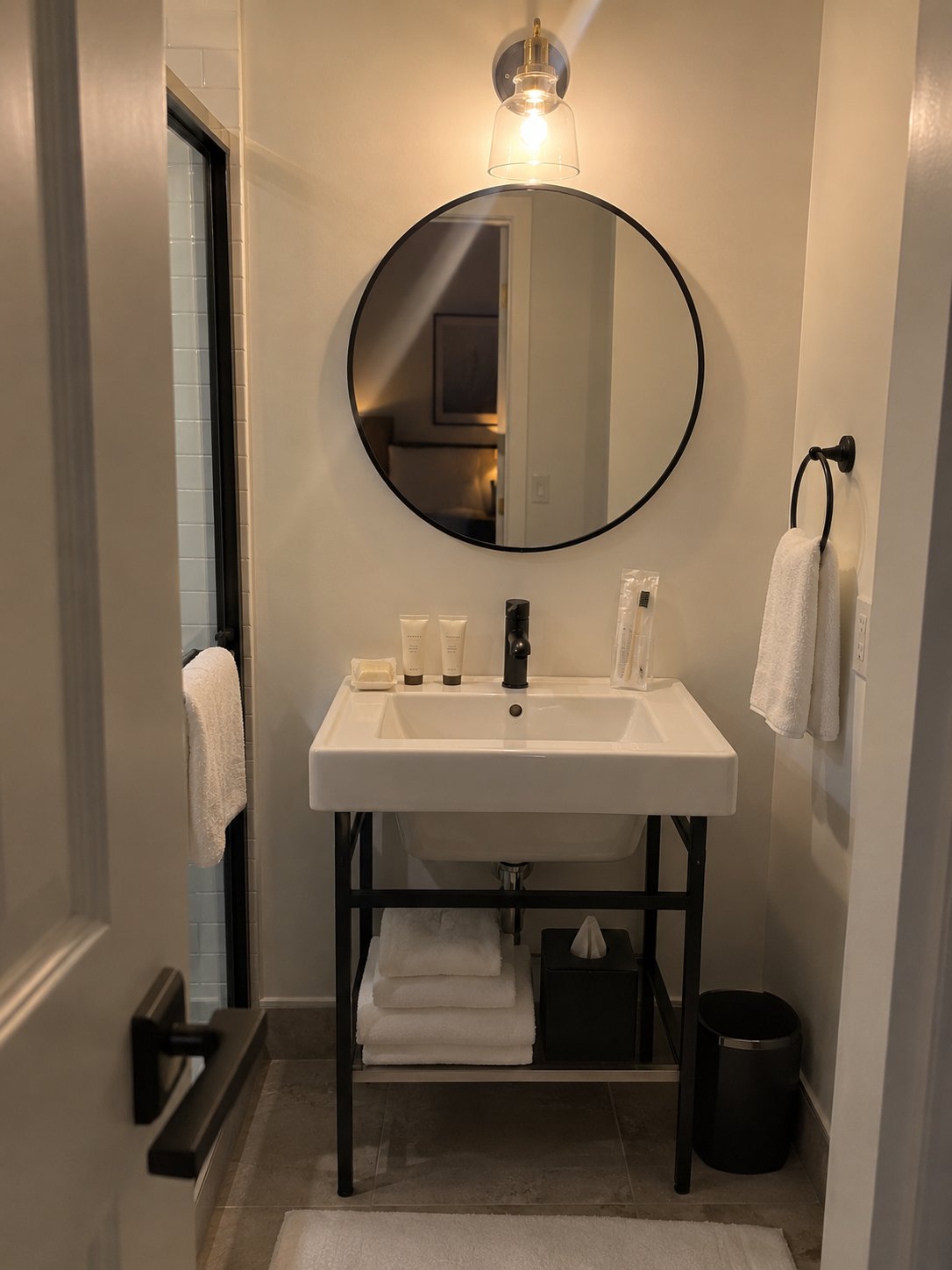
What they're scanning for, roughly in this order:
- Are there toiletries? (The absolute minimum.)
- Do they look fresh and sealed? (Hygiene check.)
- What brands or quality level are they? (This calibrates expectations for the whole stay.)
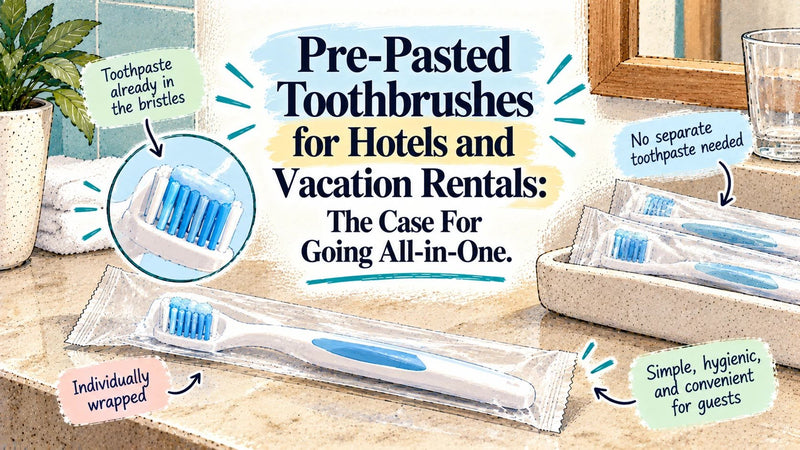
- Is the dental kit included, or do I need to dig through my bag? (More relevant than most hosts realize.)
- Are towels thick enough to feel like a real hotel? (Yes, towels are supplies. Yes, they matter enormously.)
The things guests don't notice: whether you saved $0.03 per unit switching to a different shampoo brand, whether your soap has a slightly smaller format than last season's, whether the lotion fragrance is sandalwood versus citrus.
What they do notice: running out of something mid-stay. The zip-lock sandwich bag of toiletries that reads "budget." The dispenser that ran empty before the second night.
In our experience, those complaints surface in reviews far more often than any brand or fragrance choice ever does.
The little touches that guests actually remember are rarely the expensive ones. They're the consistent ones.
The Bulk Buying Math (And Where People Get It Wrong)
This is the part most blog posts skip over, and it's the conversation we have most often with operators who are new to buying in bulk. It's also where the most money gets left on the table.
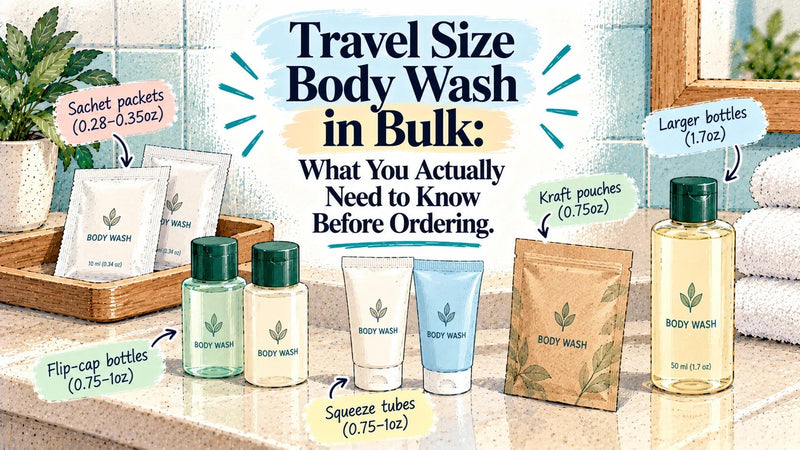
Buying hotel supplies in bulk lowers your cost per unit, often dramatically. A 0.75 oz travel-size shampoo that costs $0.50 or more per unit at retail can come down to $0.15 to $0.25 per unit when ordered by the case. At 20 rooms, turned over every two to three nights, that difference adds up to thousands of dollars over a year.
But bulk buying has real failure modes:
Overbuying perishables. Some toiletries have shelf life considerations, especially products with natural ingredients or minimal preservatives. Buying 18 months of supply for a product that degrades in 12 is a loss, not a saving.
Underestimating storage. A case order for 500 units of shampoo takes up physical space. A full amenities bundle for 30 rooms ordered quarterly takes up a storage room. If you don't have that room, the savings evaporate in logistics costs.
Chasing unit cost without checking MOQs. Minimum order quantities from wholesale suppliers can be steep. A $0.15-per-unit shampoo with a 2,000-unit MOQ is only a deal if you'll actually use 2,000 units before the next reorder cycle makes more sense.
The smarter framework is to calculate your monthly run rate per room before placing any bulk order:
- Count average occupied room-nights per month.
- Multiply by the number of amenity units consumed per stay (typically 1 of each per guest).
- Order 2 to 3 months of supply at a time, reordering before you hit your last 2-week buffer.
This keeps your storage manageable, your cash flow predictable, and your shelves stocked without waste.
For a deeper look at this specific calculation with real numbers, Bulk Buying for Hosts: Lower Cost, Same Guest Experience is worth reading through.
What Makes a Good Hotel Supplies Vendor
The wholesale hotel supplies market is crowded. There are dozens of suppliers at any given moment, ranging from massive distributors handling global hotel chains to small specialty vendors targeting boutique properties. Choosing between them involves more than price comparison.
The things that actually matter, and the criteria we hold ourselves to as a supplier:
Product consistency. You need the same product every time. A shampoo that varies in scent, color, or formulation between orders will confuse guests and create a support headache. Ask vendors directly about their production consistency and private-label product stability.
Lead times. Some wholesale suppliers run long lead times, especially for custom or branded orders. If you need a 10-day turnaround and a vendor quotes 6 weeks, that's a non-starter regardless of price.
Minimum order quantities. As noted above, MOQs vary enormously. Some vendors work with small and mid-sized properties on flexible minimums. Others require volume that only makes sense for full hotel chains.
Certifications and compliance. Depending on your property type, particularly care facilities, you may need products that meet specific safety or allergen standards. Cruelty-free and eco-certified options are increasingly expected at higher-end properties.
Packaging quality. The wrapper is part of the product. A cheap-looking crimp seal on a soap bar communicates something to a guest, and it's not premium. Look at the actual physical product before committing to a large order.
How to Build Your Hotel Supplies Kit by Property Type
Not every property needs the same kit. Here's a practical breakdown by property type, drawn from what we see ordered most consistently across each segment:
Budget Hotels and Motels
Focus on the essentials: shampoo, conditioner, body wash or soap, and a basic dental kit. Guests at this price point aren't expecting a luxury amenities set, but they are expecting to not have to unpack a toiletry bag for the basics. Keep unit costs tight; individual wrapping still matters for hygiene perception.
Mid-Scale Hotels and Extended Stay
Full amenity set including lotion, shower cap, and vanity kit. Dental kits are expected. Coffee or tea service in-room. Guests in this tier notice quality more than budget guests do, so a small step up in formulation or fragrance pays back in reviews.
Boutique Hotels and Luxury Stays
This is where brand and packaging carry real weight. Guests are paying for an experience, and the amenities are part of it. Consider custom-branded product lines, premium formulations, and a curated room consumables package.
Airbnbs and Short-Term Rental Hosts
Individually wrapped amenities here are a meaningful differentiator. Most STR guests arrive expecting a step down from a hotel room; a proper amenities setup tells them immediately that this host pays attention. Keep it clean, individually wrapped, and consistently restocked. The turnover checklist for five-star reviews is built specifically for this context.
Senior Living and Care Facilities
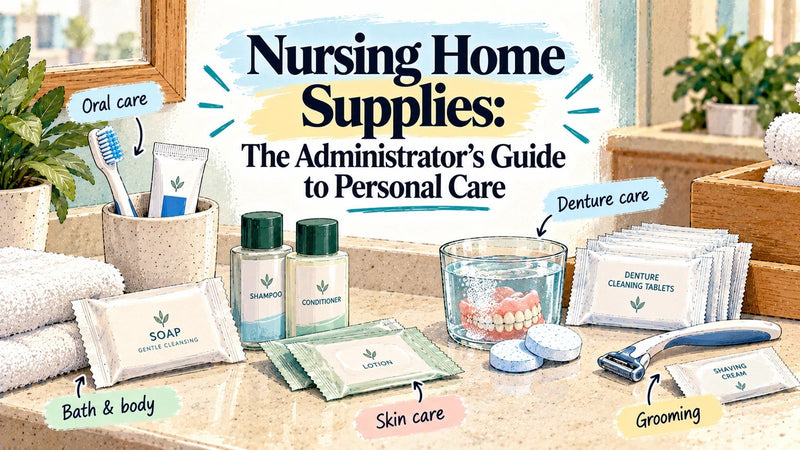
Safety and allergen considerations move up the priority list. Fragrance-free or low-fragrance options are often preferred. Individual wrapping is critical for hygiene and dignity. MOQs matter a lot here because facilities typically need to stock for a stable, predictable guest population at volume.
Why Trust This Article
We supply individually wrapped guest amenities to hotels, Airbnb hosts, short-term rental managers, and care facilities, so this topic isn't theoretical for us. We see what our customers run out of, what they reorder fastest, what generates questions, and what they wish they'd known when they started buying in bulk. The perspective here comes from that direct supply relationship, not from a general hospitality content brief.
How Avistar Fits Into This
Avistar supplies individually wrapped guest amenities, soap, oral care kits, and toiletries wholesale to hotels, Airbnbs, vacation rental hosts, and care facilities. Our catalog is built for exactly the property types described in this article: operators who need consistent quality, manageable MOQs, and product that actually looks good on a vanity.
If you're building or refreshing your hotel supplies kit, browse our full product catalog, or take a look at our travel and amenities range for individually wrapped formats that work across property types.
The goal isn't to oversell you on a massive order. It's to help you find the right supply rhythm for your property size, so you're never scrambling before peak season and never overstocked in January.
Frequently Asked Questions
What are hotel supplies?
Hotel supplies are the consumable and operational products a property needs to run its rooms and serve guests. This includes guest-facing amenities like shampoo, soap, conditioner, dental kits, and lotion, as well as room consumables (tissues, coffee service, notepads), housekeeping products, and linens. For most procurement purposes, the term specifically refers to guest bathroom amenities and room consumables.
Where do hotels buy their toiletries in bulk?
Hotels typically source bulk toiletries through wholesale amenities suppliers, hospitality distributors, or direct from manufacturers for larger volumes. Suppliers range from broad-catalog distributors covering bedding, towels, and amenities together, to specialty amenities-only suppliers focused on individually wrapped hotel toiletries. Minimum order quantities, lead times, and product consistency vary significantly between vendors.
What toiletries do hotels typically provide?
Standard hotel toiletries include shampoo, conditioner, body wash or bar soap, and hand lotion. Most properties above the budget tier also include a dental kit (toothbrush and toothpaste), a shower cap, and a vanity kit with cotton rounds and a nail file. Extended-stay and mid-scale properties often add a sewing kit and additional body care items. Luxury properties may include premium skincare products or branded amenity lines.
How much do bulk hotel amenities cost?
Bulk hotel amenities typically range from $0.14 to $1.00 per unit at wholesale, depending on product type, formulation quality, packaging, and order volume. A basic individually wrapped soap bar runs roughly $0.14 to $0.40 per unit in bulk. A full amenities kit (shampoo, conditioner, body wash, lotion, soap) sourced as a set can range from $0.75 to $4.00 per room per stay at wholesale pricing, with budget-tier products at the lower end and premium or branded formulations at the higher end.
Are individually wrapped hotel amenities better than dispensers?
Individually wrapped amenities communicate freshness and hygiene to guests in a way dispensers cannot. A sealed wrapper signals that no one has touched the product before the guest, which matters particularly in hotels, Airbnbs, and care facilities where cleanliness is directly tied to review scores and occupancy. Dispensers are more sustainable but require more trust from the guest and consistent refill discipline from housekeeping staff. Most properties outside of full-service hotels with strong sustainability branding see better guest perception results from individually wrapped amenities.
How often should hotels restock guest amenities?
Guest amenities should be fully restocked at every room turnover, regardless of how much was used. This is standard housekeeping practice and a guest expectation. For operational planning, most properties calculate a monthly amenities run rate based on occupied room-nights multiplied by units consumed per stay, then order 2 to 3 months of supply at a time to balance bulk pricing against storage constraints and cash flow.
What should Airbnb hosts stock in terms of hotel-style amenities?
Airbnb hosts aiming for hotel-quality guest experience should stock, at minimum: individually wrapped shampoo, conditioner, body wash or soap, hand soap, and a basic dental kit. Adding lotion and a shower cap moves the experience meaningfully upmarket. All items should be individually wrapped rather than in shared dispensers, both for hygiene perception and because guests expect to find a fresh set rather than a communal product. Hosts running multiple units benefit significantly from bulk buying to reduce per-stay supply costs.