Here's a thing most guides get wrong: they treat travel size toiletries like a consumer packing question. What to throw in your carry-on. What fits in a quart-sized bag.
That's not why you're here.
If you're managing a hotel room, an Airbnb, a vacation rental, or a care facility, travel size toiletries are an operational decision. They affect your cost-per-turnover, your guest reviews, your storage capacity, and the story your bathroom tells in the first 30 seconds of a stay. Getting this right matters more than most hosts realize.
This guide covers everything: what counts as travel size, what to actually stock, how to buy at scale without wasting money, and where the industry is heading on sustainability.
What "Travel Size Toiletries" Actually Means
Travel size toiletries are single-use or short-stay personal care products, typically packaged in quantities designed for one to three uses. In hotel and hospitality contexts, these are usually individually wrapped or bottled, ready to hand off to a guest without refilling or repackaging.
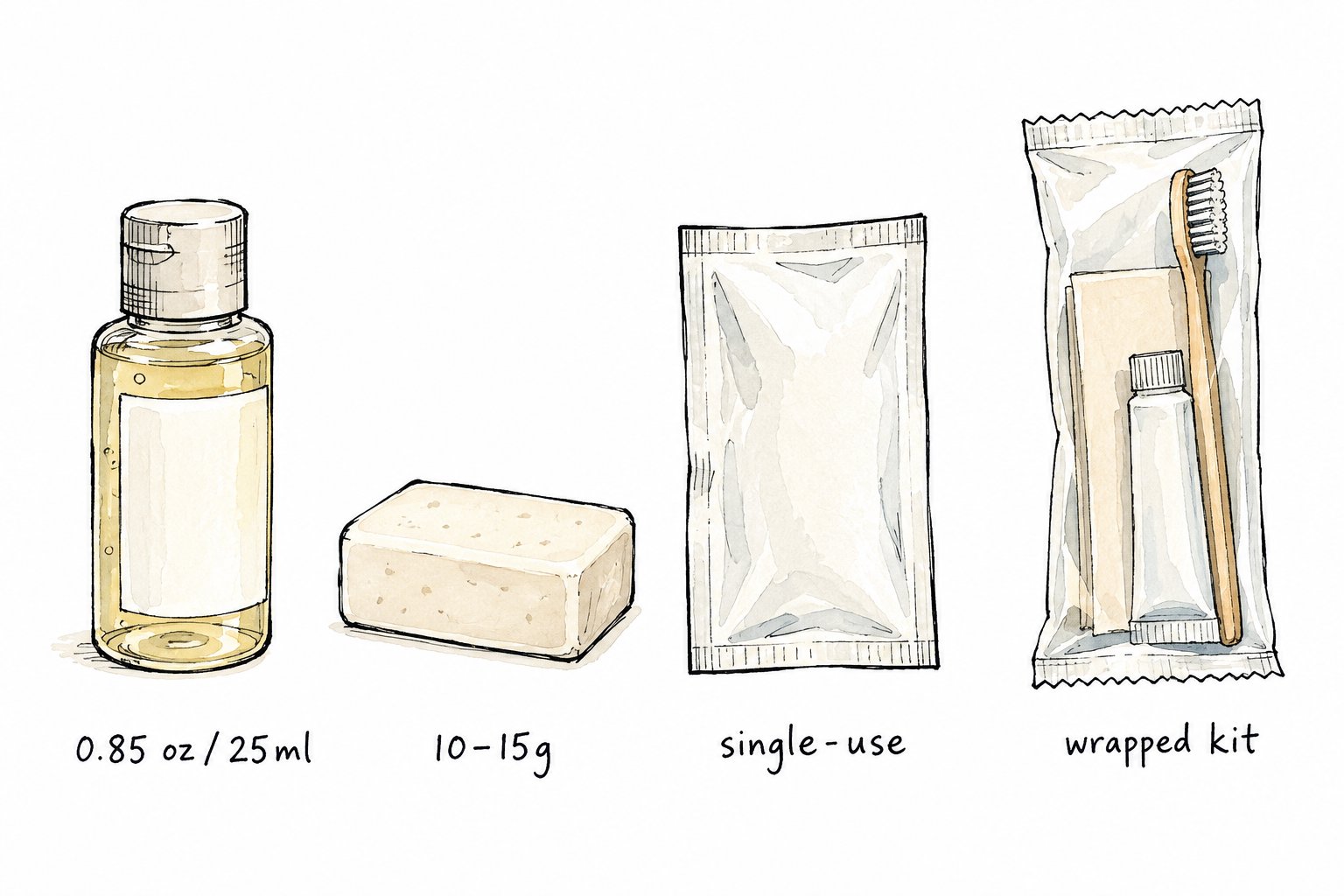
The standard sizes you'll encounter:
- 0.85 oz / 25 ml for shampoo, conditioner, body wash, and lotion: the classic miniature bottle
- 10–15g bar soaps, individually paper-wrapped or boxed
- Single-use sachets for oral care, skincare, and personal hygiene
- Individually wrapped kits that bundle multiple items in one sealed pack
The "travel size" label in a hotel context really just means: portion-controlled, guest-ready, and hygienic. That's the frame to use when you're buying.
The Real Cost Question Nobody Talks About
Most hosts and procurement managers ask the wrong question first. They ask: "What's the cheapest per-unit option?"
The better question is: "What's my all-in cost per turnover, and what does that cost signal to my guest?"
Here's a simple framework to run before placing any bulk order:
| Factor | What to calculate |
|---|---|
| Cost per unit | Price ÷ units in case |
| Turnover frequency | How many turnovers per month per room/unit |
| Usage per stay | Average number of nights × expected consumption rate |
| Waste rate | Items thrown away unopened or damaged |
| Review impact | What amenity quality does to your star rating (and ADR) |
A property running 80 turnovers a month that saves $0.10 per amenity kit saves $8/month. But if lower-quality toiletries push one review from 5 stars to 4 stars, the ADR impact on one booking swamps that saving several times over.
The math almost always favors buying better product in bulk.
The Complete Travel Size Toiletries Checklist
The Non-Negotiables
These are what guests expect to find. Missing any one of them generates a complaint.
- Bar soap (individually wrapped): the baseline. Guests will forgive a lot if the bathroom smells clean and a fresh soap is there.
- Shampoo: single-use bottle or sachet, clearly labeled
- Conditioner: more expected than most hosts think, especially at longer stay lengths
- Body wash or shower gel: increasingly replacing bar soap as the primary cleanser in upscale properties
- Toilet paper: not technically a toiletry, but adjacent; never let a guest find half a roll
The Tier Two: Strong Differentiators
These items don't get noticed when they're present. They get noticed when they're absent.
- Dental kit (toothbrush + toothpaste): one of the most frequently forgotten items by travelers. Hotels that stock these earn genuine appreciation.
- Disposable razors: especially useful for short-notice bookings when guests forgot to pack
- Lotion / moisturizer: signals care, particularly in dry climates
- Cotton rounds or Q-tips: small but deeply appreciated
The Premium Layer
Add these if you're running a higher-end property, or if reviews are your primary growth lever:
- Mouthwash sachet: fresher feeling, easy to store
- Individually wrapped floss or floss picks: overlooked by nearly every host, remembered by every guest who needed one
- Facial cleanser sachet: relevant for extended stays
- Shower cap: fast to pack, almost zero cost, genuinely useful
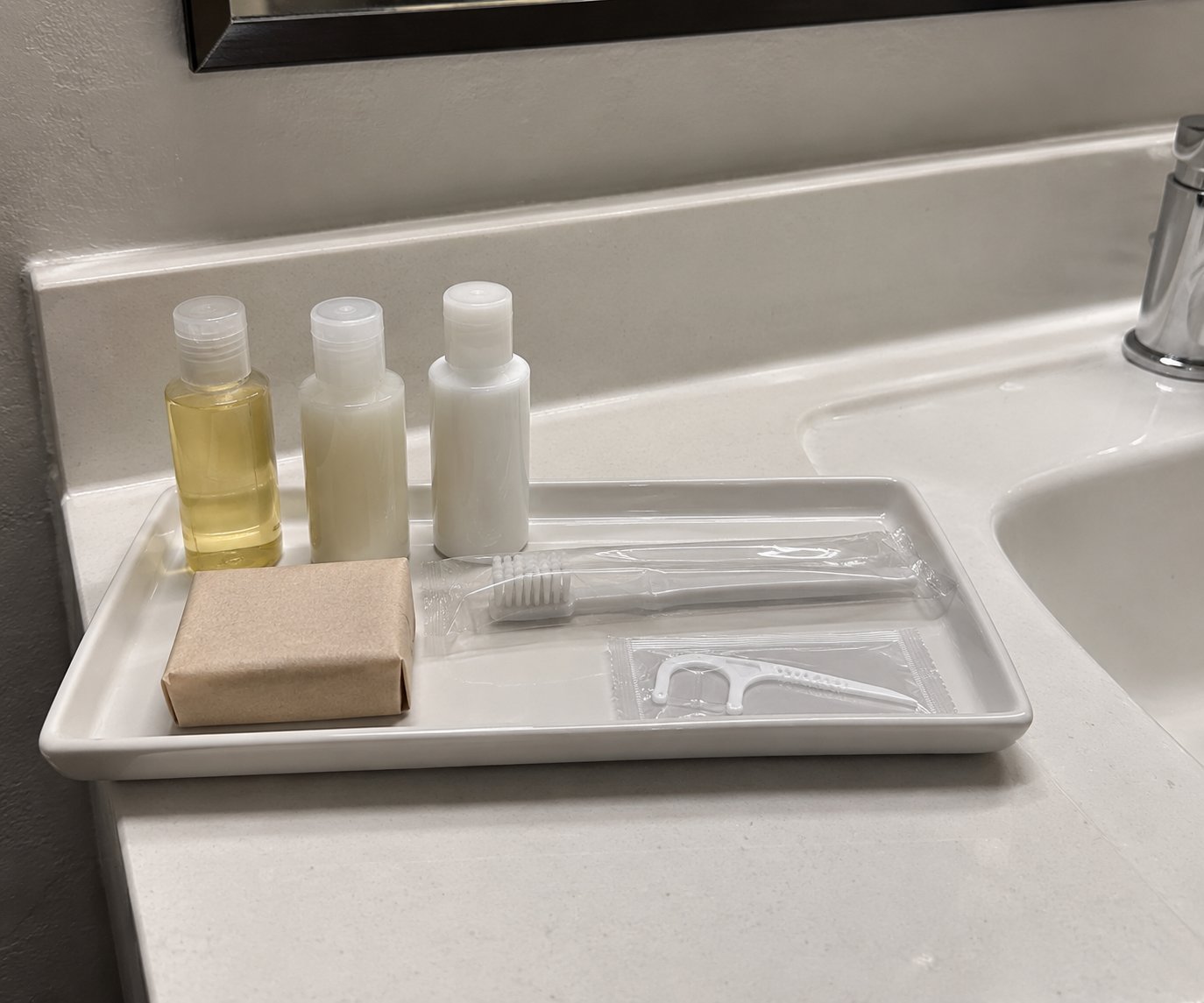
Full Reference Table
| Item | Format | Best For |
|---|---|---|
| Bar soap | Individually wrapped | Hotels, Airbnbs, care facilities |
| Shampoo | 1 oz bottle or sachet | All properties |
| Conditioner | 1 oz bottle | Airbnb, boutique hotel |
| Body wash | 1 oz bottle | Mid-to-upscale properties |
| Dental kit | Wrapped kit | Hotels, extended stays |
| Toothbrush | Individually wrapped | Hotels, care facilities |
| Disposable razor | Individually wrapped | Hotels |
| Body lotion | 1 oz bottle or sachet | Drier climates, longer stays |
| Floss / floss picks | Individually wrapped | Premium tier |
| Mouthwash | Single-use sachet | Hotels, upscale Airbnb |
| Cotton rounds | Bagged set | Extended stays |
Individually Wrapped vs. Refillable Dispensers: Where the Industry Actually Stands
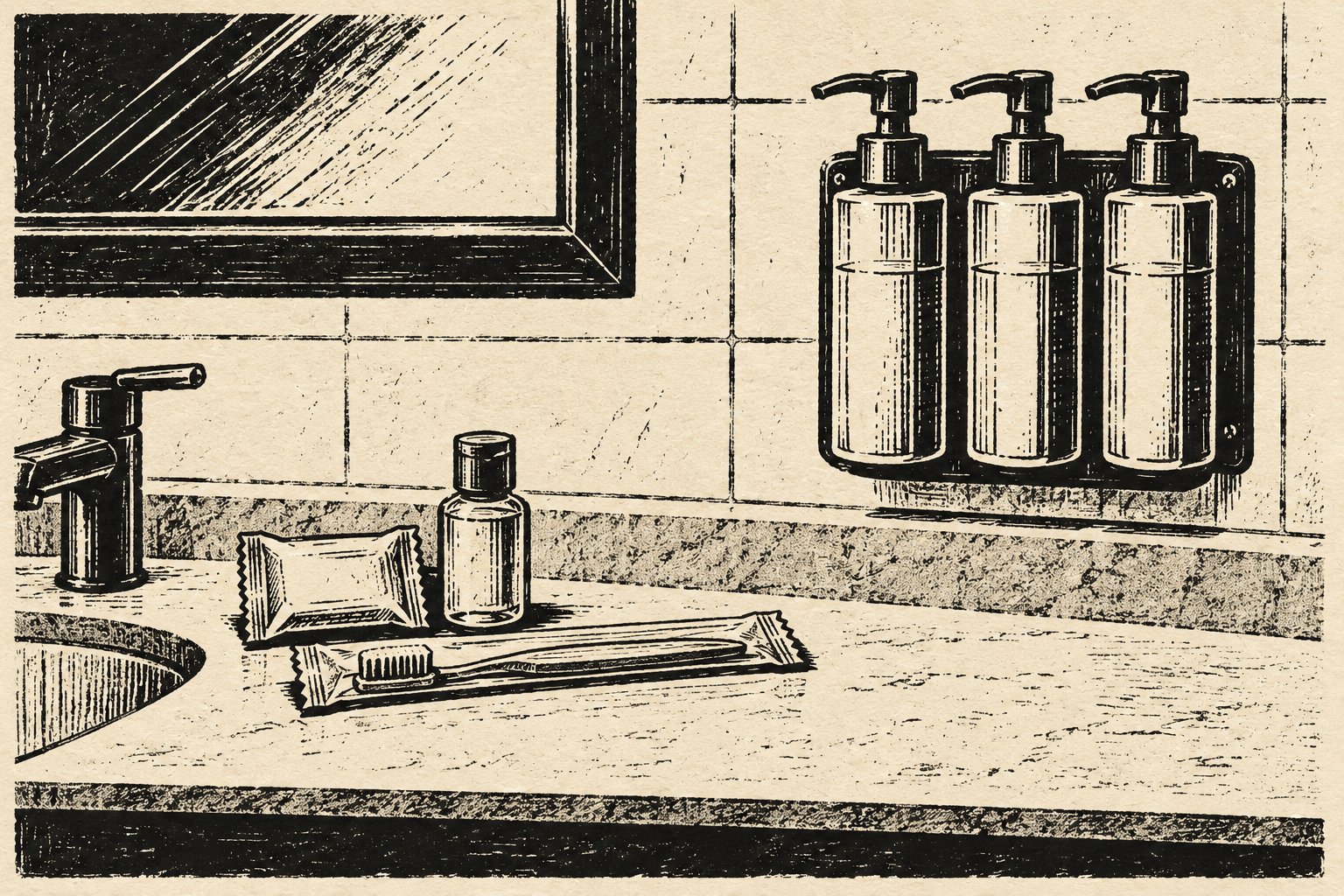
Both formats are widely used across hospitality and both can deliver a strong guest experience. The choice comes down to your property type, operational model, and what you want the bathroom to communicate.
Here is how each one works in practice.
Individually wrapped:
- Hygiene is visible. A sealed wrapper tells the guest the item is untouched, which matters in properties where turnover transparency is part of the brand.
- No setup overhead. No mounting, no installation, no maintenance protocol. Items arrive ready to place.
- Easy inventory control. You know exactly what has been used each turnover.
- Works well at any property size, from a single Airbnb unit to a mid-size hotel.
Refillable dispensers:
- Cleaner counter aesthetic. A flush wall-mounted dispenser removes clutter from the shower ledge, which reads as more intentional and upscale.
- Lower long-run cost at scale. Bulk refill product is significantly cheaper per use than individual units once you're past a certain room count.
- Reduced packaging waste. Fewer individual wrappers and bottles per stay, which supports sustainability certifications and appeals to an increasingly eco-aware guest segment.
- Easier for guests with limited dexterity. No caps, wrappers, or small packaging to manage.
- Compliant alternative for states with single-use plastic bottle bans (see the sustainability section below).
How to choose:
| Property type | Format that tends to work best |
|---|---|
| Single-unit Airbnb or vacation rental | Individually wrapped |
| Boutique hotel or B&B (under 30 rooms) | Either; depends on brand positioning |
| Mid-size hotel (30–100 rooms) | Dispensers for shower; individual for vanity items |
| Large hotel or resort (100+ rooms) | Dispensers for volume efficiency |
| Care facility or senior living | Individually wrapped for hygiene visibility |
The honest answer is that many properties use both: dispensers in the shower where guests expect a fixed format, and individually wrapped items on the vanity where the sealed presentation still matters.
How to Buy Travel Size Toiletries in Bulk Without Getting Burned
The bulk toiletries market has a lot of variance in quality. A case that looks like a deal can be full of watery shampoo, soap that crumbles on first use, or items with a three-month shelf life from the moment they arrive.
Things to check before placing a large order:
- Fragrance load: heavy fragrance in amenities triggers reactions in some guests. Neutral or lightly scented options are the safer default for shared hospitality spaces.
- Paraben and sulfate content: increasingly, guests notice and care. Products formulated without these have broader guest appeal.
- Shelf life: individually wrapped items should have a minimum 12-month shelf life from manufacture date. Confirm this before ordering in quantity.
- MOQ and case packs: understand what you're actually committing to. A "case" of 300 units of shampoo is roughly 300 turnovers if guests use one bottle per stay. That's the math.
- Packaging integrity: paper-wrapped soaps need to survive your storage conditions. In humid climates especially, the wrapper matters.
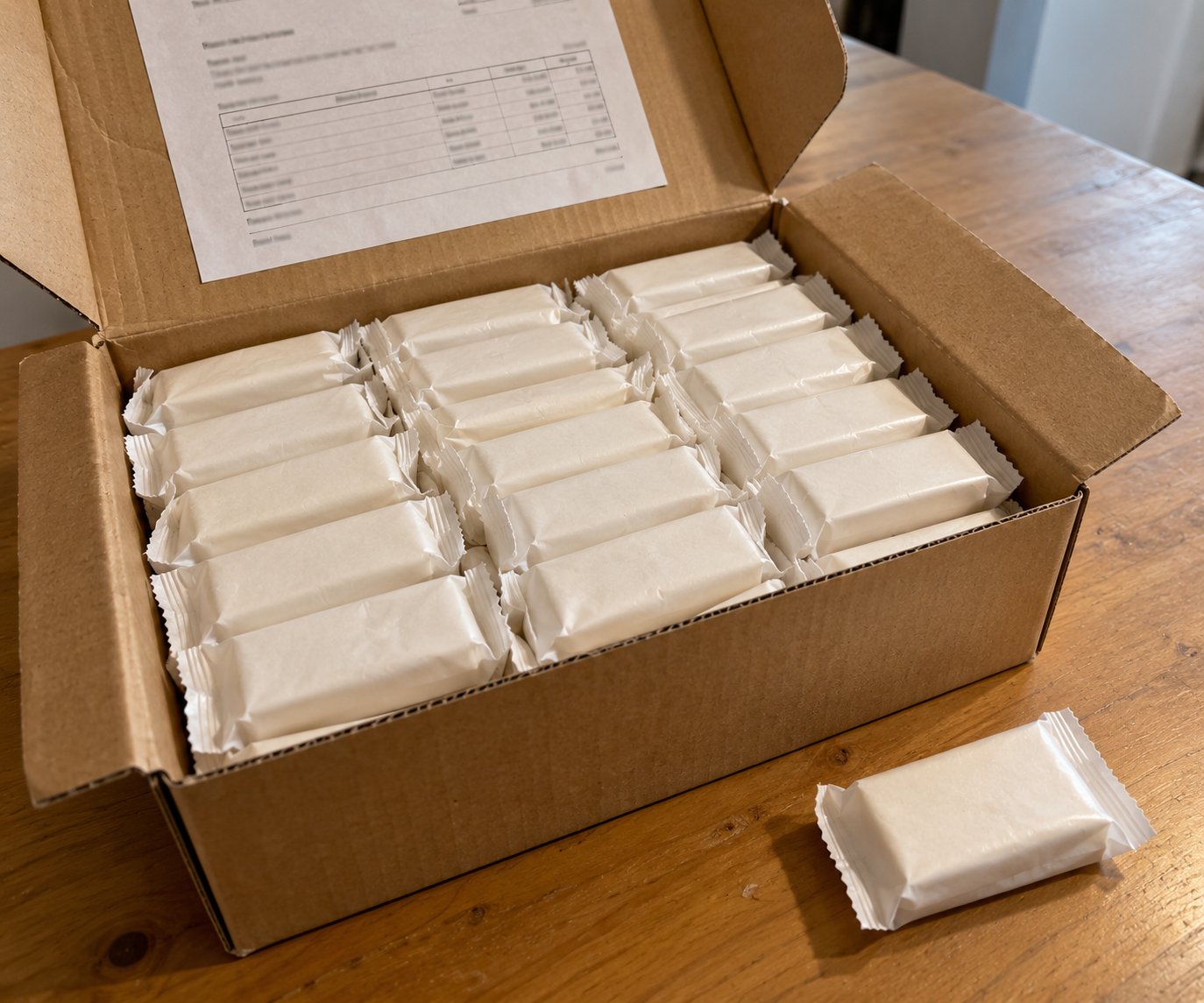
One thing that matters more than most buyers expect: individual wrapping. A guest doesn't just experience the product; they experience the unwrapping. A tight, clean individual wrap signals newness. A bulk item dropped loose in a basket signals reuse, even if it hasn't been.
If you're sourcing oral care items specifically, our travel toothbrush guide covers what to look for in disposable and single-use formats designed for hospitality.
What Good Amenity Presentation Looks Like
Stocking the right products is half the job. Presentation is the other half.
The bathrooms that generate "nice touch" and "well-stocked" comments in reviews share a few things:
- Items are arranged, not dumped. A small tray or a stacked grouping takes 30 seconds per turnover and reads as intentional.
- Everything is sealed. No half-used items. No soap with previous guest residue. No question marks.
- Quantity is right. Two bars of soap for a four-night stay feels generous. One for a two-night stay is fine. One for a seven-night stay generates a comment.
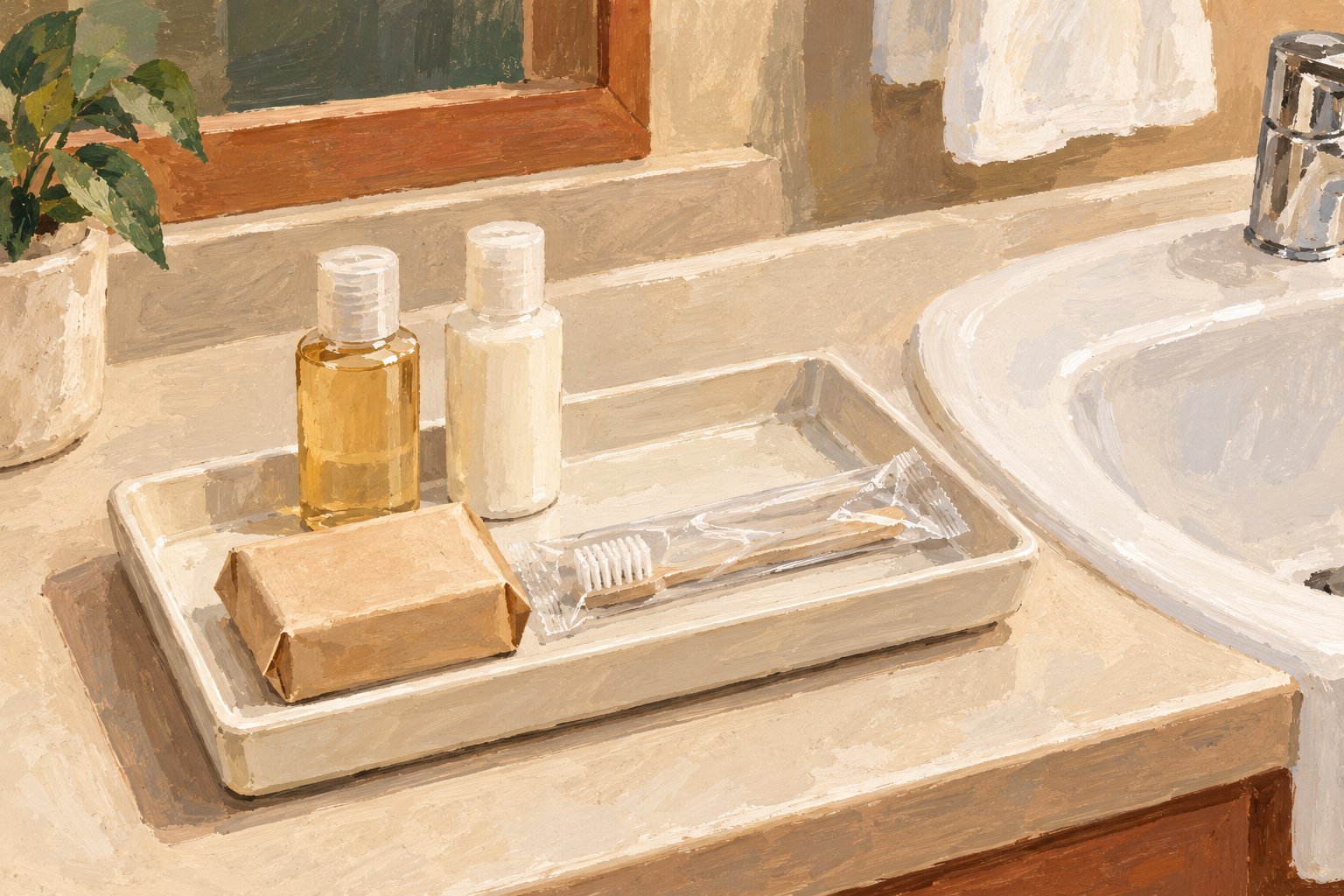
Our turnover checklist includes a bathroom section with the specifics of how to set these up consistently across turnovers. And if you want to go deeper on the bathroom as a whole, The Five-Star Bathroom covers how the full space reads to a first-time guest.
The Sustainability Angle: What's Actually Changing
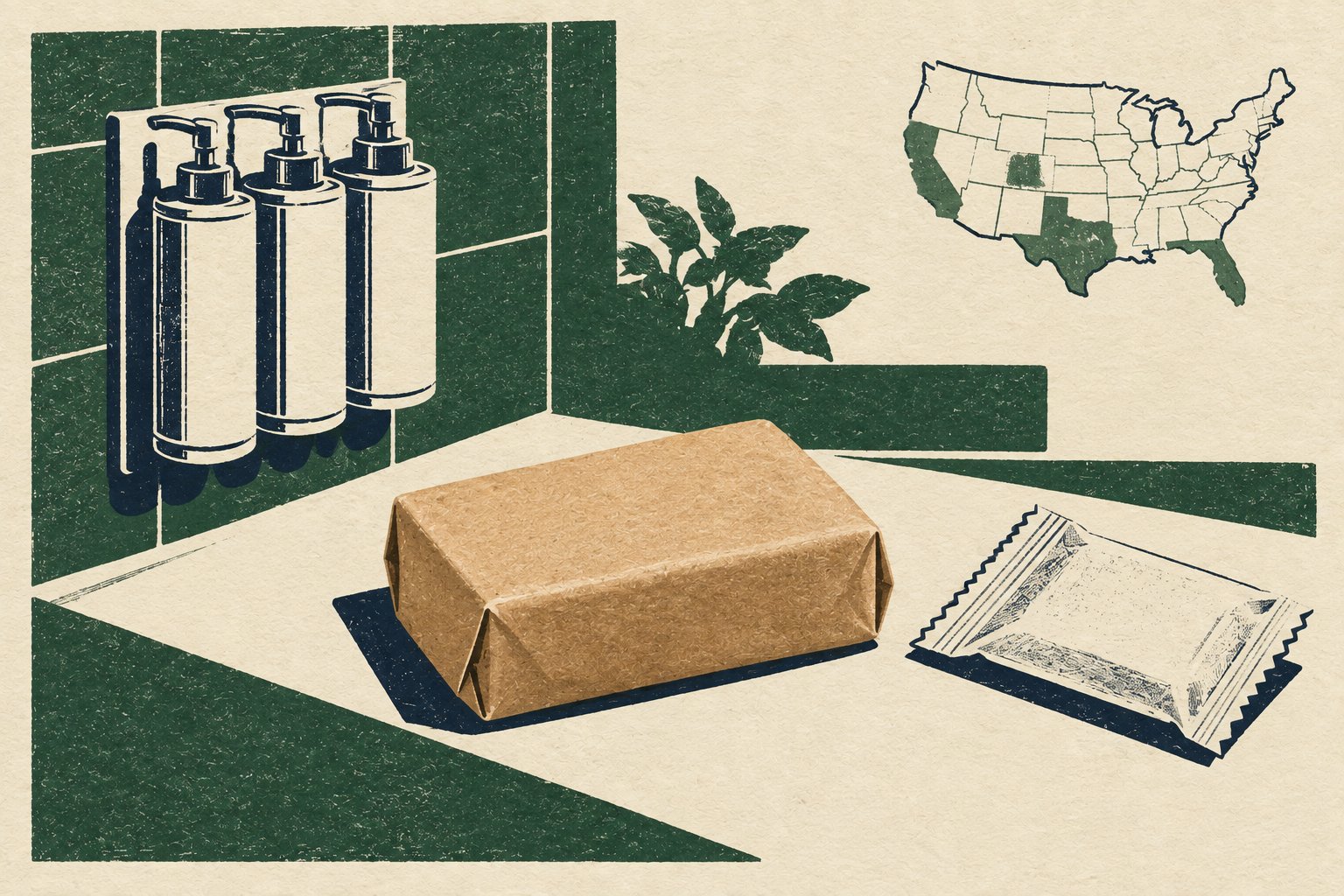
California was first, but three more states have since passed similar laws. Here is where things stand as of 2026:
| State | Large properties (50+ rooms) | All properties |
|---|---|---|
| California (AB 1978) | January 1, 2023 | January 1, 2024 |
| New York | January 1, 2025 | January 1, 2026 |
| Illinois | July 1, 2025 | January 1, 2026 |
| Washington | January 1, 2027 | January 1, 2028 |
Each law covers small-format plastic bottles (typically under 6–12 oz) used for shampoo, conditioner, body wash, and soap. Compliant alternatives across all four states include wall-mounted dispensers, sachets, and non-plastic individual packaging such as bar soap. Most laws include a guest-request exemption: products supplied only when a guest asks for them fall outside the ban.
The EU has its own single-use plastics directive moving in the same direction for hospitality products.
The practical impact for most U.S. hosts and hotel operators:
- If you operate in California, New York, or Illinois, single-use plastic bottles are already out. Washington operators have until 2027 to comply for larger properties.
- If you operate elsewhere, no legal requirement yet, but the legislative trend is clear and guest expectations are already shifting. A growing segment of guests actively prefer (and comment on) sustainable packaging.
The good news: the sustainable option and the individually wrapped option increasingly overlap. Paper-wrapped bar soaps are individually hygienic and plastic-free. Biodegradable sachets exist for liquid products. You don't have to choose between sustainability and single-serve hygiene.
Our bulk buying guide covers how to manage inventory and storage when switching formats.
Avistar: Individually Wrapped Amenities for Hotels and Hosts
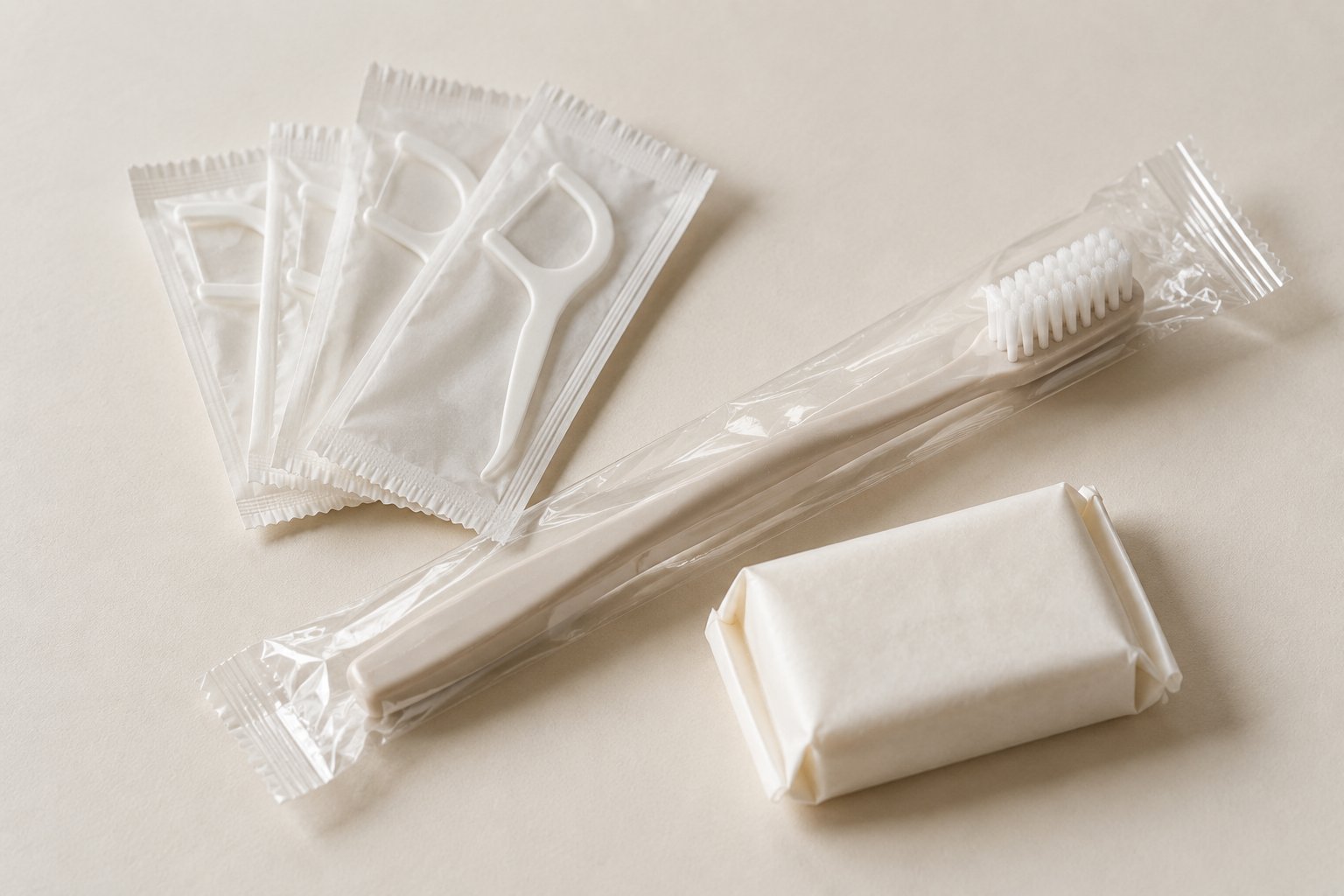
We built Avistar around one specific need: hospitality buyers who want individually wrapped amenities that arrive bulk-packed and ready to stock. Not consumer multipacks from a big-box retailer. Not loose product you have to portion yourself. Case quantities, sealed individual units, shelf-stable and guest-ready the moment they arrive.
Our travel and on-the-go collection includes oral care, soap, and personal care items: all individually wrapped, all designed for the hospitality context. No loose bulk packaging that creates waste or hygiene questions. Just clean, wrapped, guest-ready product.
What that looks like in practice:
- Oral care: individually wrapped toothbrushes (including pre-pasted waterless options) and floss picks, sized for a single guest stay, not a family bathroom drawer
- Soap: compact mini bar soaps, individually wrapped and guest-ready for every turnover
- Full bathroom sets: Hotel Toiletries Packets in sachet format, each containing shampoo, conditioner, body wash, lotion, and soap in one flat sealed pack; also available as premium bottle sets (Tropical Oasis and Nature's Essence) for properties that want a more visible counter presence
- Personal care extras: hot and cold moist towelettes for the gaps most amenity orders leave out
Everything in our catalog ships in case quantities designed for hospitality buying cadences. Whether you're stocking a handful of units or dozens of rooms, the math works without overpaying for consumer retail packaging.
If you're sourcing oral care specifically, our individually wrapped floss picks and disposable toothbrushes are among the most requested items from hosts running multi-unit portfolios. They fill the one category most amenity orders miss entirely, and they're the items guests most often wish were there.
We supply hotels, Airbnb hosts, vacation rental managers, and care facilities, and our pack sizes and case quantities are built for the way this kind of buying actually works, not for a single consumer.
Why Trust This Article
We supply individually wrapped guest amenities to hotels, Airbnb hosts, vacation rental managers, and care facilities. The buying patterns, the quality questions, and the operational math in this article come from working directly with hospitality buyers at different property scales, from single-unit Airbnb hosts placing their first bulk order to property managers running multi-room portfolios with monthly replenishment cycles.
That direct line to how buyers actually think and operate shapes everything here. We've seen what gets stocked and never used. We've heard what guests mention in reviews when amenities fall short. We know which items generate the most inbound questions ("what's the minimum order for floss picks?", "do your toothbrushes come individually wrapped?") and which categories most operators underestimate until a guest mentions them.
The framework in this article, how to evaluate cost per turnover, which items to tier by property type, what to look for in a bulk amenity supplier, reflects how procurement decisions actually get made in hospitality, not how they look on a generic buying guide.
We've flagged where specific claims about regulations or sustainability standards should be verified against your local jurisdiction, since those rules vary and continue to evolve. What stays constant is the operational logic: buy better product in case quantities, stock for the guest who forgot something, and present everything sealed.
Frequently Asked Questions
What are travel size toiletries?
Travel size toiletries are personal care products packaged in small, single-use or short-stay quantities. In a hospitality context, they're individual-portion soap, shampoo, conditioner, body wash, oral care, and related items provided to guests in sealed packaging for hygiene and convenience. Standard sizes are 0.85–1 oz for liquids and 10–15g for bar soaps.
What travel size toiletries should I provide for Airbnb guests?
The core list is bar soap, shampoo, conditioner, body wash, and toilet paper. Strong differentiators include a dental kit (toothbrush and toothpaste), a disposable razor, and body lotion. For longer stays or higher-end properties, add floss picks, mouthwash sachets, and cotton rounds. Each item should be individually wrapped and sealed before each guest arrival.
Where can I buy travel size toiletries in bulk?
Hospitality-focused wholesale suppliers are the best source for bulk travel toiletries; they stock case quantities, appropriate product formats, and correct shelf-life products. Consumer-facing options (dollar stores, discount retailers) often don't have the pack sizes or product quality suitable for consistent hospitality use. Avistar supplies individually wrapped amenities directly to hotels and hosts.
Are small hotel toiletry bottles banned?
Four U.S. states have enacted bans on small-format single-use plastic toiletry bottles in hotels: California (fully in effect since January 2024), New York (large properties from January 2025, all properties from January 2026), Illinois (large properties from July 2025, all properties from January 2026), and Washington (phasing in from January 2027). Each law covers bottles typically under 6–12 oz used for shampoo, conditioner, body wash, and soap. Compliant alternatives include wall-mounted refillable dispensers, sachets, and non-plastic individual packaging such as bar soap. The EU has its own single-use plastics directive moving in the same direction.
How many toiletries should I provide per guest stay?
A useful baseline: one bar of soap per two nights, one bottle each of shampoo and conditioner per two to three nights, and a dental kit per guest. For longer stays (4+ nights), stock more generously and consider a mid-stay restock. Most properties err toward under-stocking; the cost of a guest complaint about running out far outweighs the cost of one extra soap bar.
What's the difference between hotel amenities and travel toiletries?
In most contexts, they refer to the same category. "Hotel amenities" is the trade term used by hospitality suppliers; "travel size toiletries" or "travel toiletries" is what guests and hosts typically search. Both refer to small-format, individually packaged personal care products supplied for guest use rather than purchased by the guest for personal travel.
Do guests care what brand of travel toiletries is in the bathroom?
Research and anecdotal evidence from hospitality hosts consistently shows guests care more about the format and quality than the brand name. A fresh, sealed, individually wrapped product with a clean scent and good lather reads as high quality. An off-brand product that arrives sealed and performs well is preferred to a recognizable brand name in a refilled dispenser.